Business & Tech
Two Lakeville Experts Break Down What Financial Mess Means to 'Regular Joe'
Area financial experts say consumer confidence and prudence are keys to weathering the storm.
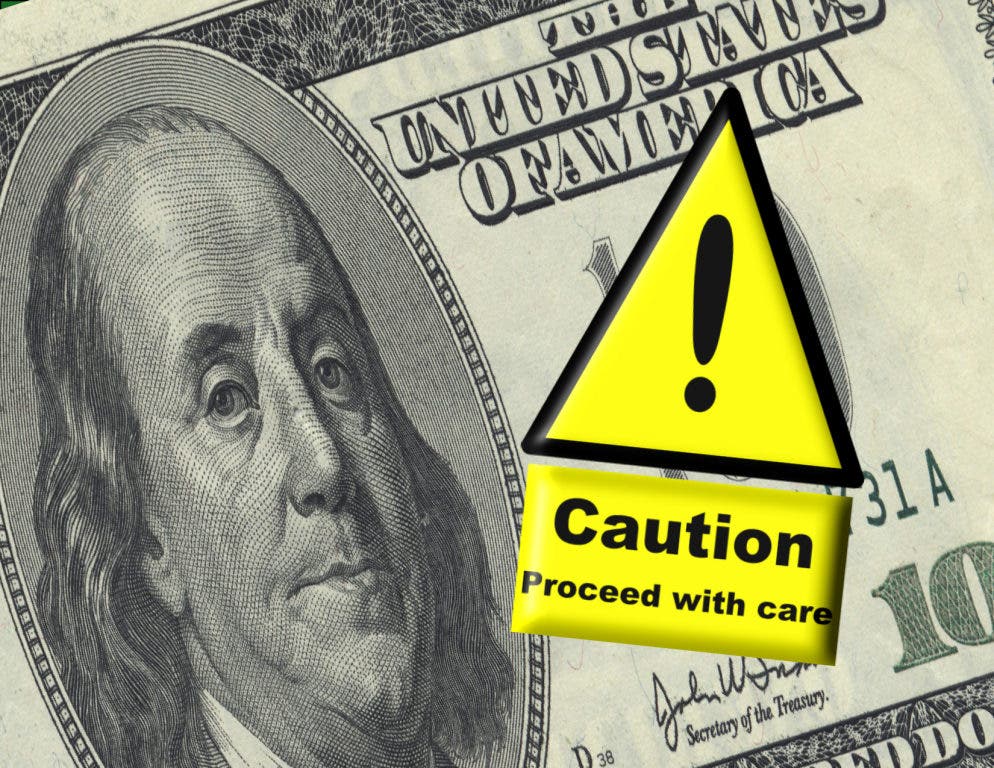
Is the financial sky falling all by itself? Or are investor and consumer screams of alarm creating a self-induced panic? More importantly, how does it affect you?
If you happen to have a stockpile of gold you’ve been sitting on, you’re doing pretty well. If you’re heavily invested in the stock market, you’ve certainly seen better days than Monday’s 634 point drop, the worst single day drop in the last three years.
Gas prices and mortgage rates also took a dip this week, something that should be welcome news for consumers. However, depending on what analyst is on what television channel, that could signal an even weaker economy. That would unwelcome news.
Find out what's happening in Lakevillefor free with the latest updates from Patch.
Standard & Poor’s downgrading of the United States’ credit rating from AAA to AA-plus represents the first time in history that Uncle Sam has been in a position of perceived financial vulnerability, if not incapability, of being able to make good on its promises. Couple that with increasingly shaky European stability and it’s no wonder economic nerves are rattled.
But two Lakeville area financial professionals say that the average person should be able to dodge any possible raindrops in the short term.
Find out what's happening in Lakevillefor free with the latest updates from Patch.
Thomas Mork, President and CEO of Lakeview Bank, says while the recent downgrade may have spooked Wall Street, it’s basically a non-event at this point as far as interest rates and lending are concerned.
“The larger question is consumer confidence,” said Mork. “People are wondering whether or not this is a harbinger of a double-dip recession that poses a bigger risk to the economy.”
Mork says it’s not necessarily the downgrade that is responsible for Monday’s stock storm, but the uncertainty of what the storm clouds will bring. And that despite the negative news emanating from Washington and the financial sector, local banks remain eager to take on new business, even though consumers may not be seeking to take on new debt.
That’s a key difference between the previous crisis the country is trying to rebound from in which credit tightened up, and now.
“I don’t envision that this recent downgrade will have any impact on local lending,” said Mork. “Most banks in the area have ample liquidity to lend and are looking for opportunity to make loans. It all comes down to uncertainty. Business owners and consumers are sitting back on their cash or available lines of credit and waiting to see where the whole government budget issue goes, where health care goes, where the price of oil goes. A lot of people are sitting tight having gotten through the last recession and are not about to jump in to anything with the threat of a double-dip recession, if indeed that is what is happening.”
Jim Christian, an independent financial planner in Lakeville specializing in retirement planning, agrees that confidence, or lack of it, is the driving force behind the recent scrambling.
“Behavioral finance affects our decision making,” said Christian. “I think it’s just a reaction to the uncertainties we’re dealing with. People are worried and they don’t want to go through what they just went through with the recent recession. But if you keep piling tinder on to the fear factor, it’s going to spark.”
Christian also doesn’t see an immediate impact happening on interest rates due to the downgrade but admits that the move “certainly sent a shockwave through the market.”
“It will raise interest rates down the way,” said Christian. “But I think there will be very little affect in the near term.”
Christian says he feels consumer confidence will return once unemployment drops, the housing market stabilizes and Washington comes up with a “widely accepted long-range financial plan for our country.”
“It needs to be a ten-year plan,” he said. “Not just something to get through the next year or two. It’s going to take awhile.”
“People need something to tell them it’s going to be okay,” said Mork. “And I don’t think that message is getting across right now.”
Mork says, even though he’s not an investment advisor, he feels there are still plenty of opportunities out there and that consumer spending could provide the light at the end of the tunnel.
“If people are secure in jobs and have their household debt situation under control, I think there are loads of opportunities out there to buy real estate or vehicles.It might even be a good time to be investing in the stock market. I think a lot of the decline in the stock market was just plain fear. We need consumer involvement in this recovery to make it last.”
Both Mork and Christian said weathering the current overcast skies can be done with patience and planning.
“We need to prudently live our lives as normally as possible,” said Mork. “If we all have the Chicken Little syndrome, that can quickly become a self-fulfilling prophecy.”
Christian offered the same advice he gives to the Boy Scout troop he leads when members are working on their economic merit badges.
“Spend less than you make,” says Christian. “If you maintain a small economic footprint you can ride through a lot.”
Perhaps there’s a prudent motto somewhere in all the financial chaos: Always be prepared.