Community Corner
Coyote Population Becomes a Fact of Life in Mendota Heights
Once considered wildlife, coyote packs are becoming urban-dwellers here at home.
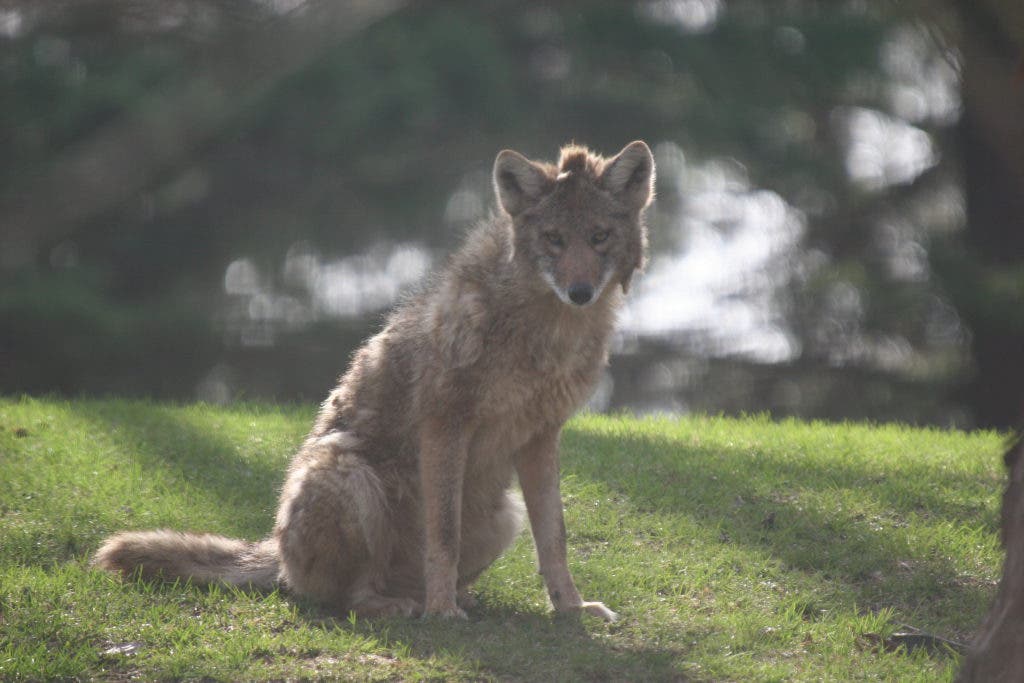


In the five years that Andrew Garner has lived in his home on James Road in Mendota Heights, he’s become accustomed to occasional coyote sightings.
“We spot them once in a while,” Garner said. “At night, we sometimes hear them howling and barking, and it often sounds like they are right outside the house.”
In 2008, he discovered they were, indeed, just outside his door. Garner noticed a few puppies rolling around in his yard one day. He was surprised to discover that they weren’t dogs, but coyote pups.
Find out what's happening in Mendota Heightsfor free with the latest updates from Patch.
“The entire coyote family took up residence under our backyard shed,” Garner explained. “There were two adults and 4 pups. We called the city and the DNR, but there wasn’t much that they could do. We were told they tend to be nomadic, and that was true: They were gone five days later.”
In an increasingly common phenomenon, urban and suburban residents report seeing or hearing coyotes in their neighborhoods. Mendota Heights, with its proximity to both the Minnesota and Mississippi rivers and numerous green spaces, is no exception.
Find out what's happening in Mendota Heightsfor free with the latest updates from Patch.
“There’s no question that coyote numbers have increased across Minnesota,” said John Erb, furbearer biologist for the Department of Natural Resources. “And wooded river valleys provide corridors for animals to travel.”
However, surrounding natural areas are not entirely to blame. “Coyotes are extremely adaptable creatures,” Erb said. “They don’t need much cover to survive. We’ve seen them take up residence in an overgrown area on the side of a highway, and under a shrub in the middle of a cul-de-sac.”
In fact, even large cities have coyote populations, and biologists are learning more about the habits of the urban coyote. In a groundbreaking study, Chicago officials are tracking over 60 coyotes with radio collars. They follow the animals as they sleep in parks during the day and run in city streets by night. The study has found that coyotes are doing the city a service by keeping the rodent population down.
In Mendota Heights, some residents may be concerned with the increase in coyote sightings, but Dodge Nature Center naturalist Pete Cleary points out coyotes have been living among us for years, and don’t pose a threat.
“I’ve lived on Dodge property just south of (Highway) 110, and I have two small dogs. I’ve never found coyotes to have much interest in us,” said Cleary. “You have to use common sense, though. I don’t recommend that people let pets off a leash. As long as you are following your city’s leash laws, your pets are safe from coyotes.”
Cleary said there are a few things residents can do to make sure coyotes keep their distance.
“I generally tell people to think of them as they do raccoons. Coyotes really aren’t that big, and they tend to be more of a pest than anything. If you see one,” Cleary suggested, “make noise or throw something near it. And keep food out of your yards—they will eat birdseed in the winter, and apples in the fall.”
Erb agreed. “The primary concern of a coyote is survival, so eliminating any food source is the most important thing you can do,” said Erb. “Don’t leave a bowl of food on your porch for your pet. Make sure your garbage is secure. And since this is usually a concern for a whole area, be aware of your surroundings. If you have neighbors putting corn out for deer, you may see more coyotes.”
In addition to removing food sources, residents should let coyotes know they aren’t welcome close to their homes.
“Clearing out brushy, overgrown areas in your yard will prevent coyotes from making a den. And if you do see one nearby, make some noise and movement,” suggested Erb. “If you are concerned about small pets or children, make sure they are supervised while outside, even if you have a fence.”
Garner learned that lesson the hard way. He hadn’t seen any sign of coyotes during the spring and summer of 2009, so he started to let his cat into his Mendota Heights yard. In August, the pet didn’t return home as usual, and it was found dead. Garner believes it was killed by a coyote.
“We are much more careful now,” Garner said. “It’s been a quiet winter, but even when you don’t see or hear them, they may be around.”