Politics & Government
Appleton Area Could Lose More Than $800,000 Per Year In Revenue Following Government Prison Purchase
Appleton Mayor Justin Koepp said the city anticipates higher demand on its water and sewer services, or paying for higher operating costs.

August 21, 2026
APPLETON — The federal government’s purchase of a 1,600-bed prison in Appleton for an immigrant detention facility could deal a major blow to city, county and school finances.
Find out what's happening in Minneapolisfor free with the latest updates from Patch.
The prison had been owned and operated by CoreCivic since 1996 until its closure in 2010, which led to significant job loss and population decline. Even as the prison sat empty, however, CoreCivic regularly paid property taxes on the facility, generating 30% of Appleton’s tax revenue.
In 2026, CoreCivic paid more than $800,000 in property taxes, with the majority — more than $500,000 — going to the city of Appleton, according to property tax records. Swift County received more than $100,000, and the rest was split between the local schools and state government.
Find out what's happening in Minneapolisfor free with the latest updates from Patch.
While the prospect of more than 500 new jobs is expected to bring new residents and economic activity to the area, it’s not clear how much that will offset the decrease in property tax revenue, especially given new pressures on the local police and infrastructure.
One analysis of 911 calls to an immigrant detention facility in Texas, for instance, revealed near daily calls for medical crises and detainees expressing suicidal thoughts, the Associated Press reported earlier this year.
Appleton Mayor Justin Koepp said the city anticipates higher demand on its water and sewer services, and doesn’t yet know how to pay for the higher operating costs.
Swift County Commissioner Gary Hendricks said the county is in negotiations with CoreCivic over a memorandum of understanding that would reduce the impact of the revenue loss.
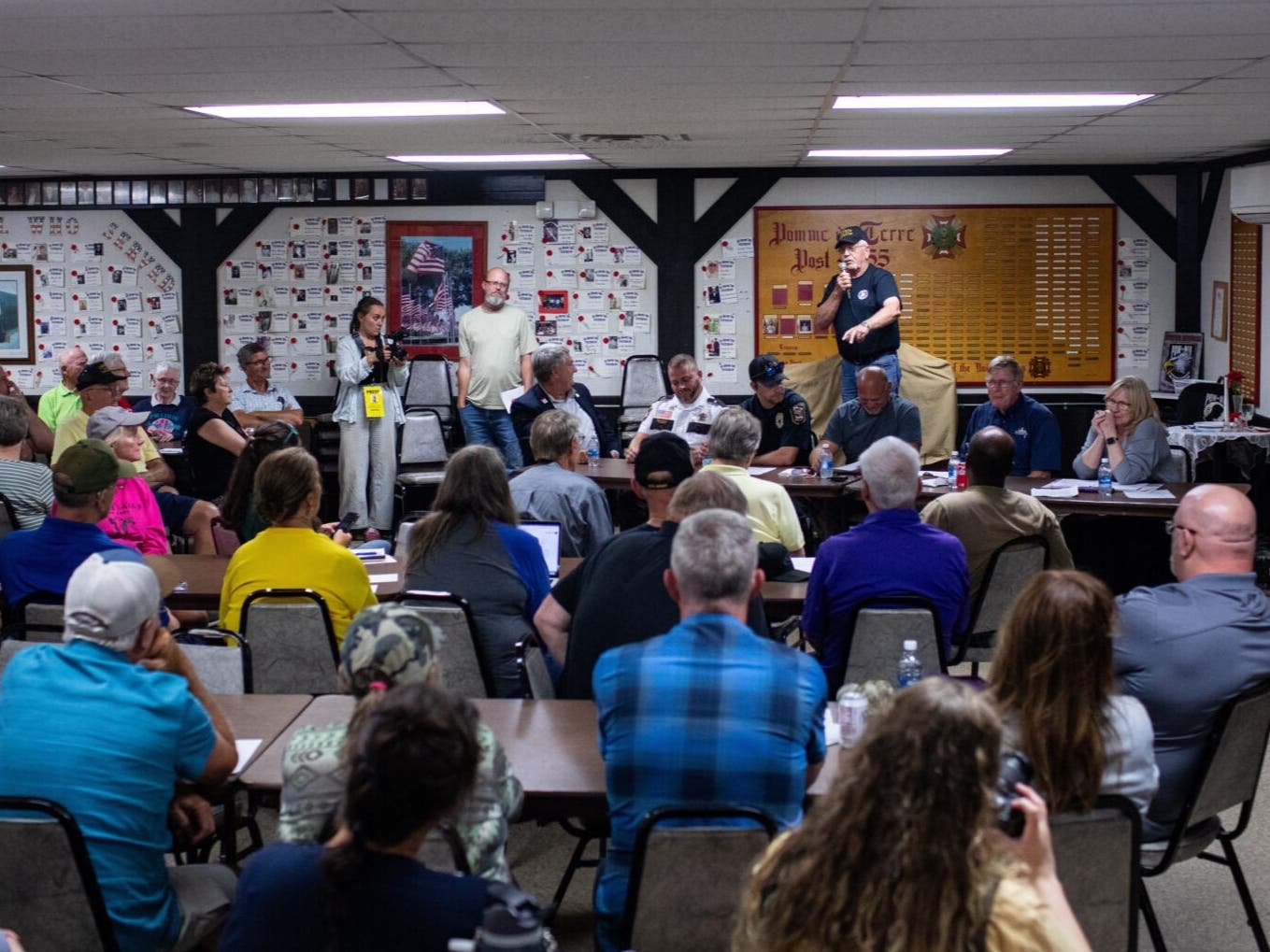
“Nothing’s been signed yet, but hopefully that will happen,” Hendricks said Thursday afternoon at a packed roundtable discussion at the Appleton VFW. He added that the impact wouldn’t be felt until the 2028 budget.
Around 150 people attended the Thursday afternoon event. Elected officials provided updates on the reopening, took written questions from the audience and read statements provided by CoreCivic.
Down the street from the VFW, dozens of protesters held signs in opposition to the opening of the facility and President Donald Trump’s mass deportation efforts.
When Koepp read a question about what could be done about the protesters, and whether they could be moved from their post at the Flags of Honor, which is a public memorial site, the elected officials on the panel looked at each other and the crowd laughed. (Trump won Appleton by 27 percentage points in 2024.)
“As you know, First Amendment rules — there are certain areas that individuals can protest, and that is an area that they can protest in right now,” Koepp said.

Appleton resident Brian Wojtalewicz expresses concern for immigrant rights during a town hall in Appleton, Minnesota, discussing the Department of Homeland Security’s recent purchase of CoreCivic’s former Prairie Correctional Facility, which will now be used as an ICE detention center Thursday, Aug. 20, 2026. (Photo by Nicole Neri/Minnesota Reformer)
Some of the questions, however, underscored concerns held even by supporters of the Trump agenda: How much would the city have to raise taxes to fill the budget gap? Where will the employees live? Will detainees be released into the community? What would local officials do about an influx of protestors and negative press? What happens if this facility is sold again — as with a number of warehouses the Department of Homeland Security purchased last year? Or if the Democrats take the presidency in 2028?
“This is brand new. We don’t know a lot of information,” Swift County Sheriff Mike Hoffman said, adding that his department was working to understand the detention center’s potential impact on the local emergency management system.
Statements provided by CoreCivic said detainees would be given transportation to their local airport or bus stop, and that they would not be released in Appleton; that the facility will not hold minors; and that the company anticipates 525 jobs.
One questioner stood up at the end of the meeting to express concerns about the lack of empathy for the people who will be detained at the prison.
After a lengthy pause from the elected officials on the stage, Republican state Rep. Paul Anderson took the microphone. Residents have honest disagreements over federal immigration policy, and immigration reform is needed, he said.
But: “That is way beyond what we are here for, which is to discuss the impact on the city of Appleton,” Anderson said.
The reopening of the prison fulfills a longstanding goal for area Republicans, who had lobbied the state to reopen the facility until the DFL-controlled Legislature banned private prisons in 2023.
“I think it’s great news for the community — let’s just work through the stresses that go with it,” said state Sen. Torrey Westrom, R-Alexandria.
The Minnesota Reformer is an independent, nonprofit news organization dedicated to keeping Minnesotans informed and unearthing stories other outlets can’t or won’t tell.