Weather
NOAA Just Dropped Its Winter Forecast: What It Means For Twin Cities Snow
A mild winter is likely, forecasters say. But that doesn't tell the whole story about snow, and one factor could change things.


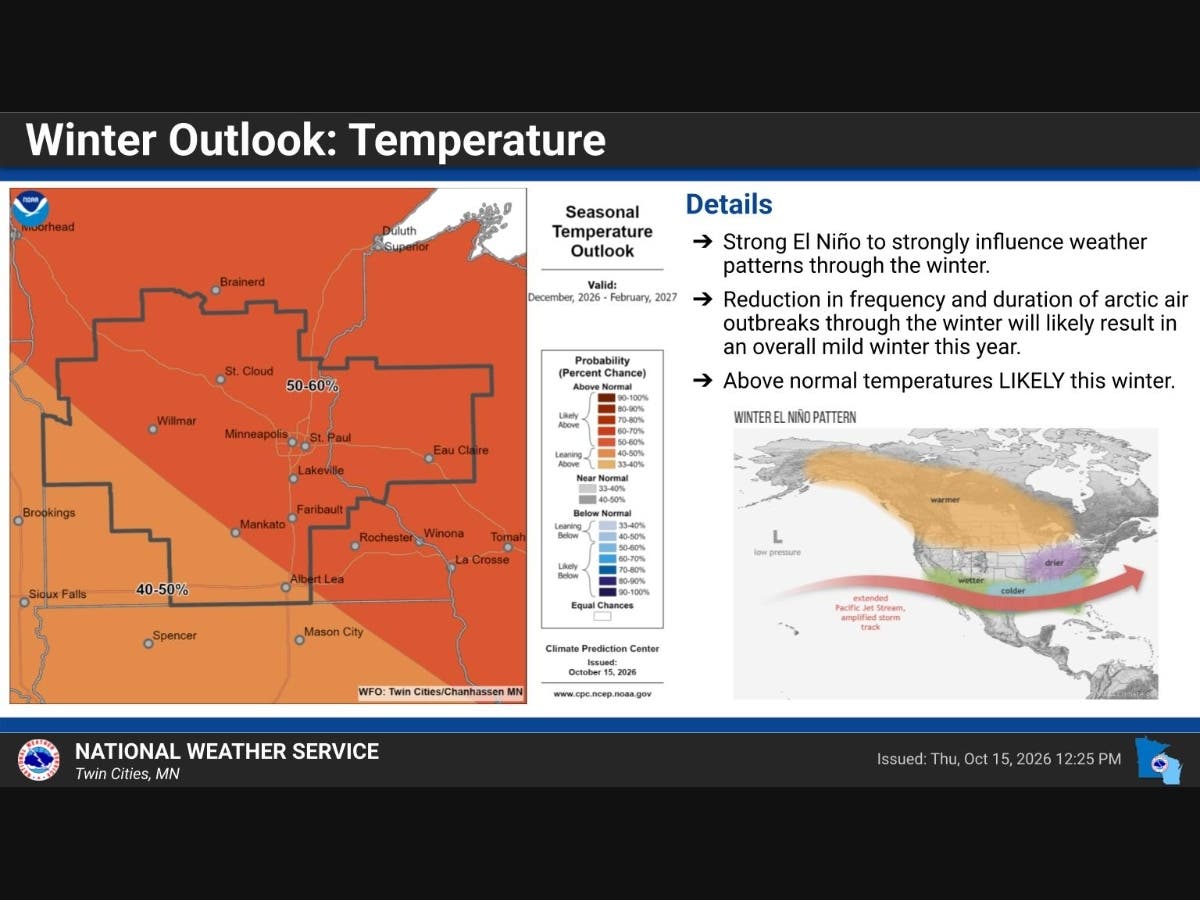
MINNEAPOLIS, MN — NOAA's new winter outlook points to a milder than normal season for the Twin Cities. But a warmer winter doesn't mean a snowless one.
The Climate Prediction Center released its official outlook Thursday for December 2026 through February 2027. The National Weather Service office in the Twin Cities said a strong El Niño is the main factor driving the forecast.
For the Twin Cities, the outlook gives a 54 percent chance of above normal temperatures this winter. There's a 33 percent chance of near-normal temperatures and only a 13 percent chance of a colder than normal season, according to the weather service.
Find out what's happening in Minneapolisfor free with the latest updates from Patch.
The weather service said El Niño is expected to reduce how often arctic air outbreaks hit the region and how long they last.
So what does that mean for snow?
Find out what's happening in Minneapolisfor free with the latest updates from Patch.
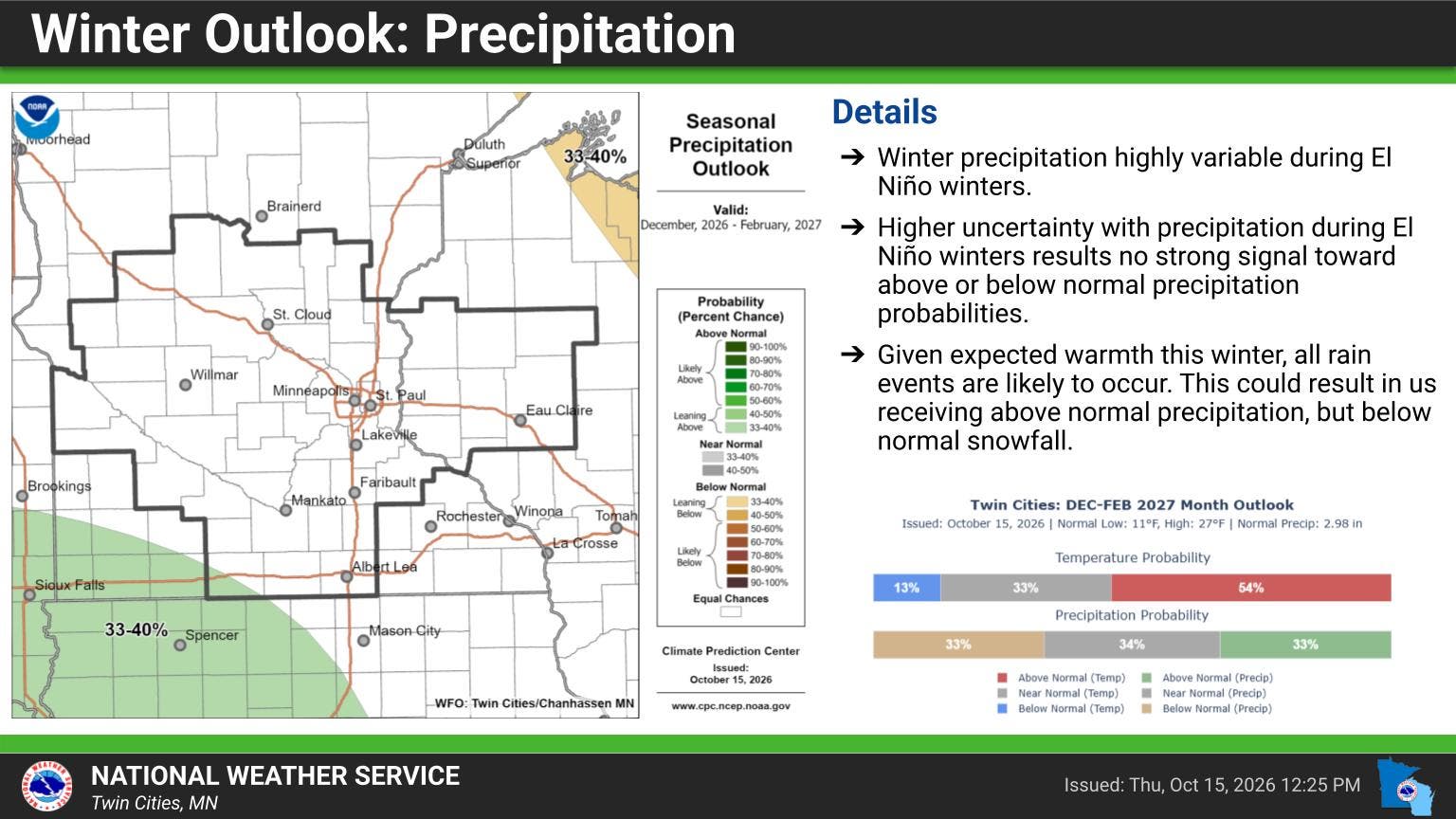
On precipitation, the outlook doesn't lean in either direction for the Twin Cities area. The odds are split almost evenly: a 33 percent chance of below normal precipitation, a 34 percent chance of near normal and a 33 percent chance of above normal.
The weather service said precipitation tends to vary widely during El Niño winters, which makes it harder to predict.
Temperature is where snow lovers may run into trouble. With warmer weather expected, the weather service said more storms could fall as rain instead of snow. That means the region could end up with above-normal precipitation overall while still seeing below-normal snowfall.
In other words, snow is still expected this winter. The outlook just suggests it may be less reliable than usual, and some storms that would normally bring snow could bring rain or a mix instead.
The Twin Cities normally get 2.98 inches of precipitation from December through February, with an average high of 27 degrees and an average low of 11 degrees over that stretch, according to the weather service.
Across most of the Twin Cities coverage area, including Minneapolis, St. Paul, St. Cloud, Mankato and Eau Claire, the odds of a warmer than normal winter sit between 50 and 60 percent.
Get more local news delivered straight to your inbox. Sign up for free Patch newsletters and alerts.