Politics & Government
Sen. Bonoff: 2011 Session Recap
Sen. Terri Bonoff (DFL-Minnetonka) is holding a Town Hall Meeting tonight.

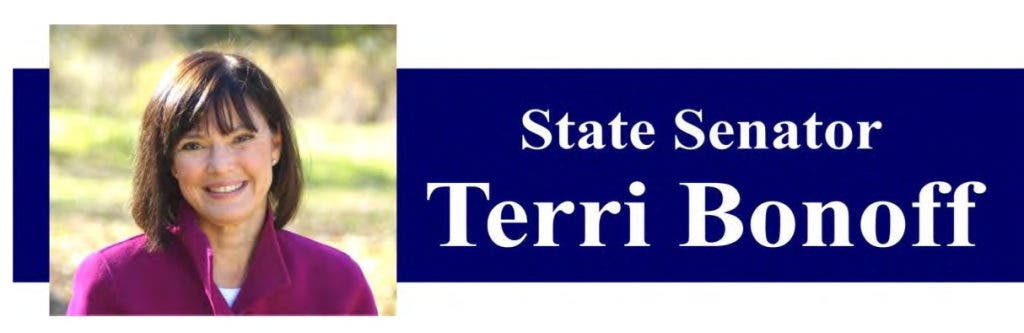
The following piece is written by Senator Terri Bonoff (DFL-Minnetonka) as a recap to the 2010-2011 legislative session. It was originally posted on her website. If you would like to read more about Sen. Bonoff's thoughts on the budget stalemate, please click here.
Sen. Bonoff will hold a Town Hall Meeting on June 9, from 6:30 to 8:00 p.m. at Plymouth City Hall, located at 3400 Plymouth Blvd.
***
Find out what's happening in Minnetonkafor free with the latest updates from Patch.
The following LENGTHY review gives summaries by issue area of action on legislation that was of interest to constituents or that was passed into law this session. We understand it is very long but expect you will skim to areas of interest. All of the major budget bills, with the exception of the Agriculture budget, were vetoed by Governor Dayton in the final days of session. These budget proposals have been summarized in previous updates.
Commerce
Find out what's happening in Minnetonkafor free with the latest updates from Patch.
Omnibus Liquor Bill
The 2011 Omnibus Liquor bill was signed into law this session. The legislation will help Minnesota craft brewers, farm wineries and microdistilleries expand and draw tourism to the state. Provisions include:
• Surly Beer. All Minnesota breweries can open on-site taprooms where they can hold tasting events and sell their own beer.
• Farm Wineries. Farm wineries will be allowed to sell wine at county fairs by the glass and an association of wine owners or operators will be allowed to hold one annual wine festival showcasing Minnesota-produced wines. This includes giving away free samples and selling wine by the glass. No off-sale wine sales are permitted.
• Microdistilleries producing premium distilled spirits bonding costs are significantly reduced to allow growth in Minnesota’s microdistilleries’ industry.• Allows private non-profit colleges’ on-sale liquor license authorization and allows cities or municipalities the authority to approve on-sale liquor license at Minnesota racetracks.
Mortgage Transparency Act
I introduced legislation this session aimed at helping homeowners determine who owns their mortgage note. As mortgages are sold by financial institutions, homeowners may find themselves sending monthly checks to a mortgage servicing company without understanding who actually owns the underlying mortgage note. This situation can become complicated for homeowners when they are facing foreclosure or need to refinance and are unable to determine how to contact the company that actually controls their mortgage. This bill would require transaction agents and servicers, upon written request from a mortgagor, to disclose the identity of and contact information for the owner of the note that is secured by the mortgage. I was pleased to see this bill signed into law by Governor Dayton in the days after adjournment.
A bill to allow liquor stores to be open on Sundays and holidays did not pass this session. Supporters argue Minnesota is on an island in prohibiting the sale of liquor on Sundays and Minnesota stores are at a disadvantage because border states don’t have the Sunday restrictions. Opponents argue Sunday sales would force liquor stores to open for a seventh day to remain competitive at a time when they are dealing with extremely low profit margins, and opening their stores for another day would generate the same net revenue in seven days as six. We did pass this bill out of committee but it was not brought to the floor for a vote. I voted for this measure in committee.
No Fault Medical Reductions
Legislation to reduce medical expense benefits under No Fault auto insurance failed to pass this session. The bill would reduce benefits for treatment of soft tissue injuries (primarily Chiropractic care) from 32 weeks to a 12 week limit -- similar to the Workers’ Compensation treatment standards. The bill also increases the maximum benefit for disability and income loss to $500 a week and the maximum benefit for funeral expenses to $5,000. The bill did not come to the floor for a vote.
Education
An alternative teacher licensure bill allowing teacher candidates to obtain a license to teach in Minnesota schools without going through the standard higher education teacher prep process was signed into law March 7. The bill requires that potential candidates have a bachelor’s degree, have a 200-hour instructional phase and pass reading, math and writing skills examinations as well as content area tests. The bill allows applicants trained in another state and who have successfully completed an alternative prep program in that state to apply for a standard license. This bill was given much attention in previous newsletters, as I worked to pass this law for many years.
This bill establishes policies for youth athletes with concussions resulting from participation in youth athletic activities. The bill requires the latest science and standards regarding brain injury be put into action in all school and community sports activities. The Centers for Disease Control would provide the latest information in establishing guidelines for coaches to follow. Training for coaches would be mandatory (online). The bill also spells out the current standards of assessment and treatment/recovery. This bill generated much discussion, with concerns over liability/ responsibility of coaches, municipalities, businesses and non-profits that may sponsor youth activities. The bill was personally important to me because two of my sons sustained sports career-ending concussions while they were in high school. We are lucky they both have had full recoveries.
Early in the legislative session, the Senate passed legislation along party lines to freeze all school employee wages for the next two years. I opposed this legislation and it failed to reach the Governor’s desk. The bill also contained a number of other provisions including revocation of school employees’ right-to-strike, removed the January 15 deadline, repealed the staff development set aside provision, repealed the $3 per pupil set aside requirement for districts to pay for school counselors, social workers, school nurses, and repealed the Maintenance of Effort requirement for those same employees.
Omnibus Education Policy Bill Vetoed
The Education Policy Omnibus bill was passed in the final days of the 2011 Legislative Session. While the legislation was ultimately vetoed, I served on the conference committee in hopes of crafting a policy reform package that could receive broad support and was pleased with much of the legislation. I did vote for the bill. Major Provisions of the bill include:
The 3rd grade reading program: Districts must develop local literacy plans that include: assessment of students’ level of reading proficiency, notification and involvement of parents, intervention with students not reading at grade level, and identification and addressing of staff development needs. No grade retention provisions were included.
Terms and conditions of employment for teachers and principals:
• Extends the probationary period from one to three years in circumstances when a continuing contract teacher moves to another district, but allows a school board to shorten that period to one or two years if the teacher already served an initial three-year probationary period in another district.
• Requires 120 days (up from 60 days) of service to achieve a probationary year, and requires evaluation at least three times during the school year for probationary employees (currently, the fewer days served, the fewer required evaluations).
• Requires notice of non-renewal of a probationary contract by June 1 instead of July 1.
• Requires a two-school-year probationary period for teachers hired internally as principals or assistant principals and for assistant principals hired internally as principals.
Innovative Delivery of Education Pilot Project: Provides for a four-year pilot project allowing groups of districts to jointly deliver education and share resources. The commissioner may select three groups (had originally been six) of districts that have formed a joint partnership. Member districts participating continue to receive revenue and maintain taxing authority as if they were a school district and not in pilot, yet are excused from certain statutes and rules applicable to a school, school board or district as if they were charters.
Principal Evaluations: The Commissioner and the associations of elementary and secondary school principals are directed to convene a group of experts to develop an annual performance- based principal evaluation system model. The group is to report to the Legislature by February 1, 2012, with principal evaluations beginning in the 2013-14 school year. Superintendents are required to evaluate principals annually.
Charter School Provisions: Changes are made to tighten or clarify timelines and processes, further delineate charter board membership and training, and clarify the information or assistance required in various circumstances.
Other provisions include:
• Reducing home school assessment and reporting requirements, and school superintendent oversight.
•Allowing a pre-Labor Day start if a district canceled at least two instructional days in the previous school year because of a flood, tornado or fire.
•Authorizing the creation of full-service school zones. Requiring the Board of Teaching to report on teacher performance assessments.
Energy, Utilities and Telecommunications
Coal Importation
Great River Energy’s Spiritwood coal plant in North Dakota (under 100 megawatts) is made exempt from state requirements that limit the importation of energy that increases carbon dioxide emissions. This allows the importation of Spiritwood’s electricity to customers in Minnesota. The Spiritwood plant is currently using the latest in clean coal technology. So while most say coal is never “clean,” this plant is making great strides in this area.
Nuclear Power Plant /Storage of Used Fuel Cost Evaluation
The PUC, when considering approval of a plan to collect funds for the decommissioning of nuclear facilities, is directed to evaluate the costs to the state of storing used nuclear fuel. After each periodic review of decommissioning costs, the PUC is to prepare a report to the legislature indicating its findings.
Inverted Block Rates Eliminated
Provisions are eliminated that allow utility affordability programs to include inverted block rate design alternatives. Language that passed in 2010 is repealed that authorizes the PUC to initiate an inverted block rate program.
Multi-year Rate Plans
The Public Utilities Commission is given authority to approve a multi-year rate plan for a gas or electric utility. Authorizing this option allows costs to be estimated for more than a year, using information for those years. This helps to avoid the expense and uncertainty that comes with using only a one-year period to evaluate costs. Utilities are not to file a multi-year rate plan that will establish rates under the plan until May 31, 2012.
Utilities can Notify Ratepayers via Email
Utilities are authorized to notify ratepayers via email for those customers who choose this option.
Coal and Nuclear Moratorium Repeal
Legislation that would allow an exemption of up to 1,500 megawatts of new coal-fired electric powers was vetoed by Governor Dayton. In addition, legislation that would lift the state’s moratorium on nuclear power plants did not move forward this session. While the repeal of the nuclear moratorium had broad support earlier in session, I was pleased it did not go forward. I learned much from watching the terrible tragedy unfold in Japan and do not support lifting the moratorium at this time.
Environment and Natural Resources
Aquatic Invasive Species
Preventing the spread of aquatic invasive species is an urgent need for the state of Minnesota. Governor Dayton and the Department of Natural Resources worked with the Legislature to propose an aggressive initiative to stop the spread of Asian carp, zebra mussels and water milfoil in Minnesota waters.
This legislation will help stop the spread of invasive species by:
• Providing more authority for inspections and enforcement.
• Requiring service provider permits.
• Restricting the use of nets/equipment used in infested waters.
• Expanding training requirements to service providers and bait harvesting workers.
• Requiring Invasive Species decals to be displayed on watercraft: These decals will soon be available wherever fishing licenses are purchased. Boaters can obtain a free aquatic invasive species decal that contains the new rules associated with AIS prevention tactics. The decal will not be mandatory for two years.
The puts Minnesota’s billion-dollar tourism industry and a way of life at risk. Every watercraft owner in Minnesota needs to do their part to ensure the safety of Minnesota’s most precious resources. The DNR will be working this summer to implement the aquatic invasive species prevention plan. The Department’s main goal will be to educate as many Minnesotans as possible about the dangers of invasive species.
Game and Fish Bill
Citing concerns with changes to the definition of All-Terrain Vehicles (ATVs) and experimental and special management lakes, Governor Dayton vetoed the 2011 Game and Fish Bill. In his veto letter, Dayton expressed concerns that provisions in the legislation modifying the definitions of Class1/Class 2 ATVs will have a detrimental impact on job providers such as Polaris and Arctic Cat, who employ over 4,000 Minnesotans and generate more than $2 billion into the state’s economy.
His veto letter also outlined concerns related to fishing regulations. The Department of Natural Resources currently enforces experimental and special regulations on 119 lakes. These regulations are tailored to individual waters and are used to allow more fish to grow to larger sizes, to balance predator/prey populations, or to distribute harvest among more anglers. The Game and Fish Bill would have limited the DNR’s ability to use this management tool to only 90 lakes.
Clean Water, Land and Legacy Appropriations Fail in House
In 2008, Minnesota voters approved a constitutional amendment to, “protect our drinking water sources; to protect, enhance, and restore our wetlands, prairies, forests, and fish, game, and wildlife habitat; to preserve our arts and cultural heritage; to support our parks and trails; and to protect, enhance, and restore our lakes, rivers, streams, and groundwater by increasing the sales and use tax rate beginning July 1, 2009, by three-eighths of one percent on taxable sales until the year 2034.” Four funds were then created to appropriate those dedicated funds. The Clean Water, Land and Legacy Funding bill would appropriate this funding and was passed off the Senate Floor. However, after much debate on the House floor in the final hours of session, the bill was tabled and no vote was taken on the Legacy Appropriations. I am hopeful the Legacy bill will be included as part of a special session agenda.
Health and Human Services
CPR Certification in Child Care Centers (Hannah’s Law)
New legislation passed into law will require all teachers, assistant teachers, and at least one staff person employed in a child care center to be certified in CPR techniques for infants and children. Training must be completed within 90 days of starting employment, unless training has been completed within the previous three years. The legislation is named after Hannah Kozitza, who died last summer after choking on a grape at a daycare facility in North Mankato.
Community Paramedics
Emergency medical technicians are authorized to be certified as community paramedics, with the intent of providing more cost-effective access to health care in under-served rural parts of the
state. A new category of certification is to be called “emergency medical technician-community paramedic (EMT-CP),” and an estimated 25 individuals would receive this certification each year.
Community paramedics would meet specified training requirements, work under the guidance of an ambulance director, and provide some treatment to those with chronic diseases and perform minor medical procedures with the aim of preventing, when possible, the use of ambulances and hospital emergency rooms. The Commissioner of Human Services is to develop a list of services to be provided by community paramedics to be covered by medical assistance.
Food, Beverage and Lodging/Exemptions
Legislation signed into law this session exempts the following from state statutes governing food, beverage and lodging establishments:
• Weddings, fellowship meals, or funerals that are conducted by a faith-based organization using a building constructed and primarily used for religious worship or education.
• Sportsman organizations that hold events in -- or on the grounds of -- their own buildings, at which home-prepared food is donated by members for sale at the events;
• School concession stands serving commercially prepared, non-potentially hazardous foods as defined in state rules;
• Food service events conducted following a disaster for the purposes of feeding disaster relief staff and volunteers serving commercially-prepared, non-potentially hazardous foods as defined in state rules.
Special Family Day Care Homes
New legislation authorizes family day care providers to locate their programs in a commercial space. Under current law, family day care services are to be located in a residential dwelling.
Health and Human Services Policy
Numerous health and human services policy provisions passed affecting health care, human services, and licensing/health boards. A few initiatives include:
• Establishment of an autism spectrum disorder task force.
• An electronic prescription program requirement.
• Single-family residential use family day care requirements.
• Guidance for shared decision-making processes to provide patients with information about treatment options, as well as their associated benefits, risks, costs, and comparative outcomes.
Higher Education
The Higher Education Finance Bill vetoed by Governor Dayton in the final days of session included language prohibiting the U of M from using state or federal funding on projects relating to “human cloning.” This would effectively halt embryonic stem cell research at the University, an incredibly promising area of medical study. Dr. Aaron Friedman, Vice President for Health Sciences and Dean of the Medical School at the U of M, said the legislation, “sent a chilling effect to our researchers, including sending a message that it would be better to be elsewhere.”
Jobs and Economic Growth
Prevailing Wage
A bill that would change the prevailing wage from mode to mean and change working hours to a simple 40 hour week was passed by two committees and sent to the Senate floor. Proponents of the bill argued that such a change could save millions of dollars resulting in additional construction projects across the state. However, the nonpartisan Office of the Legislative Auditor (OLA) found that “the most comprehensive studies generally fail to find an impact that is statistically significant.” This legislation did not come to the floor for a vote.
Unemployment Insurance
The legislation will allow the DEED Commissioner to lower the unemployment insurance interest rates to below 2% on businesses and was signed into law.
Farm Building Skylights
The bill, signed into law earlier this month, requires new agricultural buildings that have translucent panels or skylights to have the same load-bearing capacity as the surrounding roof. This legislation was prompted by several accidents involving individuals clearing snow from the roofs of agricultural buildings, including one individual who died after falling through a skylight.
Judiciary and Public Safety
Police Dogs
Legislation to increase penalties for harming or killing police service dogs was recently signed into law. The new law ensures that the lives of police service dogs are protected and any harm inflicted on them is appropriately punished.
The legislation increases the penalty for intentionally causing great or substantial bodily harm to a public safety dog from a gross misdemeanor to a felony. A person convicted of this crime could serve up to two years in prison and pay a fine up to $5,000. Under the previous law, only the killing of a police dog would result in a felony-level crime; however, police dog injuries can be so severe that they are unable to perform their public safety service. The new law also creates a gross misdemeanor crime for causing demonstrable bodily harm to a police dog and a misdemeanor crime for intentionally assaulting a police dog.
The high level of assistance provided by public safety dogs does not come at a small cost. The cost to purchase and properly train public safety dogs can exceed $10,000, and can take months and years to prepare the dogs for their service duties. Previous penalties in state law did not require restitution. The new law, however, requires that any person convicted of killing or harming a public safety dog to pay restitution for the costs and expenses resulting from the crime. Restitution costs could include the purchase and training of a replacement dog and veterinary services for the injured dog.
Controlled Substances
The Senate passed the Omnibus Controlled Substances Bill with unanimous support. The bill includes several provisions to update Minnesota’s controlled substance laws. The legislation includes the following changes to Minnesota’s drug laws:
2C-E and 2C-I Schedule I Drugs: The bill adds the definition of analog to the controlled substance statute and it adds the drugs known as 2C-E and 2C-1 to the list of schedule I drugs. 2C-E is a “designer drug” described as a hallucinogenic, similar to LSD. This type of drug has resulted in many health issues after use, including the recent overdose and death of a young man in Blaine. The drug is currently “unscheduled” in the United States which puts it in a gray area legally and allows it to be readily available on the Internet.
Makes Synthetic Marijuana Illegal: The bill makes any sale of synthetic marijuana a gross misdemeanor and makes any possession of synthetic marijuana a misdemeanor. It also adds synthetic marijuana to the Schedule I drug list.
Synthetic marijuana is often known as “Spice” or “K2” and is packaged and sold as herbal incense. It is made up of herbs and synthetic compounds that are similar to THC, the natural chemical found in marijuana. The synthetic drug, however, produces much stronger and more dangerous side effects. The use of this synthetic drug is increasing rapidly among teenagers because it is currently legal, but this product is clearly dangerous. Teens are ending up in the emergency room, in a coma, or in some cases, even dying.
Synthetic Drug “Plant Food” Schedule I Drug: The bill adds the synthetic drug mephadrone, known as “plant food,” to the list of schedule I drugs. Plant food is said to produce similar effects as amphetamines and cocaine and similar to other synthetic drugs, it has become a problem for local law enforcement. Smoking the synthetic drug has led to hospitalization and other negative side effects.
The bill to amend the Minnesota Constitution to recognize marriage as only between one man and one woman passed both the Senate and the House and will appear as a ballot question on the 2012 general election ballot. If passed in 2012, the state’s constitution would be amended to read: Only a union of one man and one woman shall be valid or recognized as a marriage in Minnesota. I strongly opposed this bill and oppose the amendment.
Firearms Legislation
A bill that would expand what is known as the “Castle Doctrine” was heard in committee, but did not pass this session. The bill would have allowed residents to use deadly force to defend themselves in more than just their homes, including, among other sites, a garage, motor vehicle, tent or boat. The state already provides the right for an individual to protect themselves with deadly force in public or in their home if they are facing unlawful death or serious bodily harm.
Opponents of the measure, including law enforcement and county attorneys, said the intentions of this legislation may have been to provide a sense of security to some; however, it falls far short of creating real public safety value and in turn will hinder law enforcement’s ability to effectively keep the peace. The bill reverses the common law “rule of retreat” that sets the standard that killing another person should be done only as a last resort. The bill allows shooting whenever there is a perceived threat, even if the shooter could safely walk away. The bill could have also provided legal cover for gang members to shoot and kill without any duty to retreat when involved in a confrontation with other gang members. Lowering the standards for the use of deadly force poses serious and unnecessary dangers to citizens and law enforcement. The bill cleared the Senate Judiciary and Public Safety and Finance Committees this session, but was not brought up on the Senate floor for a full debate.
Stadiums
Vikings Stadium Talks Continue
Discussions on a proposed Vikings stadium continue with two bills that did not receive hearings this session but may be a part of a special session deal. These bills outline Minnesota’s potential contribution to a stadium agreement. The first plan includes the creation of a new stadium authority, potential revenue sources, and the framework for partnerships with a local government entity. The second plan allows for slot machines at horse racetracks with revenue deposited into a multi-stadium fund.
The first plan creates the Minnesota Stadium Authority to solicit local government stadium proposals, manage the construction of the stadium, and oversee the operation of the facility. The authority would receive funding through five proposed state revenue sources, which include a ten percent sports memorabilia sales tax, a five percent tax on NFL employees making over $250,000 annually, a tax on luxury suites at the new stadium, funds from naming rights, and a sports themed lottery game. The bill specifies that the Vikings will contribute at least $1 for every $2 spent by the state and a local government partner.
The second plan allows racetracks to operate gaming machines, with a portion of the adjusted gross revenue allocated to a multi-stadium revenue fund, which would help fund a new Vikings stadium and contribute to a new St. Paul Saints baseball facility.
The Vikings have put their support behind a Ramsey County proposal to build a new stadium in Arden Hills on the site of a closed military ammunitions plant. This proposal would allow for tailgating and more space than a proposal to build at the current Metrodome site, but the costs to upgrade the roads and environmental cleanup in the area have caused some uncertainty. MnDOT has estimated that improving the transportation infrastructure will cost about $131 million, while Gov. Dayton has indicated that the state would not contribute more than $300 million. He continues to support stadium legislation and has said he is willing to sign a bill beyond the regular session. I will work to make certain any investment made by Minnesota taxpayers has a strong and clear return. I will oppose any general fund expenditure for stadiums.
State Government
Gambling Expansion
Several bills to expand gambling in Minnesota were introduced this year, but none were heard in the Senate. The most high-profile legislation would have allowed slot machines at the state’s two horse-racing tracks. That bill only received an informational hearing in its original committee a week before session adjourned; committee members never voted on the proposal. The bill was both supported and opposed on a bi-partisan basis. I have said repeatedly that if a fair Racino bill came before me, I would vote yes.
The only gaming legislation that was recommended to pass the State Government Innovation and Veterans Committee was a bill to allow charitable organizations to upgrade to electronic pull- tabs. It was sent to the Tax Committee on a voice vote but never received another hearing. A bill to allow electronic lottery ticket dispensing machines was laid over by the State Government Committee.
Dues check-off
A bill was introduced this session that would require public employees to request and sign a separate dues authorization card to allow dues collected through the normal check-off to be used for contributions to foundations, PACs or publications. Employees would need to make a separate request, in writing, for their union dues to be used for these purposes.
Currently, some unions provide an opt-out option for employees that do not want to dedicate at least a portion of their union dues for such purposes. Changing this to an opt-in provision that would apply to all unions would have made it much more difficult for unions to use dues money for certain purposes.
The bill passed the State Government Innovation and Veterans Committee on a party-line vote. The House did not progress the bill.
Elections
Legislation was approved by the House and Senate that would require photo identification be shown when casting ballot in Minnesota elections. Supporters claim that this legislation will
improve the integrity of Minnesota’s election system and prevent voter fraud. Opponents of the legislation raised several concerns that the legislation will disenfranchise eligible voters, especially seniors in nursing homes and those living in out-state Minnesota. This legislation was vetoed by Governor Dayton. I opposed the legislation but have publicly expressed my interest in working on a bi-partisan basis to develop a photo identification process that does not result in disenfranchising voters in high risk groups; i.e. seniors, people living in poverty.
Two legislative and congressional redistricting bills were passed by the House and Senate this session on party line votes and were rejected by Gov. Dayton. Redistricting maps will now likely be drawn by the courts, unless both parties come to the table to negotiate maps during the interim. In his veto messages, Gov. Dayton cited that the plans were drawn to “protect or defeat” certain incumbents, were not passed with bipartisan support, and, once the plans were unveiled, the public had little time for review or comment.
Taxes
Partial 2010 Tax Conformity
In a unanimous vote, the Senate agreed with the House of Representatives to conform to a number of federal tax changes from last year. The bill was largely non-controversial. One provision extends the exclusion from federal taxable income of health insurance coverage for dependents to adult children up to age 26. This legislation is a result of federal health care changes contained in the Affordable Care Act.
The bill conformed to the following provisions, but only for tax year 2010:
• Extension of the higher education tuition deduction.
• Extension of the educator classroom expense deduction.
• Extension of the enhanced deduction of charitable contributions of computers.
• Increasing the maximum exclusion for employer-provided adoption assistance.
• Extending the authority for individuals age 70 1/2 or older to transfer up to $100,000 from an IRA or Roth IRA directly to a qualified charity.
• Extending the increase in the federal adjusted gross income limit on the amount of qualified conservation easements that may be claimed as a charitable deduction.
• Extending various provisions related to depreciation and expensing.
Corporate Refunds Authorized
Included in the federal conformity bill was another provision which repealed a law from last year that delayed corporate tax refunds. At the time, the state was facing difficult cash-flow problems and Gov. Pawlenty asked the legislature to pass this measure to free up state funds. After the 2011 February economic forecast projected a $1 billion reduction in the state’s deficit, Gov. Dayton issued a letter to legislative leaders requesting them to send him a bill repealing this law. The law change was accounted for in the economic forecast and wasn’t an additional burden to the current deficit.
Green Acres/Rural Preserves Programs Altered
In 2008, the Legislature created the Rural Preserves program, in part, to address a number of inconsistencies in the Green Acres program found by the state’s Legislative Auditor. Farmers almost immediately criticized the new requirements and the Department of Revenue later admitted that they did not explain the changes effectively to the public. Over the years, the 2008 changes have been slowly chipped away.
This year, the most wide-ranging changes yet were passed and signed into law. No longer would a Rural Preserves applicant be required to file a conservation plan or enter into a covenant agreement. Eligibility in the program is also now limited to class 2b land currently classified as agricultural homestead and also properly classified class 2b Green Acres land as of 2008. Enrolled land must be contiguous to class 2a land under the same ownership that is enrolled in Green Acres. The 10-acre minimum enrollment was also eliminated.
Transportation
Tyler’s Law
This legislation, signed into law late in session, will require driver’s education to include training on the dangers of carbon monoxide (CO). This bill was brought forward by the family of a young man named Tyler, who passed away while working on his car. Even though the garage door was open, the carbon monoxide (CO) generated from his vehicle did not circulate outside because it was a cold day and CO accumulates in warm areas. A car running for as little as a minute or two may produce high CO levels, and can cause unconsciousness in 15 minutes or less and asphyxiation shortly thereafter. Because it is an odorless gas, it can strike without warning. The intent of this legislation is to prevent similar tragedies and ensure that student drivers are aware of the dangers of carbon monoxide.
Transportation Policy Bill Fails to Pass
An Omnibus Transportation Policy bill did move in the final days of session, however it failed to pass off the Senate Floor. A few notable provisions of the bill include:
• Off-road vehicles would be allowed to travel on certain roads if it is approved by local ordinance. The legislation also allows off-road vehicles to travel at night (if properly equipped) at the discretion of local ordinance.
• Veterans’ license plates would be allowed to have a female designation.
• School buses built after January 2012 will be required to have an automatically activated crossing control arm.
• With the approval of the Department of Public Safety, the in-class portion of driver’s education can be completed by taking an online course.
Agriculture
Criminalizing Animal Abuse Disclosure
A bill to prohibit the documentation of animal mistreatment at any animal facility, including livestock operations, hatcheries, research facilities, and kennels was introduced but did not pass. The bill would make videotaping and audio taping at these facilities a crime without the expressed consent of the animal facility owner.
The language in the bill was very broad and had the potential to expand to the criminalization of documenting labor and environmental violations committed by commercial industries, which would drastically undermine the ability of whistleblowers to uncover workplace abuses. With fewer state regulators available due to current budget constraints, the Department of Agriculture in particular must depend on private employees and others to identify noncompliance of regulations. This legislation would hold industries less accountable to animal welfare and possibly other workplace standards as well. I opposed this.
A bill to allow unpasteurized milk to be sold by farmers directly to consumers was not given a hearing in the Senate. The bill would permit consumers to buy raw milk from farmers for direct
consumption of dairy products derived from raw milk including cream, butter, cottage cheese, ice cream, yogurt, and cheese. Any “direct farm-to-consumer sales and delivery” method would be allowed, resulting in raw milk distribution at farmer’s markets, consumer share groups, and community fairs. A companion bill was heard in the House, and the Departments of Agriculture and Health opposed the bill due to the possibility of contamination of the food supply and the concern that it would increase the likelihood of infections and illnesses from the spread of pathogens in raw milk. There was also a concern that it would hurt the dairy industry as a whole due to negative reaction from possible outbreaks of contamination from raw milk distribution.
Thank you again for the opportunity to serve you in the Minnesota State Senate.
Get more local news delivered straight to your inbox. Sign up for free Patch newsletters and alerts.