Schools
Carleton College's Community Concerns Form Receives High Praise
Student: We're policing ourselves in a way that didn't happen before.
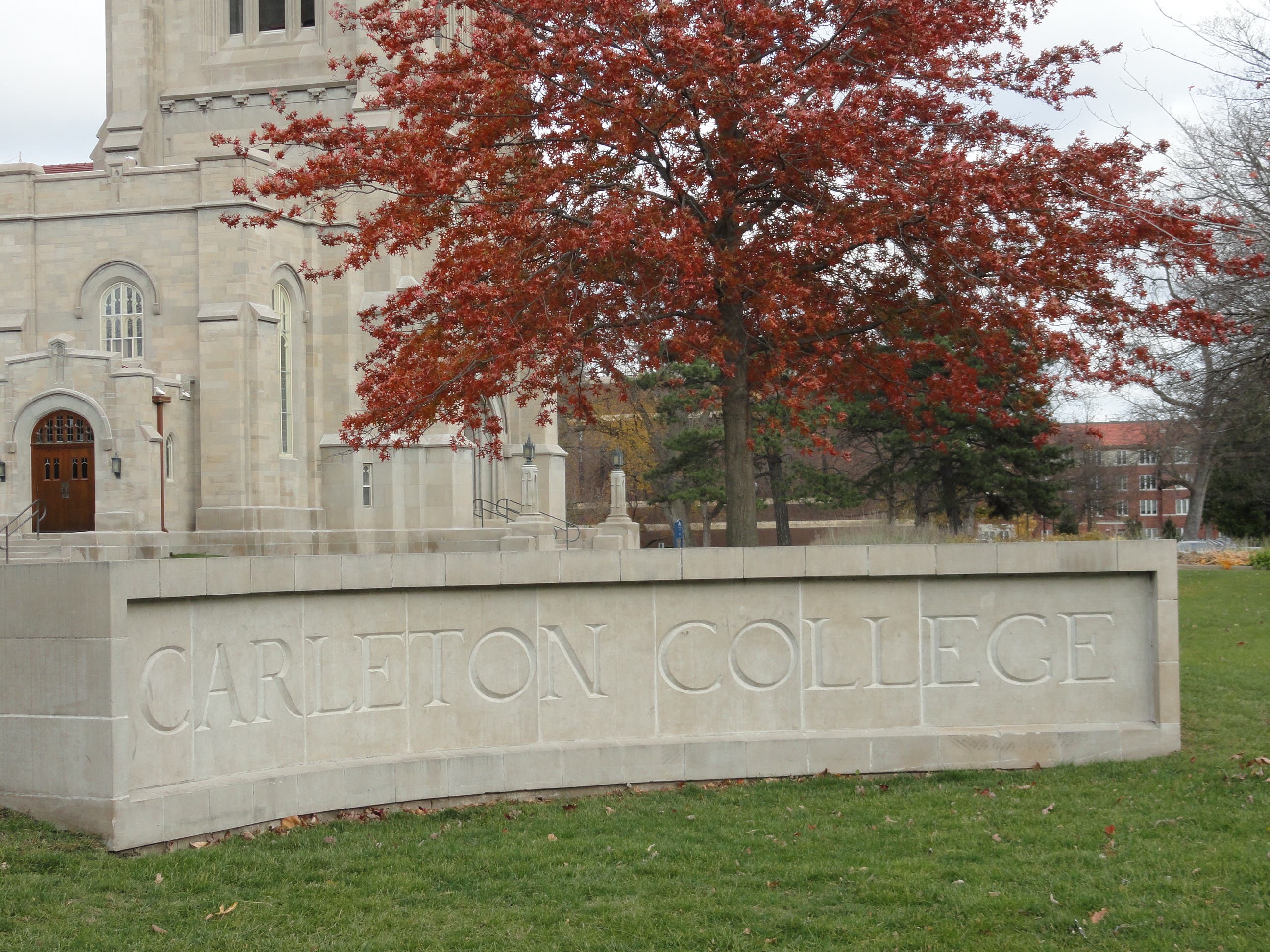
At the beginning of the 2010-11 school year, as a new class of freshman walked wide-eyed through halls, the school was in the midst of introducing a new, digital way for students to report sexual misconduct.
The online complaint form, called the Community Concerns Form, is one of the more prominent of many additions made to the school’s sexual harassment policy following a year-long discussion with students about how to make reporting and responding to cases an easier process for victims.
Past complaints were either directed to the student-run CAASHA organization, which provides one-on-one peer assistance to victims, or were made formally to the school.
Find out what's happening in Northfieldfor free with the latest updates from Patch.
Many victims, uncertain about the seriousness of their situation or fearing overly drastic disciplinary actions by the school, remained reluctant about bringing cases to the school’s sexual harassment office. Ninety percent of cases as a result went to CAASHA and no further.
In September 2008, the Campus Climate Assessment, a survey taken of the student body, indicated that 52.4 percent of students said they “understand Carleton’s formal procedures to adjudicate complaints of sexual assault,” and 51.3 percent reported feeling confident that “Carleton administers the formal procedures to adjudicate complaints of sexual assault fairly.”
Find out what's happening in Northfieldfor free with the latest updates from Patch.
The Community Concerns Form is supposed to fill in some of these communication gaps. So far, campus advocates say it’s doing just that.
“The Community Concern form has definitely made it easier to let someone in the college know that you have experienced any form of sexual misconduct, not just sexual harassment.” said Sara Cantor, the Educational Associate for Sexual Misconduct, a position that is also a part of the new sexual harassment policy. “It's a prevention tool. If you're a student, submitting a Community Concern Form will lead to a conversation with someone from the Dean of Students office, who will connect the submitter with support resources and will see if any further follow up is needed.”
Other students say the form provides a middle-ground option for the whole slew of cases that only murkily fit under the category of sexual misconduct.
“It really allows for accountability in a way that doesn’t necessarily lead to people being expelled. Sometimes it’s needed to not take such drastic measures,” said Nimo Ali, a senior sociology major who works in the Gender and Sexuality Center.
Nimo recently filled out the form after a party where she saw an intoxicated male lose his temper and grab the hair of a female student.
“[The form] gives agency to the students of Carleton who are in a bystander position,” Nimo said. “If you’re at a party and you see something inappropriate, you can stay stop, but that person might not listen. We’re policing ourselves in a way that didn’t happen before.”
Implementation of the school’s new policies is far from over.
Cantor, who is in the second half of a one-year position, said there’s a lot of work she’s doing that wouldn’t be done otherwise. Next year, she said, for the safety of students, it will have to get done whether her position exists or not.
A LOOK AT THE NUMBERS FROM FALL TERM
Submitted by:
• Students—13 (8 by peer leaders)
• Staff/Faculty—13
Concerning the behavior of:
• Students—22
• Staff/Faculty—0
• Visitors—3
• Unknown—1
Concern regarding:
• Concerning behavior (sexual in nature)—22 *
• Concerning behavior (non-sexual)—4
• Concerns where alcohol was involved—11
*Approximate number of individual incidents represented by the above numbers—16
Source: Community Concern Form