Politics & Government
Minnesota Shutdown Puts the Cannon River Watershed Partnership in Precarious Position
With the state shutdown, about 70 percent of the CRWP's funding has stalled.

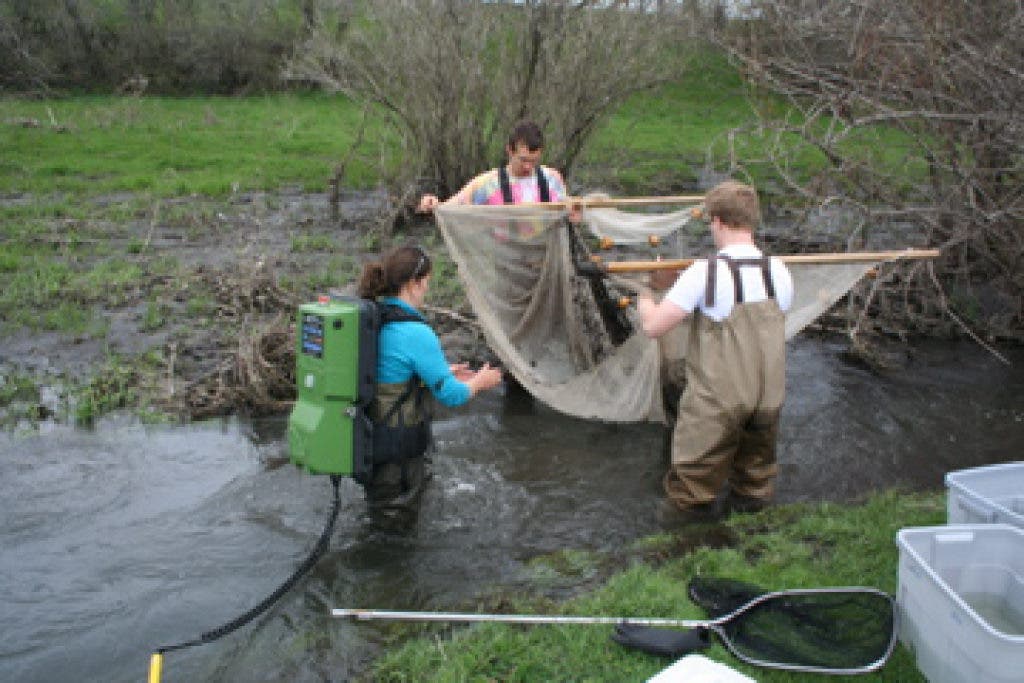
The countdown has started for the Cannon River Watershed Partnership.
With a and the subsequent government shutdown, the Northfield-based nonprofit aimed at protecting and improving the water quality and natural systems of the Cannon River watershed has seen about 70 percent of its revenue stream halted for the time being.
Those funds, which come from state and federal dollars, are passed through state agencies, like the Minnesota Pollution Control Agency, which ceased most of its operations July 1 with the majority of other state departments. The balance of CRWP funding comes from donations from individuals and groups like the McKnight Foundation.
Find out what's happening in Northfieldfor free with the latest updates from Patch.
The dilemma has left the five staff members of the CRWP wondering what time will bring—and how long their funding will last without reducing their time on the clock.
“We’re trying to be fairly conservative with our approach and taking it a day at a time,” said Beth Kallestad, executive director of the partnership.
Find out what's happening in Northfieldfor free with the latest updates from Patch.
The group has always been frugal with its dollars, Kallestad said, as it relies heavily on grants. Because of reduced funding in recent years, the organization last year downsized from seven staff members.
Matters didn’t improve last month as Kallestad received mixed messages from the state about what the partnership could and couldn’t do during a shutdown.
At first, Kallestad thought the group’s work could continue. Then they were told they couldn’t work on any state-funded projects. A week before the shutdown, Kallestad was informed the CRWP could continue work on state-funded projects but wouldn’t see any money for it until the shutdown ends. Normally, the CRWP submits monthly invoices and receives reimbursement from the state.
But that can only go on for so long as the partnership has limited cash reserves.
“It’s kind of touch and go,” Kallestad said. “It depends on how long the shutdown goes.”
July shouldn’t be a problem to get through. By mid-August, Kallestad said the nonprofit would need to draw on a line of credit to continue work. After that, hours will need to reduce for the five staff members so no one person is entirely laid off.
In the meantime, the group will continue to work on its Surface Water Assessment, Wastewater Initiative and Rice Creek Assessment projects.
The Rice Creek project is overseen by Bridgewater Township and funded through a $110,000 grant from the MPCA. The project involves many groups—CRWP, , the Minnesota Department of Natural Resources, Rice County Soil and Water Conservation, MPCA and Trout Unlimited.
Bridgewater Township received all the money upfront for the project, which will gauge the health of this rare brook-trout stream, which is the only stream of its kind in Rice County and one of only a few in southern Minnesota. CRWP will continue to receive funding for work on the project.
The Wastewater Initiative is subcontracted through the Southeast Minnesota Water Resources Board and funding is allocated by Olmstead County. The CRWP and SMWRB were approved by the United States Environmental Protection Agency, which allocates the money, to receive funding through 2015 for that grant.
However, because of cuts at the federal level, fewer dollars are now expected to go to that specific grant, which was used to stop the discharge of raw sewage into Minnesota rivers and lakes. The funding is expected to cease in October, effectively ending the project.
It’s just another blow to deal with and makes it that much more important that the state budget impasse be resolved, Kallestad said.
Down those funds, the CRWP will need to find other ways to support the percentage of that staff person’s time.
It also means the CRWP looks to its 60 volunteers to help out more with its Surface Water Assessment.
It’s a reality of how far-reaching the shutdown is, Kallestad said.
“It’s not just the 22,000 state employees who are affected,” she said. “It trickles down.”
The shutdown could spell trouble and Minnesota, forcing them to discontinue programming, cut staffing or shutter altogether, either temporarily or permanently.
Minnesota’s 3,750 nonprofits employ one of every nine workers in the state, according to the Minnesota Council of Nonprofits, earning wages of $13.2 billion in 2009. Slightly more than half of those workers—about 153,000—are in the Twin Cities metro area.
“We are hearing from a lot of our members that they are making a lot of tough decisions,” said Christine Durand, spokesperson for the MCN.
Other environmental impacts
If the shutdown lasts into the fall, Rice County officials have concerns over a needed expansion of its landfill, which is located a few miles south of Dundas.
Rice County Administrator Gary Weiers last week said the county needs to get a permit through the MPCA, which is running with a limited staff for critical functions only. Processing permits is not part of its essential services.
“This is not a short-term issue, but it could become (an issue) if the shutdown goes on for months,” Weiers told county commissioners last week.
Weiers said the project would need to happen before frost hits the ground.
“That puts us in a situation where we may not have the capacity at the landfill to receive material,” he said, which could make it a “crisis.”
Waste would likely need to be transfered outside of the county, which could be costly.
Nerstrand-Big Woods State Park, DNR closed
The shutdown of state government means most Department of Natural Resources operations ceased until a budget deal is in place, and the task of patrolling the state’s waterways will fall to just 186 conservation officers.
State parks, recreation areas and campgrounds are also closed until further notice. All were locked at 4 p.m. June 30.
Statewide, 73 state park and recreation areas closed, as did 40 state forest campgrounds, according to Courtland Nelson, director of the DNR Division of Parks and Trails. This includes Nerstrand-Big Woods.
“We are discouraging people from coming into the parks while we’re closed because there won’t be emergency services—no staff to respond to injuries, no water or sanitary facilities,” he said. “While we discourage activities in parks while we are gone, some people will come in, so hopefully those people will be kind to the parks and not cause damage."
Just about all of the DNR’s 2,500 employees are going without pay for the duration of the shutdown, and no fishing, boating, hunting or ATV licenses will be issued until the state government resumes operation.
More than 36,000 fishing licenses were sold statewide on June 30, more than 2.5 times the number sold on the same day a year earlier.
This is the first time in the DNR's history that the agency has ceased virtually all of its operations and services.
The DNR made contingency plans for a state shutdown back in 2005, but implementation wasn't needed because the DNR’s budget was approved prior to the state government shutting down.
WOULD YOU LIKE TO DONATE TO THE CRWP?
Click here.
Get more local news delivered straight to your inbox. Sign up for free Patch newsletters and alerts.