Politics & Government
What Minnesota’s New Sports Concussion Law Means For You
In Part I of a three-part series, Patch dissects how a new law changes the diagnosis and recovery steps for concussions in youth sports
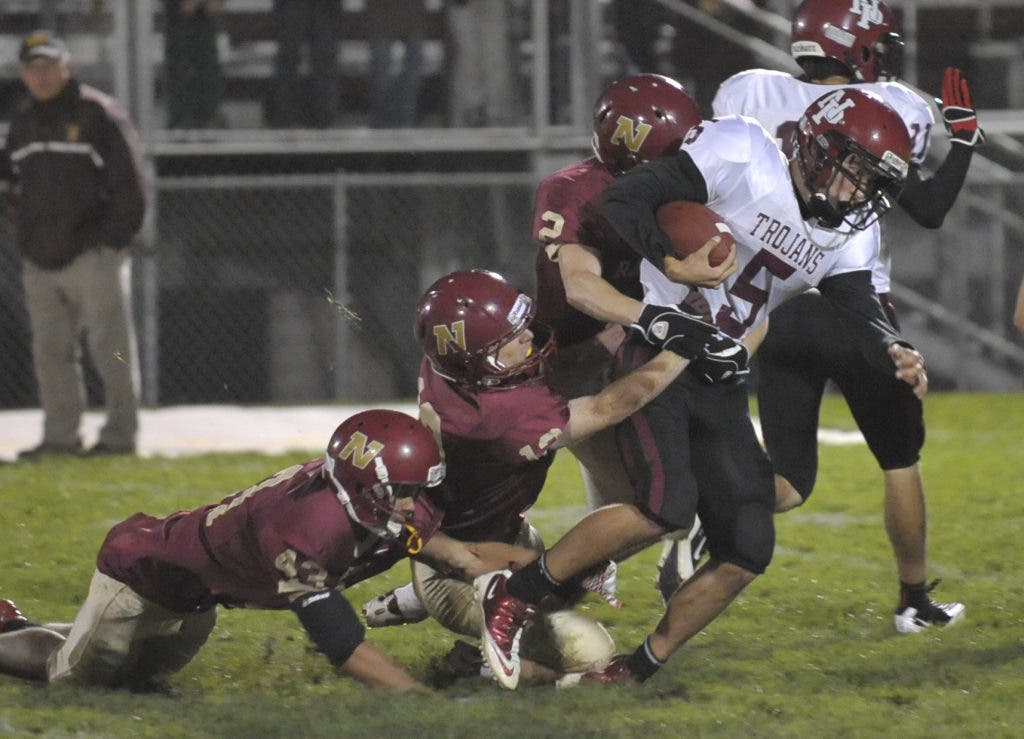
Editor's Note: This story is part one of a three-part series examining the new state law on sports-related concussions in Minnesota youth sports. Tomorrow's article will focus on concussion recovery; Wednesday's will examine a key testimony that helped get the law passed.
Within the last decade, both sons of Minnesota state Sen. Terri Bonoff (DFL-Minnetonka) suffered severe concussions while playing sports.
One, who ran head-on into another baseball player at home plate, had lingering effects for a year and a half, making it hard to concentrate in school. The other, who suffered an injury while playing football, had to give up the sport.
Find out what's happening in Northfieldfor free with the latest updates from Patch.
My son “would just keep repeating phrases,” Bonoff said. “He sounded like Rain Man. It was very scary. We didn’t know what was going on.”
Now, a new state law co-authored by Bonoff, should make students, parents and coaches more aware of the dangers that concussions present to young athletes—and not just in football. Gov. Mark Dayton’s signature on the bill in late May came during a period of increased awareness of sports-related concussions nationwide.
Find out what's happening in Northfieldfor free with the latest updates from Patch.
The law went into effect for high school athletics in mid-August and for youth sports Sept. 1.
“I think it is a good law and is basic common sense,” said football coach Bubba Sullivan. “If a kid has a concussion, they cannot play until cleared by a doctor or health professional is a no-brainer. It protects kids and coaches.”
Northfield's activities director, Tom Graupmann, called the new law “adequate,” in that it educates the public about the issue of concussions.
“Being educated helps us all make informed decisions,” he said.
A concussion is a traumatic brain injury that changes the way the brain functions and is often caused by a blow to the head, according to Heather Bergeson, a sports medicine physician at the TRIA Orthopedic Center in Minneapolis. In Minnesota athletics, football is the leading cause of concussions, but head injuries are common in all forms of competition.
A Minnesota Department of Health study by Dr. Leslie Seymour and Jon Roesler showed that during competition between 2004 and 2007, male athletes in Minnesota annually suffered 130 concussions in football, 84 in hockey, 45 in baseball and 38 in basketball and soccer. For girls sports during the same time period, there were 16 concussion in hockey, 15 in soccer and eight in basketball.
Northfield’s Graupmann and Sullivan said they have not seen evidence say there are more concussions among youth athletes now as compared to past years.
“I am not basing this statement on research,” said Graupmann. “I believe we might be seeing less concussions than in the past, and certainly, concussions are being identified and dealt with better today than years ago.”
The bill originated in August 2010, when the Brain Injury Association of Minnesota brought the issue to Sen. Michelle Benson (R-Ham Lake), whose own nephew, as well as the son of a close friend, suffered from a sports concussion.
“It’s hard for kids to know if they have a concussion,” Benson said. “We want them to know it’s OK to step back for a bit.”
The new law pertains to the high schools and the organized youth leagues in Minnesota.
What the law means for youth sports:
- Information about concussions should be made available to high school and youth league coaches, officials, athletes and their parents. This is intended to help everyone involved in sports become more aware of concussions, so parents such as Bonoff can better deal with the injury.
- Coaches and officials participating in organized sports programs must complete an online training exercise provided by the Centers for Disease Control and Prevention which discusses the risks, treatment and potential effects of sports concussions.
- A player who has been removed from a sport with a possible concussion must be examined by a physician, and must be certified as having no symptoms of the concussion before returning to the sport. This is meant to reduce the frequency of second concussions before an athlete recovers from the first, which can cause more damage.
“How many concussions is too many? We don’t know,” said Heather Bergeson, a sports physician at the TRIA Orthopaedic Center. “We do know that youth tend to develop more long-term symptoms than adults.”
— Northfield Patch freelance reporter Michael Garlitz contributed to this report.
TODAY (Part I): The origins of the new Minnesota concussion law
TOMORROW (Part II): Why proper recovery steps are important to an athlete’s long-term health
WEDNESDAY (PART III): How one young woman’s testimony helped get the law passed, and how it affects youth sports