Neighbor News
Is Your Workout Killing You?
Contrary to popular belief, endurance training and cardio can be damaging to your adrenal, hormonal, and overall health, and here's why...
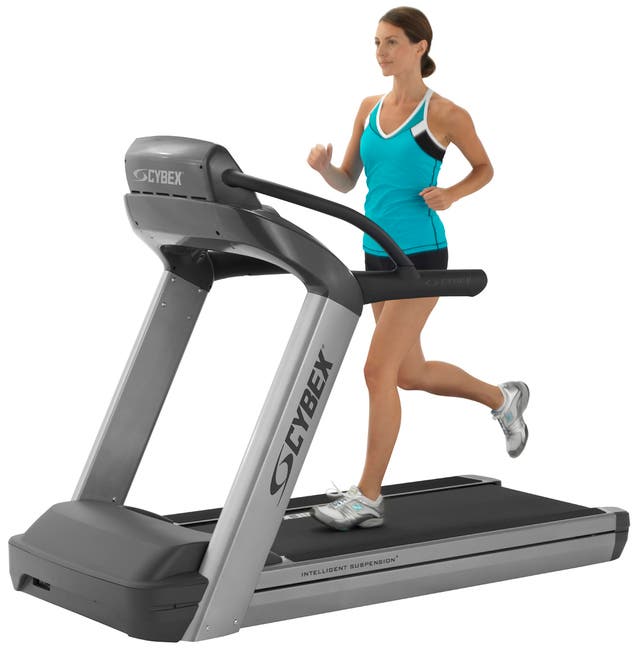
We’re all told that “working out”—that hard and lengthy exercise three to four times a week—is paramount for optimal health. Cardio’s king, man: the treadmill, distance running, stair-stepping, spinning, cycling, rebounding, rowing, swimming laps, jumping rope…do it all for at least an hour straight, no less than three to four days a week! This approach is the foundation of vitality and longevity. Just ask the typical fitness “expert” or American physician.
But what if this advice was pure hogwash? What if I told you that the notions being prescribed by modern-day, mainstream “health” sources are indeed killingyou, slowly but surely?
Well, I’ve got news for you: they are!!
Find out what's happening in Northfieldfor free with the latest updates from Patch.
I could begin by telling you that real science indicates modern “cardio”—that is, endurance training of more than 20 minutes, non-stop—is doing little more for you than shrinking your heart and lungs. Although a fact, that’s not the focus of this article. Thus, I won’t elaborate further on that matter amid this particular space. (But these studies should help reinforce that concept.)
Instead, this piece will focus on two other detrimental aspects associated with modern cardio/endurance training—those which are also robbing you of your life-force.
Find out what's happening in Northfieldfor free with the latest updates from Patch.
The first of these two aspects is that of adrenal dysfunction/fatigue. No, it’s not just that your adrenals “get tired” because you work out; it’s much more complex. In reality, each time your adrenals perceive you to be in danger—each time they suspect a threat to your survival—they produce excessive amounts of cortisol. What is cortisol? Cortisol is a hormone that acts as a “buffer” in stressful times; it helps you adapt to and deal with stress.
Believe it or not, your body—which is not designed for long bouts of exercise but instead short and intense bursts (this is rooted in our original hunter-gatherer make-up)—perceives “endurance” exercise as a threat to your survival. Therefore, every time you undertake such an activity, you’re signaling your adrenals to produce excess cortisol, so as to deal with “the threat.”
Now, the longer, and more often, you’re under this “threat,” the more your adrenals are asked to perform such a task. And the longer, and more often, they’re asked to perform such a task, the more chronic the condition becomes.
And by its very nature, chronic stress, whether it be external or internal, causes adrenal dysfunction, as the adrenals begin to fatigue and thus have a more and more difficult time not only producing excess cortisol (as a “buffer” to deal with the threat) but sufficient cortisol (to deal with life in general).
And if you can’t produce sufficient cortisol, you’re bound to experience a cascade of other hormone issues, including those associated with inadequate testosterone, progesterone, and DHEA measures, as well as subsequent health issues, which can range from chronic fatigue to digestive disorders to autoimmune disease to catabolism (muscle atrophy) to bone loss to infertility to insomnia to deflated libido to vaginal dryness to migraines to hair loss to constipation to moodiness to…
Well, you get the idea.
The second element of my argument is that of oxidative stress. What isoxidative stress? In roughly the same manner that an apple core turns brown or metal rusts, oxidative stress corrupts human cells. And excessive exercise elevates lipid peroxide counts…which means it increases oxidative stress! As a result, you age much faster than you should practicing an otherwise healthy lifestyle. In fact, excessive exercise/endurance training causes oxidative stress in much the same fashion as does alcohol abuse and cigarette smoking. 
And while this oxidative stress is caused by the external stress of endurance/excessive training, the oxidative stress itself (in the mother of all irony) acts as an internal stressor responsible for causing further adrenal dysfunction and hormone disruption.
Now, how can all of this result in your workout actually killing you? Well, aside from shrinking your heart and lungs, let’s simply look at this from a cortisol and oxidative stress angle: the further you get down the three-phase adrenal dysfunction road, the closer you are to death…which results when you simply run out of enough adrenal strength to produce viable cortisol measures.
The bottom line? There are, in fact, two morals to this story: 1.) Despite what fitness old timers might have you believe, excessive exercise, otherwise known as “cardio,” is just no good for your long-term health; and 2.) if you do endure strenuous workouts and/or cardio on a regular basis, and you aren’t feeling as good as you should, and you really want to know what’s at the root of your health issues…
Never guess; always test.
P.S. I invite you to download my eBook, 27 Things CRUSHING Your Hormones, for free here.
REFERENCES
Cook DG, Shaper AG, Breathlessness, lung function and the risk of heart attack. European Heart Journal. 1988;9(11):1215–1222.
Liu M, Bergholm R, et al. A marathon run increases the susceptibility of LDL to oxidation in vitro and modifies plasma antioxidants. American Journal Physiology – Endocrinology and Metabolism, 276: E1083-E1091, 1999; 0193-1849/99.
Williams P. Relationships of heart disease risk factors to exercise quantity and intensity. Archives of Internal Medicine. 1998;158:237- 245.
Tabata I, Nishimura K, et al. Effects of moderate-intensity endurance and high-intensity intermittent training on anaerobic capacity and VO2max. Medicine & Science in Sports & Exercise. 1996 Oct;28(10):1327-30.
Nitti Joseph. The Interval Training Workout: Build Muscle and Burn Fat with Anaerobic Exercise. Hunter House Pblrs. 2001
Truelsen T, Prescott E, et al. Lung function and risk of fatal and non-fatal stroke. The Copenhagen City Heart Study. International Journal of Epidemiology 2001; 30:145-151.
Sedlock, Darlene, et al. Effect of exercise intensity and duration on postexercise energy expenditure. Medicine & Science in Sports & Exercise. 1989.