Driving north recently, the leaves were so brilliant I could hardly keep my eyes on the road. Low-slung sumac in intense garnet tones provided the base for taller gilded leaves of poplar and ruby-toned maples.
Oaks displayed amber tones, adding their hues to the jewelbox of a Minnesota autumn.
Exactly a year ago, I traveled the length of Vermont just at this peak season, and the foliage was gorgeous, but this year, our state has equaled New England for glorious color.
Find out what's happening in Rosevillefor free with the latest updates from Patch.
However, what was missing, when I pulled into the yard of my northern lake house, was the clear yellow of birch leaves. One of my favorite photos was taken more than 40 years ago, on a logging road nearby, where a canopy of yellow birch, dazzling in the sunlight, created a crown of autumn glory.
When birches added to the mix of maples, poplar, oaks and pines along the road leading to the cabin, a long-ago visitor from New Zealand, in awe of the color, said she thought such glories were only in the imagination of artists.
Find out what's happening in Rosevillefor free with the latest updates from Patch.
But now, in the aftermath of birch borer disease, the once-vibrant trees with their curling white bark are ghostly skeletons in our up-north woods. They haven't sprouted leaves for years, and the trunks stand upright, bare and broken, midst the living forest. When they finally fall, they are punky to the core.
My lake neighbor once described birches as weeds, eager to grow anywhere in the north. Now, after their demise, they are standing silent proof of the vulnerability of our woods.
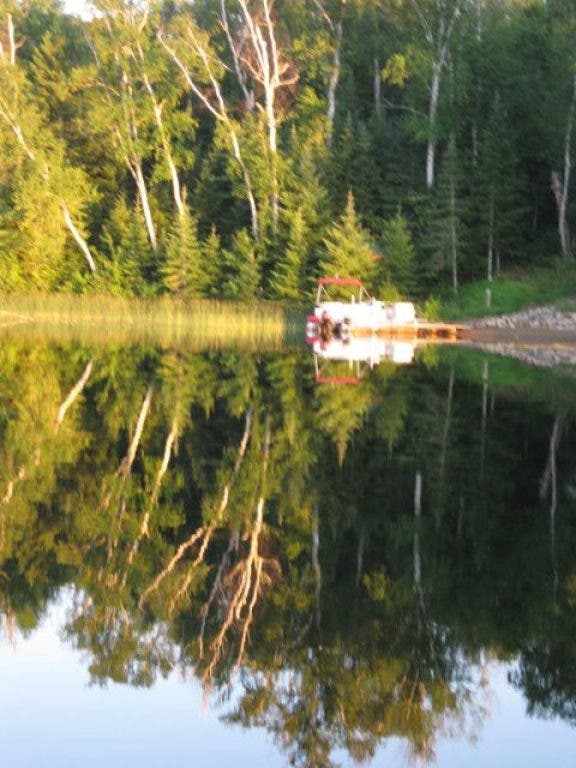
During a pontoon ride around the lake in August, when the photo accompanying this story was taken, the only living birches we saw were on an island. Perhaps birch borers couldn't swim. I can only hope that the few birch that survived elsewhere have an immunity that might one day repopulate those woods with a more resistent generation.
This got me to thinking about the attacks our trees always seem to be facing.
Our first house was on Lincoln Avenue in St. Paul's Crocus Hill area, and I remember, after we purchased it in 1966 as newlyweds, how beautiful it was to drive under the elm branches, which reached from either curb to arch over the middle of the street.
Then, in the 1970s, Dutch Elm disease found St. Paul's trees ripe for invasion. Sure, the trees were old, maybe facing their last decades, but Dutch Elm hastened their deaths. We lost two boulevard trees and a couple of monsters in our back yard, despite pumping them with potions that we hoped might forestall the inevitable. No miracles happened.
In the mid-1970s, I served as co-chairman of the St. Paul Junior League's 60th anniversary celebration, and we decided to give back to our city by planting trees along Summit Avenue to compensate for Dutch Elm devasation. On the advice of forestry experts, we planted a variety of of species -- among them Ash. Now Summit Avenue is the new battleground against the Emerald Ash Borer, and maybe those trees we planted are among the ones being felled. So sad.
Last winter, when Lake Josephine was still icebound, I looked out one morning to see that a tree I thought was on my shoreline had been cut down. I called my neighbor to find out what she knew, ready to do a little screaming if they'd chopped down my tree, even though a large branch had fallen into the lake the previous summer.
My neighbor informed me that, since tree surgeons were working at another nearby house, her husband had decided to take it down, certain it was on their side of the property line. When she told me it was an Ash, I decided to curb my irritation. Downing trees is a pricey project, and if it had to go, better they paid for it.
So now our region is trying desperately to stop this latest scourge. Ash trees are being mowed down wherever beetle infection is suspected.
The latest effort is the release of non-stinging wasps which are said to find the borer's larve quite tasty. I hope they do their job better than the useless medications we used on our elms, and don't prove to be a residual nuisance down the road.
I fear for the worst. Minnesota is loaded with ash trees, as it was once rife with birch. If there's an upside, expect full employment in the tree-cutting industry.