Community Corner
We Shall Study War: Wars Are Not About Justice
Forgiving enemies is sometimes the smoothest way forward.


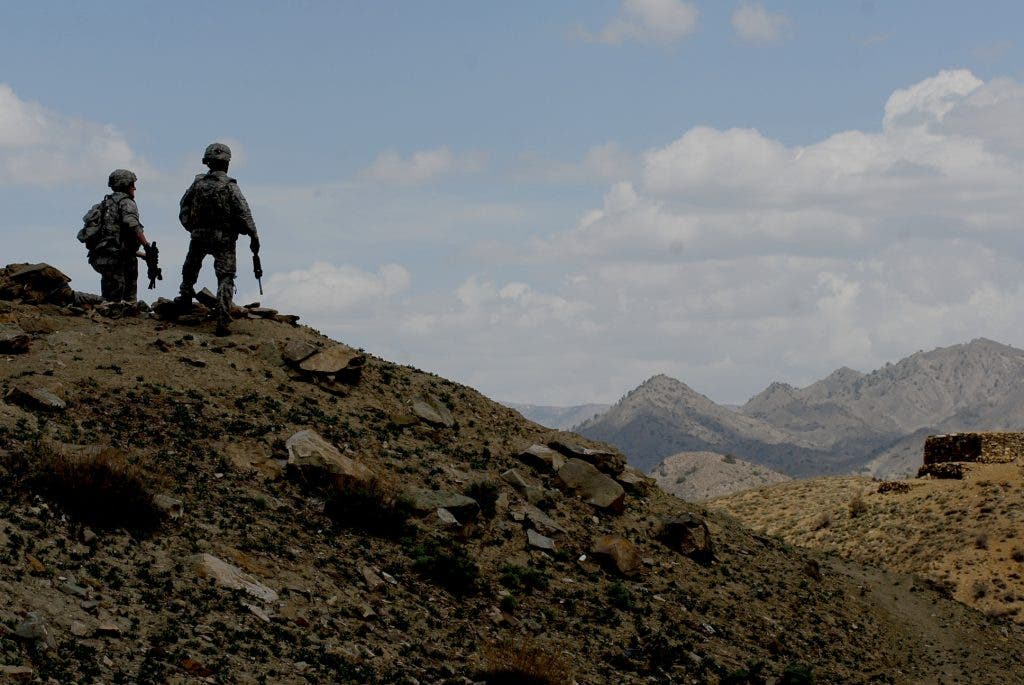
(Editor's Note: As we approach Memorial Day, Hopkins Patch local editor James Warden has been chronicling his service in the military and exploring different aspects of war. This is latest post in his series.)
The sergeant went to house-to-house talking to neighbors. He knocked on the doors, removed his glove to shake the residents’ hands and then spoke politely to them through an interpreter.
“We just want to know if you saw anything,” he explained. “Thanks for your time.”
Find out what's happening in Rosevillefor free with the latest updates from Patch.
Take away the body armor and the assault rifle, and he could’ve been a police officer asking neighbors if they witnessed a fender bender.
But it wasn’t a car crash. A few minutes earlier someone in an alley across from the homes detonated a roadside bomb .
Find out what's happening in Rosevillefor free with the latest updates from Patch.
“I’m so mad right now,” the soldier confessed when I marveled at his calm.
It stretched the imagination that no one in the homes knew anything about the bombing. There’d been multiple attempts in the same area before. In Baghdad’s dense Sadr City neighborhood, someone had to have seen something.
Was there not any justice for the fallen soldier?
But war is not about justice. War is about pragmatism.
In a counterinsurgency campaign, pragmatism comes down to simple math: Are you eliminating more enemies than you create?
With such arithmetic, the population’s perception of justice is most important. The majority of people in any conflict will be fence-sitters. Even if they sympathize with insurgent groups, few will start out as actual militants.
The insurgents’ goal is to persuade the people to join the fight against the government or occupying forces—if only passively by not reporting militant activity. The counterinsurgents’ goal is to persuade the people that they’re the best hope for the future.
A vital part of this is working through the country’s judicial process in order to emphasize the triumph of law over a code of vengeance that may have driven the conflict.
After the Iraqi-American security agreement took effect in 2009, U.S. forces in most cases had to obtain Iraqi warrants if they wanted to detain a suspected insurgent. That was more difficult than just relying on their own intelligence—not least because the Iraqi system valued sworn statements over high-tech evidence. But it aimed to convince citizens there was an established government they could trust to be fair.
(Although whether that was actually true is debatable.)
Inevitably, known insurgents went free. Partly this was because, as in civilian prisons, indefinite detention was the exception. Beginning in 2008, the military released thousands of detainees—again, to communicate a return to normalcy.
But even some who avoided capture got a get-out-of-jail free card. The military set up a formal reconciliation process where former fighters could be forgiven as long as they hadn’t committed war crimes. The goal was to convince militants to lay down their arms and rejoin the political process—the No. 1 way terrorist groups end.
When I visited one rural area south of Kirkuk, 263 people had requested reconciliation and 186 had been accepted. A successful reconciliation candidate freely admitted to attacking American soldiers—but also said he was tired of fighting. Reconciliation gave him that option and made the soldiers’ jobs easier.
"This is a pretty unique thing we’re trying," the battalion commander told me. "We are breaking weird ground here."
Just three months before the Sadr City bombing, I witnessed another encounter with justice—this time in Baghdad’s Ghazaliyah neighborhood.
Soldiers learned about the return of a rising insurgent leader suspected in a string of bombings, drive-by shootings and sniper attacks. The man, who led a youth insurgent group affiliated with al-Qaeda, had eluded soldiers for a month.
They got a tip he was at a friend’s home studying for an upcoming final. He led them on a chase through Ghazaliyah’s narrow alleyways and appeared poised to make another escape. But this time, the soldiers had help from the neighbors. When the man tried to blend in with a local family—clearly expecting sanctuary—the head of the family instead pointed him out to soldiers.
Not long before his capture, he would’ve had a shot at escape. USA Today called Ghazaliyah one of Iraq’s most violent neighborhoods in 2007. But by 2008, the people were sick of fighting.
They, too, were mad.
***
Be sure to check out the entire series:
- May 22:
- May 23:
- May 24:
- May 25: Wars are not about justice.
- May 26: Worthy goals undermine one another.
- May 27: Wars are not bipolar.
- May 28: Wars are not about victory.
Stay up to date on all your local news. Sign up for the free Hopkins Patch newsletter, like us on Facebook and follow us on Twitter and Editor James Warden's Pinterest boards. Do you own a local business? to learn about five easy ways your business can use Patch.
Get more local news delivered straight to your inbox. Sign up for free Patch newsletters and alerts.