Community Corner
Mdewakanton Sioux Scholar Finds Home in Social Work
Korina Barry was the first to get a masters degree after receiving the Shakopee Mdewakanton Sioux Community Scholar award.
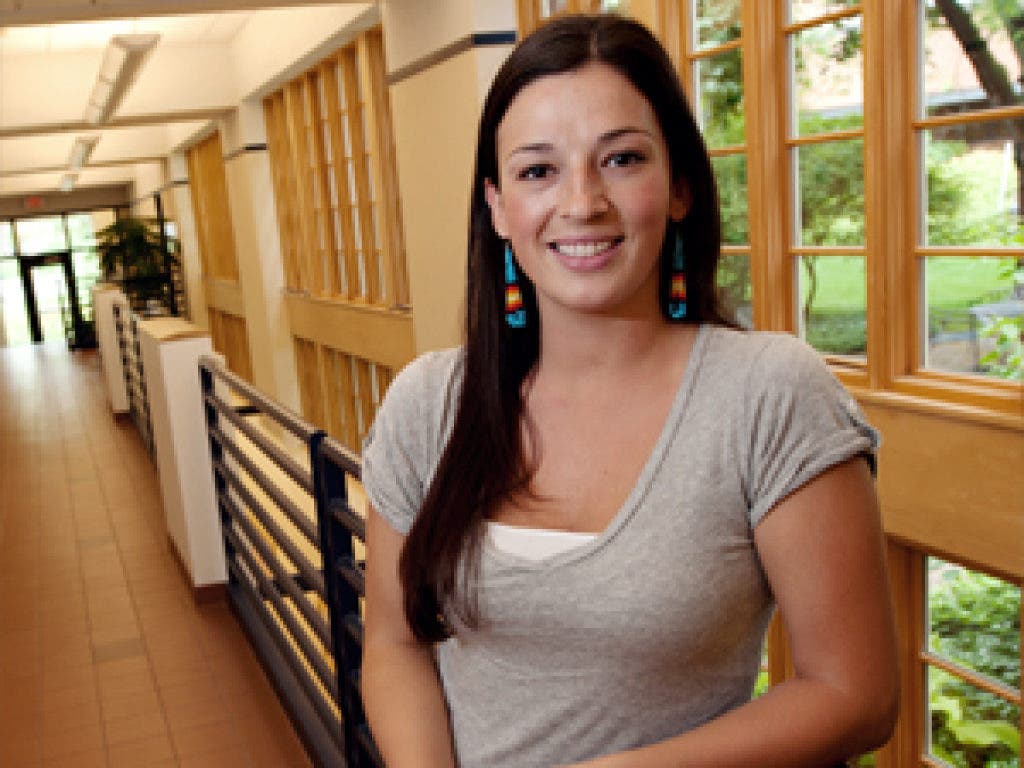
Kicked out of high school and living from couch to couch, Korina Berry may not have seemed like a natural scholar. But after some encouragement from a school counselor, Barry applied and won the Shakopee Mdewakanton Sioux Community Scholar award, later receiving her master's degree in social work from the University of Minnesota. She is the first student to earn a degree under the scholarship.
Speaking frankly about her experience as a struggling Native American youth in South Minneapolis, Barry said the scholarship—one of many she earned—was indispensable to finishing her education at the university.
The scholarship program is designed to recruit and retain American Indian students who have demonstrated financial need. But Barry almost didn’t get into college in the first place. She was denied admission to the University of Minnesota and had to appeal that decision in order to become a freshman, said Jillian Rowan, who works both at the admissions office and as the American Indian Outreach and Special Programs Coordinator.
“She wasn’t even thinking about going to college until junior or senior year of high school,” Rowan said. But, after asking the admissions coordinators to take a chance on her, Barry proved she was a good investment, keeping a B average. Barry’s admission was “a good decision,” Rowan said.
“At a glance, she would look typically like a student that would not be admitted to college,” she added.
Barry now works at the Indian Child Welfare Act long-term foster care unit at Hennepin County, helping other young people who are having difficulties similar to hers.
“I always wanted to give back and help my community, and I thought that social work was the best way to do that,” Barry said.
NATIVE UNDERSTANDING
Barry has never had it easy.
Find out what's happening in Shakopeefor free with the latest updates from Patch.
Some close family members have been in and out of prison, and Barry moved from home to home as a child. She said she’s knows what many Native American children are experiencing in the Hennepin County system.
“I felt like (social work) was something that I had experience with personally," she said. "I think people can go into these fields and not have that experience. But I understood that."
As half Native American, Barry said she identifies with that heritage more than anything. Participating in Pow Wows and other cultural events as a child, she said, “I’ve always identified with that. I’ve always been raised around the community.“
“(They) are struggling like I struggled or worse,” she said of the youth she works with. “When they are graduating college, getting jobs, taking care of their children, that’s enough motivation to keep me doing this.”
There is a large number of Native American children in the longterm foster care program, Barry said, and with that community comes negative misconceptions about social workers and their place in a family.
Find out what's happening in Shakopeefor free with the latest updates from Patch.
“There’s always been this notion that they come into your house and take your families. I kind of wanted to change that. I want to keep your families together,” she said.
Rowan said she had no doubt Barry would take a job within her community.
“She’s the type of person that really wants to give back. She never came across as a person that would get a job just for the paycheck. There has to be some meaning to it,” Rowan said. “It has been so neat to see her come from a freshman at college, to a beautiful, strong, Native woman. I’m one of her biggest fans.”