Crime & Safety
Amir Locke's Cousin Pleads Guilty In Case That Led To Deadly Raid
Amir Locke was not a suspect in the case, but he was shot and killed by police during a no-knock warrant search of his apartment.


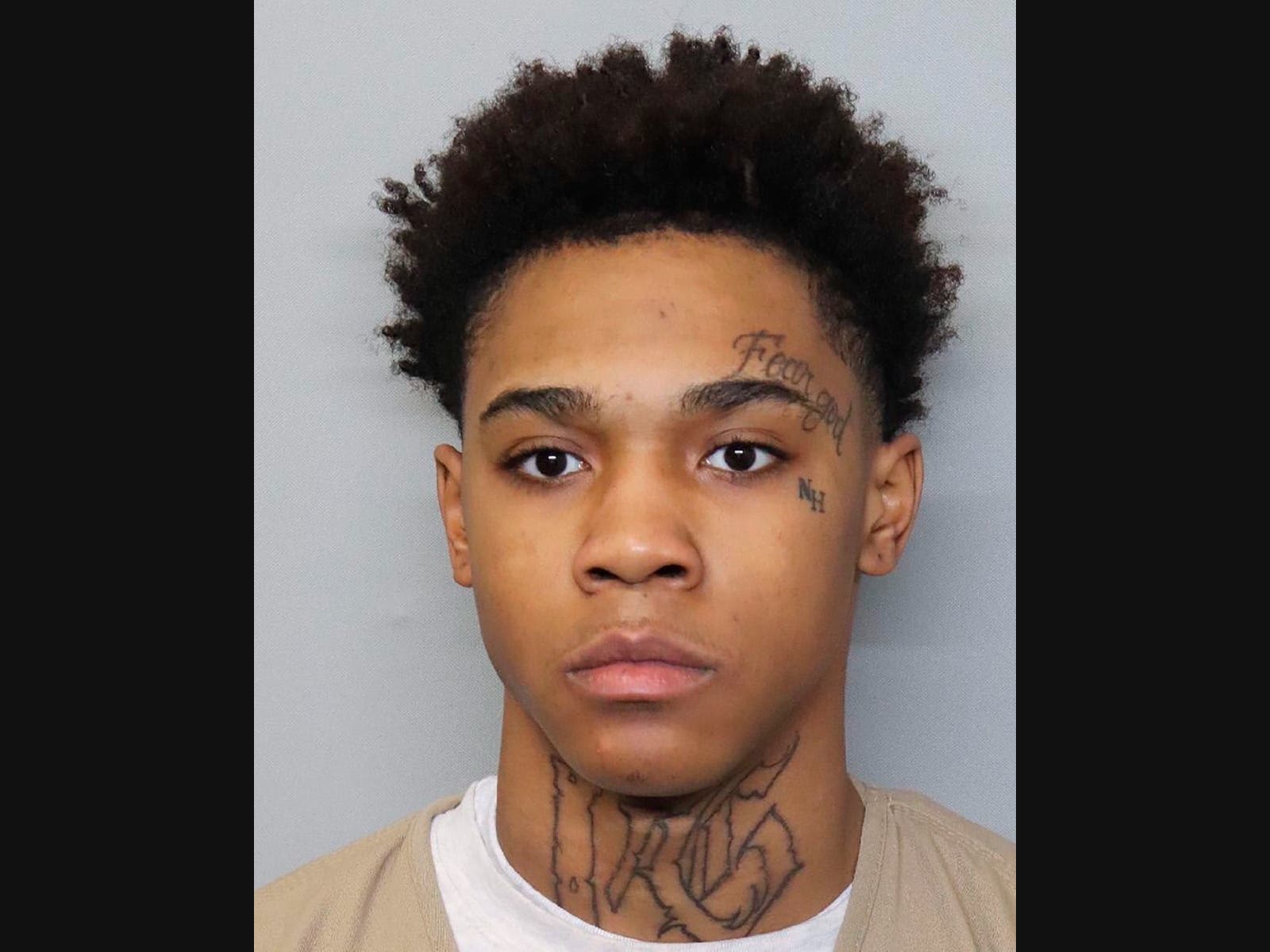
MINNEAPOLIS — A cousin of Amir Locke — the 22-year-old killed by Minneapolis police during the serving of a no-knock search warrant in February — has pleaded guilty in a homicide case.
Mekhi C. Speed, 18, pleaded guilty Friday to aiding and abetting one count of second-degree murder in the Jan. 10 killing of Otis Elder, 38. Elder was fatally shot in Saint Paul's Hamline-Midway neighborhood in January.
Speed told the court he had a handgun when he and others tried to rob Elder of drugs in the Midway neighborhood of St. Paul. However, Speed claimed that he had no memory of pulling the trigger.
Find out what's happening in Southwest Minneapolisfor free with the latest updates from Patch.
Speed was 17 years old at the time.
The Elder case is the same case that prompted Minneapolis police to raid an apartment that Locke was at on Feb. 2, where an officer fatally shot him within seconds of entering.
Find out what's happening in Southwest Minneapolisfor free with the latest updates from Patch.
Locke was not the subject of the warrant, which was executed on behalf of the St. Paul police homicide investigations team.
Speed did not live in the unit where Locke was killed, but he did live in the same Bolero Flats apartment complex at 1117 South Marquette Avenue, police said.
In April, Hennepin County Attorney Michael Freeman and Minnesota Attorney General Keith Ellison declined to file criminal charges in Locke's death.
"He should be alive today, and his death is a tragedy," read a joint statement from Freeman and Ellison.
"After a thorough review of all available evidence, however, there is insufficient admissible evidence to file criminal charges in this case. Specifically, the State would be unable to disprove beyond a reasonable doubt any of the elements of Minnesota's use-of-deadly-force statute that authorizes the use of force by Officer Hanneman. Nor would the State be able to prove beyond a reasonable doubt a criminal charge against any other officer involved in the decision-making that led to the death of Amir Locke."
Locke's killing reignited criticism of the Minneapolis Police Department and the use of no-knock warrants from both police reform and gun rights activists.
Mayor Jacob Frey also drew criticism over his reelection campaign website, which falsely claimed that the mayor had banned no-knock warrants in Minneapolis.
Frey later acknowledged that, "as more and more people and outside groups began weighing in, language became more casual, including my own, which did not reflect the necessary precision or nuance. And I own that."
While the mayor did update the city's policy on no-knock or "unannounced entry" warrants in 2020, they were not banned. Frey handily won a second term on Election Day in November.
In April, Frey announced a new ban on no-knock warrants.
Reporting from the Associated Press was used in this report.
Get more local news delivered straight to your inbox. Sign up for free Patch newsletters and alerts.