Health & Fitness
Who Are These Villagers?
Now that the Linden Hills corner plan has been defeated, what's next for this village? Who are the people who are so compelled to protect it?
As you may have read here on the Southwest Patch, ...for now.
This has been a controverial plan with passionate people on both sides of the fence.
It has also caught the eye of many outside of Southwest Minneapolis, including Adam Platt, who wrote a column in the February issue of the Minneapolis St. Paul Magazine, deriding the citizens who worked hard to oppose the planned development. He describes Linden Hills dwellers as "ex-hippies [who] talk about community while they put up walls to economic diversity."
Find out what's happening in Southwest Minneapolisfor free with the latest updates from Patch.
Ouch.
But I have to say, his words gave me pause.
Find out what's happening in Southwest Minneapolisfor free with the latest updates from Patch.
I had to think and take a look around: Who are these villagers, who are so passionate about saving our village?
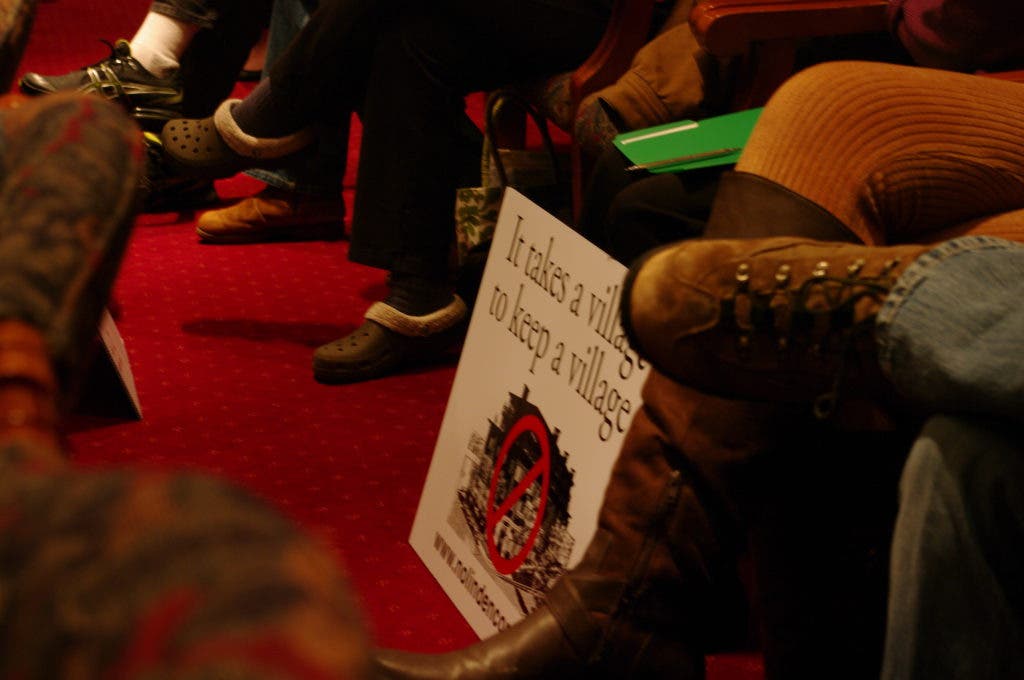
Their homes are easy to spot; they're the ones with the "It takes a village to keep a village" sign in their front yard.
And then the irony hit me.
So many of these signs are in front of homes that I can guarantee you were not part of the original plan of the Linden Hills "village."
Yes, I do see these signs in front of original Linden Hills homes as well, those that were built in the 20's or the 50's. This is not a scientific poll -- I'm sure there are a lot more supporters who never put a sign in their yard. But the overall impression that I got was that many of the most passionate supporters were those for whom building variances may have been approved for their own homes.
So many of these homes were maybe 5 or 10 years old, tops. These homes tower over their neighbors' homes. Some are so enormous that the only grass on the entire lot is a 5-foot square patch in front, where they proudly stuck their "It takes a village to keep a village" sign.
Building requirements are that homes are at least 10 feet from the lot line, but I've seen homes go up that appear to be 10 feet from EVERY lot line except the one facing the street.
I see more of these tear-downs happening now that the economy is beginning to turn around again, and it saddens me. We are losing a little piece of history every time that happens, and house by house the inventory of homes in this area is changing. If this trend continues, in 50 years Linden Hills will look nothing like it does today, and certainly nothing like how it was originally conceived and built. In some ways that could be a good thing. After all, many of our homes have detached garages because back when they were built transportation options were either trolley or horse and buggy. It's called progress.
But doesn't it seem hypocritical to allow change to our own homes in order to "progress," but not allow other elements of the neighborhood around us to change along with us?
The other point that Adam Platt and the supporters of the development made is that a higher population density can better support the kinds of businesses that make Linden Hills special and unique. In other neighborhoods, small businesses are suffering from the lack of traffic as competition in other areas of the city draw people out of the area to shop and dine.
We are fortunate in that business owners in our area have been able to keep their doors open based on the foot traffic of the neighborhood, or because they've created a one-of-a-kind experience that people go out of their way to visit. But as our homes become bigger and the values continue to rise while they fall elsewhere in the city, will we have the right population here to support our local businesses?
Clearly the plan that was put forth for 43rd and Upton was not the right one or it wouldn't have drawn the venom of the local neighborhood. As for me, I'll be watching the next steps carefully and putting my support behind the plan that does allow for economic and population growth for our village.