Politics & Government
Derek Chauvin Denied Public Defender For Appeal Process
Former Minneapolis Police officer Derek Chauvin is currently trying to appeal his murder and manslaughter conviction.


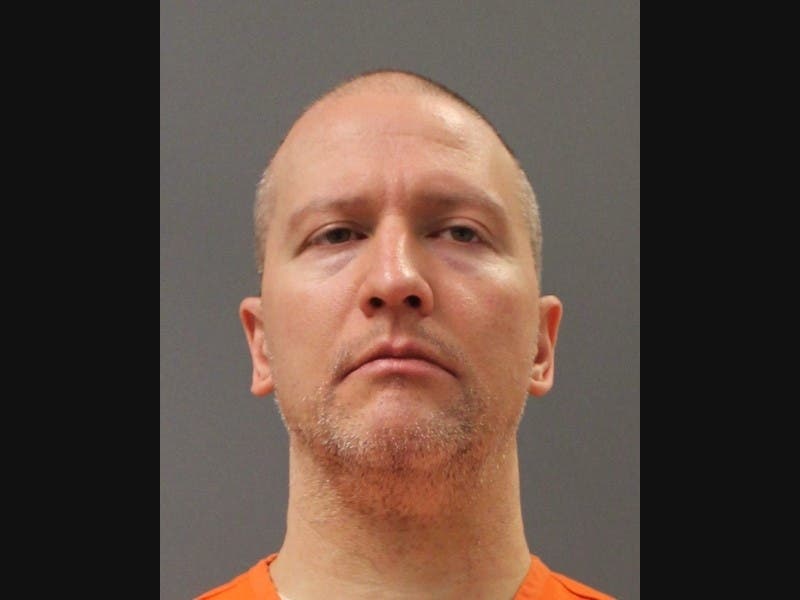
MINNEAPOLIS — Former Minneapolis police officer Derek Chauvin was denied a public defender Wednesday by the Supreme Court. Chauvin, who was found guilty of murder and manslaughter in George Floyd's death, is currently representing himself while he appeals his conviction.
Under Minnesota law, a defendant can only receive public representation if he is unable to afford a private lawyer.
"We conclude that Chauvin has not established that he is entitled to appointed representation at this time," Chief Justice Lorie Gildea ruled Wednesday.
Find out what's happening in Southwest Minneapolisfor free with the latest updates from Patch.
Chauvin was represented by a private attorney up until his conviction. However, the Minnesota Police and Peace Officers Association is no longer paying his legal fees, the Star Tribune reports.
Chauvin's appeal
In his appeal, Chauvin cites over a dozen reasons for why his conviction should be overturned, including "prejudicial prosecutorial misconduct."
Find out what's happening in Southwest Minneapolisfor free with the latest updates from Patch.
Chauvin also claims that the court "abused its discretion" when it denied his request to sequester the jury during the trial.
Invite a friend to subscribe to free Minnesota newsletters and real-time email alerts.
Read all 14 reasons Chauvin cited below:
- The District Court abused its discretion when it denied Appellant's motion for change of venue or a new trial
- The District Court abused its discretion when it denied Appellant's motion for a continuance or a new trial
- The District Court abused its discretion when it denied Appellant's motions to sequester the jury throughout the trial
- The State committed prejudicial prosecutorial misconduct
- The District Court prejudicially erred when it concluded that the testimony of Morries Hall, or in the alternative Mr. Hall's statements to law enforcement, did not fall under Minn. R. Evid. 804(b) and was not a violation of Appellant's constitutional confrontation rights
- The District Court prejudicially erred when it permitted the State to present cumulative evidence with respect to use of force
- The District Court abused its discretion when it ordered the State to lead witnesses on direct examination;
- The District Court abused its discretion when it failed to make an official record of the numerous sidebar conferences that occurred during trials
- The District Court abused its discretion when it failed to allow Appellant to exercise several cause strikes for clearly biased jurors during voir dire
- The District Court abused its discretion when it permitted the State amend its complaint to add the charge of third-degree murder
- The District Court abused its discretion when it strictly limited and undercut the admissibility of George Floyd's May 6, 2019 arrest
- The District Court abused its discretion when it submitted instructions to the jury that materially misstated the law
- The District Court abused its discretion when it by denying Appellant's motion for a Schwartz hearing
- The District Court abused its discretion when it denied Appellant's post-verdict motion for a new trial due to juror misconduct.
In June, Chauvin was sentenced to serve 22 years and six months in prison after he was convicted in Floyd's death. Chauvin now faces federal civil rights charges.
Get more local news delivered straight to your inbox. Sign up for free Patch newsletters and alerts.