Community Corner
Natasha Fleischman: Growing Responsible Citizens
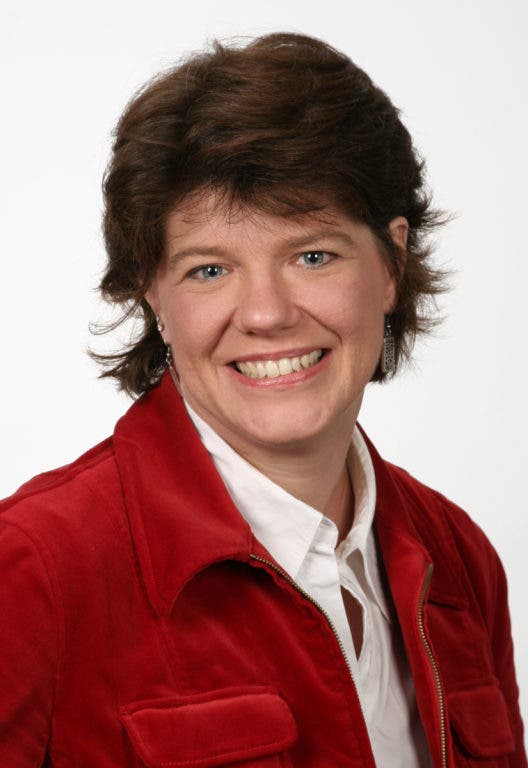
Stillwater Area School Board member Natasha Fleischman asks voters to vote yes on all three questions on Nov. 8 ballot and "help our community carry forward the value of education for all."


Thomas Jefferson knew that the key to a strong democracy was a properly educated populace. One where those who vote have the knowledge and skills necessary to become educated voters and the critical thinking skills necessary to cast a vote. That is what the American public school system is about and the reason I am so passionate about public education and serve on the Stillwater Area School Board.
In Jefferson’s time, the voting population was quite limited and, as a result, public education did not teach every American. Today, however, we expect all of those age 18 and older to vote, and every child in District 834 and the rest of the country must have the knowledge and skills necessary to become responsible citizens and informed voters.
State funding for schools over the last 8 years has lagged behind inflation by over $1,000 per pupil. That fact alone makes it more and more difficult to raise well-educated citizens and voters. Yet despite the failure of state funding to keep up with inflation, state mandates and global competition continue to increase requirements for student learning. It is because of these facts that the Stillwater School Board is compelled to ask three levy questions on the ballot on Nov. 8.
Find out what's happening in Stillwaterfor free with the latest updates from Patch.
These questions aren’t about irresponsible requests for more and more tax dollars; they are about making sure that each and every child in this district has access to the same educational opportunities and the tools they need for success. Currently, there are large disparities in the opportunities available to children at different schools in the district.
Why?
Find out what's happening in Stillwaterfor free with the latest updates from Patch.
It’s simple. Some schools have PTAs or other organizations that are able to raise large sums of money to enhance educational opportunities. That leads to disparity. A child’s education should not be less rich because the PTA at their school is unable to raise as much money as the PTA at another school. In our current funding situation, some schools receive enhanced art or science, technology, engineering and math (STEM) programs based on parent and staff interests at a particular school. It’s not in the best interest of our community for the opportunities for our children to be so completely different. Question number 1 addresses these curricular issues and will allow us to expand both STEM and art to all of our elementary schools. Research has shown that these subjects increase critical thinking skills in our kids.
The “T” in STEM stands for technology. Question 2 will allow us to infuse technology into our STEM curriculum as well as into subjects such as English and social studies. Technology distribution in our schools is also very uneven, again based on the fundraising capabilities of individual PTAs. At the secondary level, students are able to bring their own technology devices from home for use in school. However, we also know that many students are unable to afford the technology to use in the classroom. Question 2 will give us the resources to make sure that every school has equal technology and that each student can use appropriate technologies regardless of parent income.
At the secondary level, the discrepancies in STEM programming are serious. Some students have access to science labs spacious enough to conduct lab work safely. In other situations, students may have science taught by a teacher using a cart (a rolling cart to transport teaching materials from room to room). In this case, there are no lab facilities available in which to apply what students are learning. Yet we know through empirical evidence that when students participate fully in science labs, they are able to create and test hypotheses, which is the basis for analyzing and forming critical arguments. This will become a larger problem now that the State is requiring every student to take chemistry and/or physics. In our district, an additional 1,000 students will need to take one of these classes. Without additional space for science labs, most will be taught without any hands-on learning.
Question number 3 will address this need for science classrooms as well as the need for climate control in our buildings. Currently, only about half of our schools have air conditioning. This makes learning very difficult for our children for approximately one third of the school year in the months of May, June and September.
Our forefathers understood that the backbone of a strong democracy was a strong public education system for the children who would grow up to vote. Our state, which is constitutionally mandated to provide for public education, has simply not kept funding rates equal to the rate of inflation. This pushes the requirement to keep our district strong on our local community. Every dollar pledged will go directly to the education of the kids in our community. We are asking that the Stillwater Area voters accept the responsibility to ensure that every child has access to equal and excellent education opportunities. We need critical thinkers and contributors to our community.
Please vote YES, YES, YES on Nov. 8 and help our community carry forward the value of education for all.
--Natasha Fleischman is a member of the Stillwater Area School Board
Get more local news delivered straight to your inbox. Sign up for free Patch newsletters and alerts.