Health & Fitness
How to Take Great Graduation Pictures - Part I
Professional photographer Maris Ehlers provides tips for taking better photos at high school and college graduation ceremonies. Part I of III.
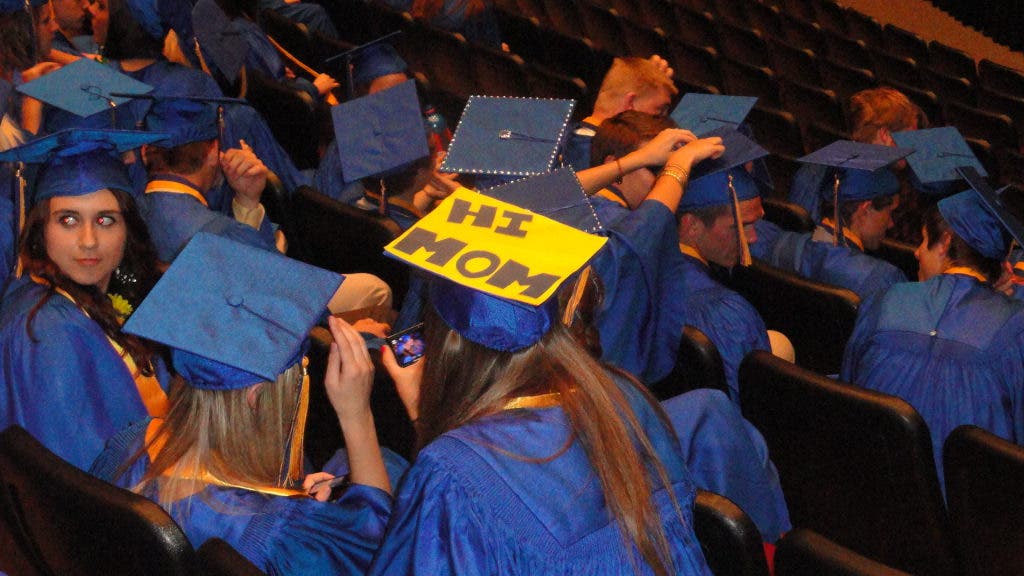

Ah, graduation season is finally here. Whether you love photography or not, if you have a child graduating you'll most likely want to have pictures to document this special day. Having pictures that aren't out of focus or underexposed would be nice, too.
These days, there are often professional photographers at graduation ceremonies, but regardless, there will still be both candid and posed moments that you may want to capture with your own camera. Below are some helpful questions to ask yourself before the event along with some simple tips to ensure you'll snap pictures you'll be happy to share with family and friends.
1. Where is the ceremony and what are the rules?
That might seem like a silly question, but it really does matter, and it should get you to ask yourself several others as well. Will it be indoors or outdoors? Will you have tickets with assigned seating? Is flash photography allowed? Can you roam around in order to take pictures or is there a specific area for taking pictures that must be adhered to? Anything you can find out ahead of time (if you don't already know it from past ceremonies) can help you prepare for the event.
Find out what's happening in St. Michaelfor free with the latest updates from Patch.
2. What will you bring?
For many, when you read the above question, you'll look at your point and shoot camera and wonder what else it is that you are supposed to bring. Nothing except you've fully a fully charged battery and a blank card or two. Nothing ruins taking pictures of loved ones at an event when you look down to see that your battery is dead or that your disk is full... of pictures that you don't want to delete right then and there.
If you are passionate about photography and have an arsenal of equipment - or even an extra lens or two, think about your list of answers from question number one before you start loading your bag and the car.
Find out what's happening in St. Michaelfor free with the latest updates from Patch.
When shooting indoors, a tripod is always a great to have, but if you can't photograph from anywhere other than where you are sitting, it's going to be a clunky piece of equipment to drag around that you won't even be able to use.
Same goes for a macro lens. I love my macro lens, but I wouldn't even bother bringing it to an event like this. I'd keep it safe at home.
For any graduation ceremony, a zoom lens is going to be your best bet. It will help you get closer to the action than you will most likely physically be able to. I would definitely bring my Canon 70-200 f/2.8 L IS USM. If you have a zoom lens that reaches 300mm, now is the time to see what it can do fully extended. I would also pack my Canon 50mm f/1.2 L USM lens. This is truly one of my favorite go to lenses, and if the ceremony is indoors, having a lens that can perform in low light with or without flash is a huge plus.
Equipment List:
- plenty of batteries (both for camera and for the flash if it needs one)
- an empty memory card (or several if you think you'll take a lot of pictures)
- choose your lenses wisely
- an external flash if you have one and know how to use it
- a tripod - only if you know you will be able to get it out and use it without disrupting others
- a compact bag to hold everything that is easy to carry
That's it for Part I of this series. In Part II, we'll look at shooting at indoor vs outdoor ceremonies, and in Part III we'll tie it all together.
As always, if you have any questions or comments, we'd love to hear them!
Maris