Health & Fitness
Making Sense of the Supreme Court’s Ruling on the Affordable Care Act
Trying to make sense of the Supreme Court's health care ruling? Read this.
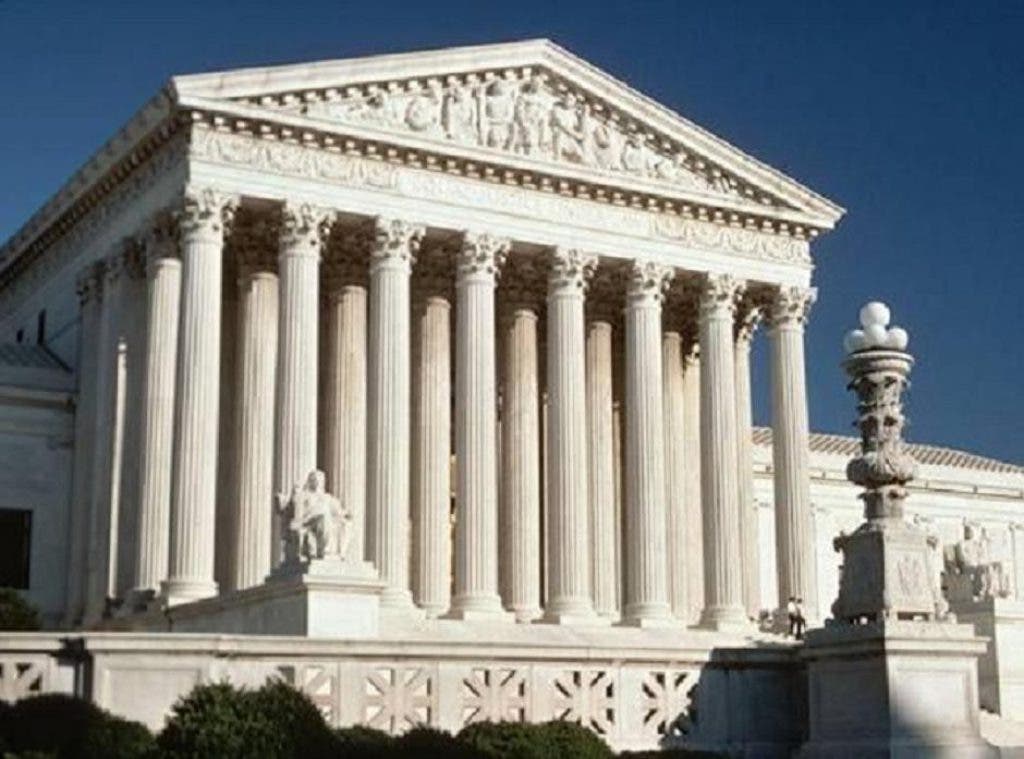
On Thursday, June 28, the U.S. Supreme Court issued its long awaited ruling on the constitutionality of the Patient Protection and Affordable Care Act (the “ACA”), colloquially known as “ObamaCare." Chief Justice John Roberts wrote the majority opinion for the Court in upholding the controversial “individual mandate”, but not on the grounds that the federal government had primarily argued.
The crux of the legal challenge to the ACA stemmed from the provision requiring individuals to purchase health insurance. If an individual did not purchase such insurance, he/she would have to pay a “penalty” equal to 2.5 percent of their income. In the wake of the ACA’s passage in 2010, numerous legal challenges were commenced in the Federal District Courts. Some courts found the ACA to be constitutional and others held the opposite.
These cases wound their way through the Courts of Appeals and ultimately to the U.S. Supreme Court, the highest court in the nation and the ultimate arbiter of what is constitutional and what is not.
Find out what's happening in St. Michaelfor free with the latest updates from Patch.
Here’s what you need to know about the Court’s ruling:
• The federal government has limited powers. These powers are enumerated in the U.S. Constitution and every piece of federal legislation must include a citation to the section of the Constitution which provides the authority for the legislation.
Find out what's happening in St. Michaelfor free with the latest updates from Patch.
• In regards to the ACA, the basis for federal action was cited as the Commerce Clause. Found at Article I, Section 8, Clause 3 of the Constitution, the clause states that the United States Congress shall have power "to regulate Commerce with foreign Nations, and among the several States, and with the Indian Tribes." The Commerce Clause has been cited as the basis for much of the federal government’s intervention into the economy for decades and thus it was no surprise that it formed the claimed basis for the ACA.
• At oral argument, the federal government argued alternatively that the ACA was constitutional as a legitimate exercise of Congress’ taxing authority under the Taxing and Spending Clause. Article I, Section 8, Clause 1 of the Constitution gives the federal government of the United States its power of taxation. It states that “[T]he Congress shall have Power To lay and collect Taxes, Duties, Imposts and Excises, to pay the Debts and provide for the common Defence and general Welfare of the United States….”
• The Supreme Court ruled that the Commerce Clause in the Constitution does not empower Congress to force people to buy health insurance:
“Construing the Commerce Clause to permit Congress to regulate individuals precisely because they are doing nothing would open a new and potentially vast domain to congressional authority. Congress already possesses expansive power to regulate what people do. Upholding the Affordable Care Act under the Commerce Clause would give Congress the same license to regulate what people do not do. The Framers knew the difference between doing something and doing nothing. They gave Congress the power to regulate commerce, not to compel it. Ignoring that distinction would undermine the principle that the Federal Government is a government of limited and enumerated powers. The individual mandate thus cannot be sustained under Congress’s power to “regulate Commerce.”
• The Supreme Court did, however, uphold the individual mandate as constitutional under the Taxing and Spending Clause. In other words, while the Federal Government cannot require individuals to purchase health insurance, it can impose a tax on individuals who do not purchase health insurance.
• Many have questioned why Chief Justice Roberts (an appointee of President George W. Bush) would side with the more liberal Justices Kagan, Sotomayor, Breyer and Ginsberg (all of whom were appointed by either President Obama or President Clinton) in upholding the ACA. Many have speculated that the Chief Justice has become increasingly concerned with how the Supreme Court repeatedly finds itself embroiled in political/policy issues. In fact, in the course of his opinion he writes:
“Members of this Court are vested with the authority to interpret the law; we possess neither the expertise nor the prerogative to make policy judgments. Those decisions are entrusted to our Nation's elected leaders, who can be thrown out of office if the people disagree with them. It is not our job to protect the people from the consequences of their political choices.”
When Chief Justice Roberts’ opinion is read in tandem with Justice Anthony Kennedy’s opinion earlier in the week which struck down much of Arizona’s controversial immigration law (stating that the states cannot pre-empt the federal government even when it is perceived that it is not upholding its duty to enforce the law), it becomes clear that the Supreme Court is telling the American public “if you don’t like what your elected officials are doing, vote them out of office but do not come to us to undo their decisions.”
In other words, the ultimate arbiters of whether the ACA will stand or not will be the voters in November.