Business & Tech
Fourth of July Used to Mean Celebration in Old St. Michael
The city used to pull out all the stops for Independence Day. Now, most residents have plans outside the community.
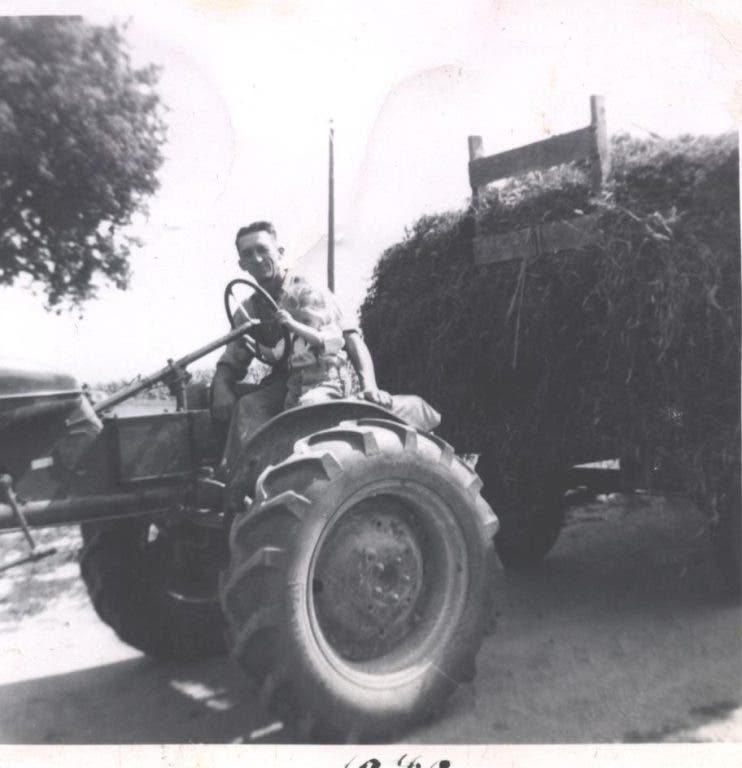

When we think of modern 4th of July celebrations – we think of parades, carnivals, fireworks and days at the lake. However, the reality for those that lived before us here in St. Michael was fundamentally different.
Recently we spoke with Bob Zahler – President of the St. Michael Historical Society – on how St. Michael celebrated the 4th of July in the days of yore.
Bob laughed and replied, “Well, you know what they did – they worked!” Thus began Bob’s story.
Find out what's happening in St. Michaelfor free with the latest updates from Patch.
St. Michael was largely founded by German immigrants. Remember the old brown restaurant that once stood where Cornerstone Eye Clinic stands today? Apparently about 25 years ago, German was still spoken by the older folks, sitting around tables in the diner.
At the end of the 1800’s and through most of the 1900’s – St. Michael was a small, farming community of largely German immigrants. These were not wealthy people, but the salt of the earth folks that broke sod using only farm animals, basic tools and the sweat of their brows. Not many lived in the “downtown” proper – shop owners mostly – as families were tied to their rural farms.
Find out what's happening in St. Michaelfor free with the latest updates from Patch.
“Going way back to the late 1800s the only real community event was the St. Michael Catholic Church festival, which also used to be in July until it was later moved to September. The church festival was the big event of the year for the local farm families for many years.”
Delano's Fourth of July parade had been organized for such a long time that it was tough to compete with that in terms of getting bands and floats. St. Michael-Albertville's marching band has been a participant of the Delano parade for at least 30 years.” Robert shares.
Robert tells us, “When talking to my dad, Harvey Zahler, about the 4th of July, he commented how going to Lake Charlotte on the Fourth of July to go swimming was a huge treat even though there was no "public beach". They simply received permission from a local farmer to use his pasture to go wading into the lake among the cows and then they would have a picnic in a part of the pasture that was mostly free of cow pies.”
However there were caveats to that as well. “If it was haying time though – no one stopped working. Too important! Hay wagons might have been used in neighboring towns for parades, but in St. Michael – they were used to haul hay.”
In the early 1970’s the Jaycee's tried to rally interest in celebrating the 4th of July. They had some success for a few years, then things petered out. At its heyday, events included a “kiddie parade” and a ball tournament at the old ball field and grandstand (what is now the west parking lot of the Community Education Building). Bob shares the highlight of the day - a "firemen’s' fight".
“A cable was strung between two opposing basketball hoops behind the old grandstand. Then an empty beer keg was hung from a pulley on the cable. Each team of firefighters then used their water hoses to force the keg to the opposing team's side. It was a big deal to have the rival towns compete like that. At dusk was a fireworks display, also at the ball field.” Bob explains.
Although 4th of July was not a huge event, St. Michael did have an event that stood out. It was the annual Trapshoot and Barbecue sponsored by the Crow River Sportsmans' Club and the American Legion. That was always the 3rd Sunday in August and they had a few kid's games and fireworks at that event. That started in 1946 and ran until about 1982. It was held at the old Berning Mill (now Millside Restaurant) at Riverside Park – which still exist today.
The Zahler farmhouse once stood on a hill on the corner of Ct Rd 19 and Carissa. Where children now play in cul-de-sacs, were once the Zahler children working the farm field. St. Michael is rich with history and we encourage you to visit the St. Michael Historical Center webpage for more information. There is an amazing book now available, written by Bob Zahler, full of a wealth of information and fascinating pictures – Faith, Family and Farming – A History of St. Michael Minnesota.
“The history of St. Michael, Minnesota has been a topic near and dear to me most of my life. I started asking questions and absorbing information when I was a kid growing up on the southern edge of town along County Road 19. While doing a project in high school, I discovered that there was little written about St. Michael's past and decided then that someday I would attempt to research the many questions that I had about my home town and put the answers in a book.
The writing of Faith, Family & Farming started in 1990, but my teaching career and renovating my old house kept me away from working on the book. The project finally came to fruition in the fall of 2009 and the book was released to the public on December 19, 2009.”
The St. Michael Historical Society meets the second Monday of each month at the St. Michael City Hall. For more information, click here.
The St. Michael Patch offers many thanks to Bob Zahler for his willingness to share his stories and those of his family.