Politics & Government
Woodbury Gets a Look at Community-Supported Agriculture
County encourages residents to buy from local farmers as part of initiative to combat obesity.
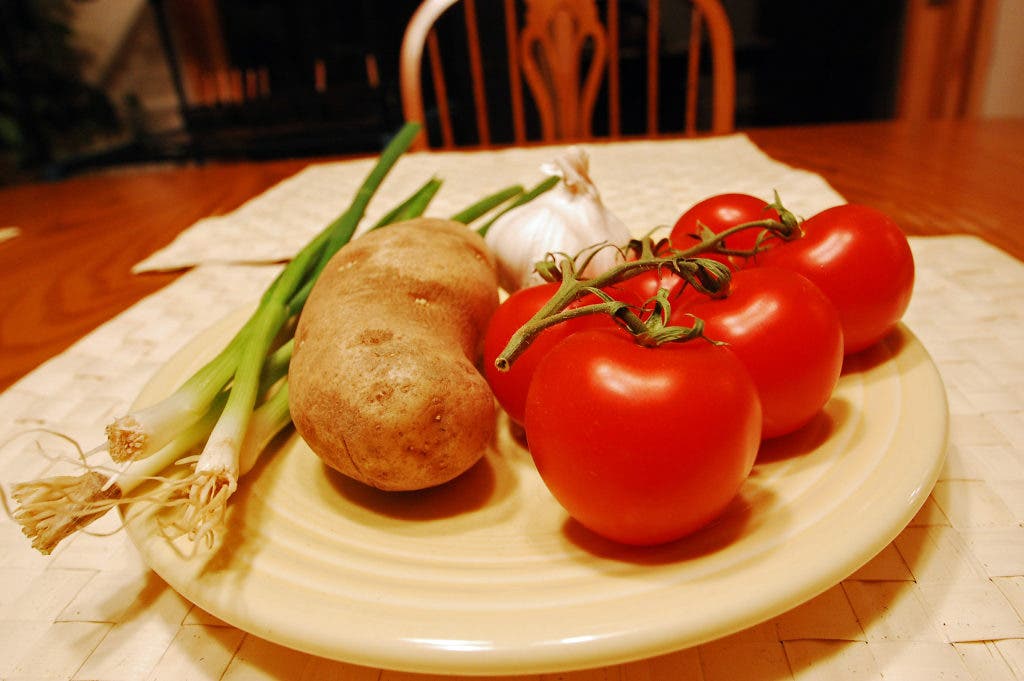


Tantalizing tomatoes, sweet onions and a plethora of potatoes are just some of the fresh produce items that Woodbury residents can sink their teeth into this growing season if they join community-supported agriculture farms.
Washington County, through the Land Stewardship Project—a nonprofit organization founded in 1982 that seeks to foster an ethic of stewardship for farmland and promote sustainable agriculture—is encouraging its residents to buy shares in CSA farms as part of a nationwide effort to combat obesity.
The county also has its own initiative, backed by the Minnesota Legislature, called “Living Healthy In Washington County” that is seeking to promote healthier eating as well.
Find out what's happening in Woodburyfor free with the latest updates from Patch.
Dana Jackson, senior program associate at the Minnesota-based Land Stewardship Project, and two CSA farmers—Chris James, the owner of Fresh Earth Farms in Denmark Township and Aaron Blyth, the farm manager of Big River Farms in Marine on St. Croix—hosted a discussion about CSA farming at the Woodbury Tuesday night.
Jennifer Engstrom, a Shoreview resident who has bought shares in James’ farm for the last few years, was also on-hand to talk about her involvement with CSA farming.
Find out what's happening in Woodburyfor free with the latest updates from Patch.
Jackson said CSA farms are growing in popularity, and that was evident Tuesday as around 50 people funneled into the YMCA’s community room to listen to the discussion.
Getting people to eat healthier is of vital importance to the nation, because how people eat and the cost of their health care is closely linked, Jackson said.
“We’re promoting production and consumption of food right here where we live,” Jackson said.
Buying shares
Those interested in buying a “share” in a CSA farm don’t actually own stock in one of the local farms, Jackson said, they’re simply allotted a certain amount of produce that can be picked up from the farm on a weekly or biweekly basis throughout the growing season.
CSA farm shareholders can also pick up produce from local drop sites closer to their homes if they’re not able to make the drive out to farms, James said.
Blyth said the amount of produce a person gets when they buy a share—which can range in price from around $400 to $700—is usually 10-15 items. What those items are depends on the type of farm a person buys a share in and what kinds of produce are in season at that time of year.
“For example, in July you’re starting to get zucchini, summer squash, cucumbers and peppers,” Blyth said. “Later in the season, you’ll be receiving things like winter varieties of squash and other produce.”
Engstrom said it might seem like a hassle to receive an array of produce that might not be what a person usually purchases on a weekly basis at a grocery store, but that allows CSA farm shareholders to get a variety of fresh produce that changes with the season.
Blyth said in many cases, CSA farms offer cookbooks with ideas about how to prepare the produce that is sent to their members.
“We also offer ways of storing the food,” Bylth said. “If there’s just two of you … it can be a little too many vegetables at one time. We don’t go into canning too much, but we do (offer information) about the simple things you can do to freeze what you receive.”
For more information on CSA farms and the Land Stewardship Project, visit www.landstewardshipproject.org. To learn more about the county’s Healthy Living initiative, visit www.livinghealthywc.org.