Politics & Government
Woodbury Honors Church, Businesses, Residents With Environmental Awards
Woodbury Lutheran and Arlen and Barbara Marcus were among those honored at the May 19 Business Town Meeting.


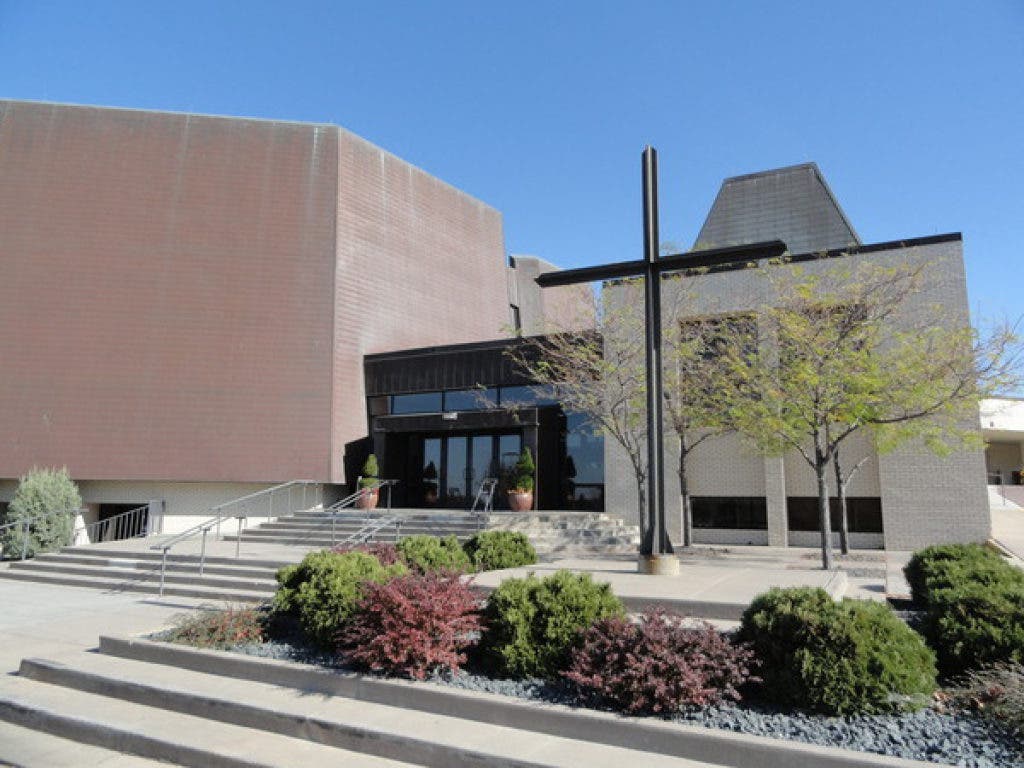
A Woodbury church, two businesses, and a Woodbury family were honored May 19 as recipients of Woodbury’s fourth annual Environmental Excellence Awards.
Mayor Mary Giuliani Stephens presented the awards at the annual Business Town Meeting, held at . Recipients were recognized for their efforts in the areas of energy efficiency and conservation, use of renewable or alternative energy, and green building.
The awards were developed in 2008 by the Woodbury Sustainability Committee, a citizens group formed by the City Council to promote sustainability in the community. The committee’s goal was to highlight businesses, organizations, and individuals that are making Woodbury a more sustainable community through innovative programs and practices that demonstrate environmental leadership.
Find out what's happening in Woodburyfor free with the latest updates from Patch.
Listed below are the 2011 Environmental Excellence award winners, along with a description of their achievements.
Arlen and Barbara Marcus (Use of Renewable Alternative Energy)
Find out what's happening in Woodburyfor free with the latest updates from Patch.
The Marcus family installed a 5.5-kilowatt solar photovoltaic system to provide electricity for heating and cooling their home.
The system, designed to provide up to one-third of the electrical needs for the home site, is currently tracking to produce 45 percent of the annual electrical need for the Marcus household. Excess capacity produced by the system is returned to the electrical grid through net metering.
The solar system, in combination with a geothermal heating and cooling system and approximately 1,000 trees on the site, is expected to reduce electrical consumption sufficiently so the home can become carbon neutral.
Prelude Senior Living Campus (Green Building)
The site for the Prelude Senior Living Campus was developed using the following guidelines:
- View natural features as assets and preserve them.
- Re-position impacted assets.
- Re-process assets that can’t be preserved into useful alternative materials.
As a result, tree clearing on the site was drastically reduced by creative placement of buildings and site features, saving approximately 471 of 543 trees. Also, more than 36 additional trees were moved, stockpiled, and reinstalled as mature landscape features.
Equally important was the reuse of materials from trees that had to be cut down, by taking logs off-site and using the lumber to build furniture for use inside the Senior Living Campus. Any trees that were not suitable for milling were chipped and sold to energy plants for use as alternative energy. Sustainable design was also utilized in managing storm water and waste on the site.
Robert Muir Company (Use of Renewable or Alternative Energy)
The Woodbury Village Solar Energy Project consists of a four-part, 130-kilowatt solar array.
The panels are designed to generate 15 percent of the electrical needs of the common areas within the shopping complex. The annual savings is estimated at $20,000 per year, and will be passed on to the tenants of the shopping center. The Woodbury Village solar project demonstrates how easily a rooftop can be turned into an environmental and economic asset.
Woodbury Lutheran Church (Energy Efficiency and Conservation)
Beginning in 2008, staff at began an effort to reduce consumption of natural gas and electricity.
With significant changes in the use of boilers during transition months, coupled with the utilization of programmable thermostats, increased insulation and replacement of windows, the church was able to reduce natural gas consumption by 50 percent in 2009 compared to 2008 (approximately $13,000 per year).
Electrical use was also evaluated and changes were made to the cooling cycle based on occupancy demands and staff behavior. The church replaced lighting fixtures and bulbs with more energy efficient fluorescents and LEDs. It is anticipated that the annual electrical usage will be reduced 15 to 20 percent (approximately $6,000 per year).
Get more local news delivered straight to your inbox. Sign up for free Patch newsletters and alerts.