Schools
Affton High To Introduce New Computer Repair, Biomedical Science Curriculums
The courses for the 2011-2012 school year focus on preparing students for careers in technically challenging fields.
Starting this fall, will be extending and integrating part of its curriculum in computer sciences and biology to give students an opportunity to gain insight into two demanding career fields.
The school will be working with Project Lead the Way, an organization that prepares students for success in the fields of Science, Technology, Engineering and Mathematics (STEM), to introduce a new the biomedical sciences program—a project approved by the Board of Education in February.
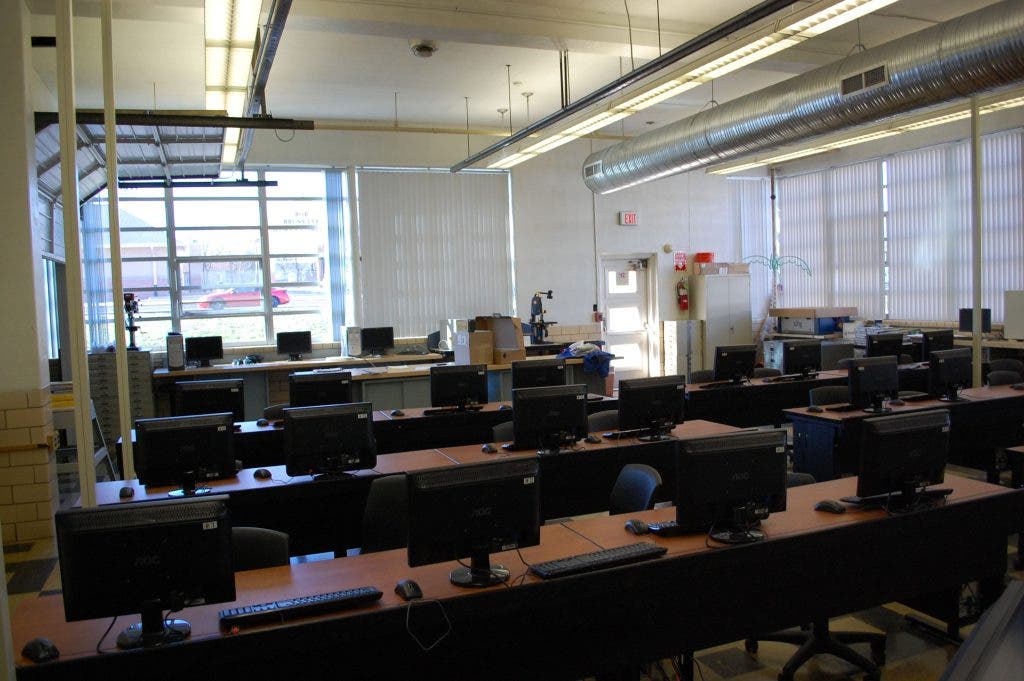
Also, the computer repair and networking technology course, currently one semester, will expand to a full-year course titled Computer Repair, which will prepare students to take an industry certification test. The change was approved by the Affton Board of Education at its January meeting.
Find out what's happening in Affton-Shrewsburyfor free with the latest updates from Patch.
“We are constantly looking for ways to improve coursework to better prepare students for post-secondary school and the workforce," said Marilyn Allen, who coordinates the CompTIA A+ certification, Tech Prep, Career and Technocal Education and PLTW programs for the . "We started looking at how to expand the computer class, and the biomedical sciences program seemed to fit right in.”
Currently, only three other districts in St. Louis offer the biomedical sciences program: Clayton, Rockwood and Hazelwood.
Find out what's happening in Affton-Shrewsburyfor free with the latest updates from Patch.
The biomedical sciences programs that will now be offered at Affton High School began through an agreement with Project Lead the Way. The program consists of a sequence of four high school courses designed to be taken alongside college-preparatory math and science courses. High school students can begin the courses in either ninth or 10th grade and take one class per year. Tenth graders will be able to double up their senior year to complete the program, taking both medical interventions and biomedical innovation. Upon completion of the course, students will have 12 hours of science credit through the Missouri University of Science and Technology at Rolla.
Between fees, teacher training and new lab equipment, Allen projects that the biomedical sciences program will cost the district $70,988 to implement throughout the next four years.
The overall goal of the program is to challenge students who are interested in going into the field of medicine or science with stimulating curriculum, so they have not only a better understanding for the fields, but are also prepared for their post-secondary education and training, Allen said.
The newly expanded computer-repair class will be open to students in grades 9 through 12. The class will teach students how to troubleshoot and repair microcomputer systems and their peripherals in preparation for the CompTIA A+ certification exam, which all computer technicians must pass. Students will have the option of taking a CompTIA A+ certification exam for a nominal fee once the classes are completed.
“What is neat about computer repair is that students have an option of being certified before they leave Affton to move right into a highly demanding field in an entry-level position," Allen said. "However, they can also go on to post-secondary schooling with the information and three credit hours to put toward their education."
The expansion of the computer program will put greater demands on the high school's facilities and equipment.
Currently, the high school has one lab for the class. We are putting in for a grant right now to get more equipment for the class for student use, said Phil Davis, chairman of the Industrial Technology Department at Affton.
Both Davis and Allen said that students were excited to take the new classes. "Many seniors have said they wish they had an opportunity to take the courses before leaving school,” said Allen.
The high school will also be changing the biology curriculum next year to eliminate the semester-long genetics course and expand the currently semester-long anatomy course to a full year. According to science teacher Laurie Free, who made a presentation at the Board of Education's December meeting, the genetics class is finding that there is not enough high school level material to fill a whole semester, and delving into college level material puts some students in over their heads. The anatomy course, on the other hand, rushes to complete its material in a semester.
Genetics will be cut from the 2011-2012 curriculum, and its course material will be covered in the new anatomy and physiology class and in the regular biology courses.