Neighbor News
2015 Legislative Session Highlights
During the 2015 session, the legislature passed measures to reform welfare, better protect kids, and reform municipal court practices.

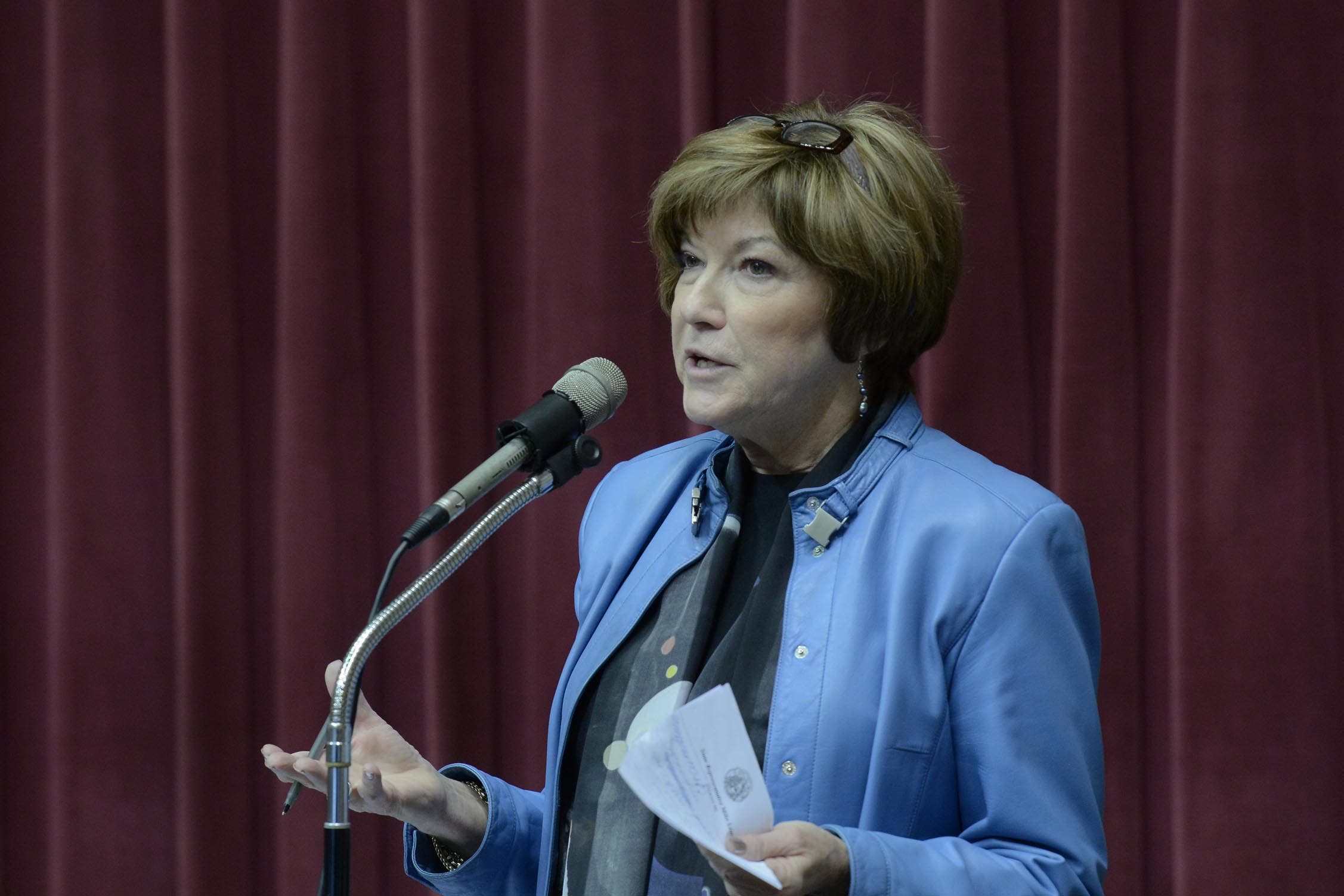
During the 2015 legislative session, which came to a close on May 15, the Republican-led General Assembly passed critical reforms to move Missouri forward. From tackling spiraling welfare costs and abusive municipal court practices to making significant investments in education, the legislature made meaningful progress that will benefit all Missourians in the coming years.
Unfortunately a multi-day Senate filibuster derailed many bills heading for final passage during the last week of session. Two pieces of legislation I filed had strong bipartisan support in both Chambers and only needed one more vote to head to the governor’s desk. Democrat Senators, however, obstructed any Senate action and session ended before the bills could receive a vote.
House Bill 458, my anti-bullying bill, initially passed the House 121 to 33 and the Senate 33 to 0. The conference committee report, which was a compromise between the House and Senate versions of the bill, was supported by every member of the committee. House Bill 458 would have required school districts to adopt more stringent anti-bullying policies, defined cyberbullying in law, and ensured that districts established suicide prevention policies. These are vital steps toward protecting our state’s young people from the damaging effects of bullying and making schools safer places for children to learn and grow.
Find out what's happening in Ballwin-Ellisvillefor free with the latest updates from Patch.
The filibuster in the Senate also blocked the passage of House Bill 1066 and Senate Bill 10, bills that would have modernized Missouri’s healthcare-associated infection reporting laws and required hospitals to develop anti-microbial stewardship programs. Patients should be able to turn to a credible source for timely healthcare facility infection data, and this transparency could save lives. Moreover, encouraging the judicious use of antibiotics through anti-microbial stewardship programs will help prevent outbreaks of dangerous antibiotic-resistant infections.
It is unfortunate that widely popular measures designed to better protect Missourians were caught in the crossfire of disagreements between Senators. I plan to refile these bills next year and hope they will move quickly through the legislative process.
Find out what's happening in Ballwin-Ellisvillefor free with the latest updates from Patch.
Thankfully, several bills that came through the Select Committee on Social Services, which I chair, were passed by the House and Senate before the filibuster began. These bills, which are now on their way to Governor Nixon’s desk, include reforms to better protect children, improve care for seniors, and encourage doctors to remain in Missouri.
- House Bill 343, sponsored by Rep. Mike Lair, establishes a committee to assess the continuation of the Money Follows the Person Demonstration Program. This grant helps seniors and individuals with disabilities transition from nursing homes to community settings. Living in the community often affords individuals a higher quality of life while saving the state money on costly nursing home services. The committee will evaluate the program’s savings and consider possible improvements to the current model.
- House Bill 769, sponsored by Rep. Keith Frederick, facilitates the practice of direct primary care, which allows patients and doctors to build a relationship without the interference of burdensome insurance rules. Direct primary care provides options to patients and doctors who are fed up with cumbersome regulations and want to contract with each other directly.
- Senate Bill 341, sponsored by Senator Jeanie Riddle, allows courts to grant orders of protection to sexual assault victims, empowers the Children’s Division to better investigate allegations of sexual abuse by juveniles, and requires schools to display the toll-free child abuse and neglect hotline number. This bill will also protect children in daycares by requiring licensed facilities caring for infants to implement a safe sleep policy based on the American Academy of Pediatrics’ recommendations and allowing parents to find out whether any children in a daycare have been exempted from vaccinations.
Now that the legislative session has ended, the Budget Committee and Appropriations Committees will begin holding interim oversight hearings. Passing a balanced budget is only the beginning of our responsibility to use taxpayer dollars wisely. The committees will call in officials from state departments to determine if they are spending money properly and whether or not their programs are fulfilling their intended purposes. By holding departments accountable and demanding performance measures, legislators can ensure that the state’s limited resources are put toward the best uses possible.
Even as the current fiscal year draws to a close, the governor has failed to release over $74 million that the legislature allocated in the FY 2015 budget. The Missouri Works Job Development Fund, transportation services for schools, and other programs have yet to receive their full funding for this year. You can find a complete list of withholds as of May 6 here.
In the FY 2016 budget, the legislature extended managed care services to Medicaid recipients across the state. Medicaid recipients in 54 Missouri counties are currently enrolled in managed care, and this will shift 200,000 more individuals to these plans. Blanketing the state in managed care will help Missouri control rising costs and provide patients with more coordinated care. Interim hearings will focus on bringing patients into managed care effectively and investigating successful managed care models and best practices.
Other highlights of the 2015 legislative session include:
Reining in Welfare Spending
This past year, welfare spending consumed over 30% of our state budget—to the tune of $8.6 billion. The Heartland Institute recently ranked Missouri as last in the nation for welfare reforms.
The only way to truly break the cycle of poverty is to help individuals find steady employment. By requiring welfare recipients to complete work activities, which can include job training or community service, SB 24 transforms Missouri’s welfare system into a hand-up for those who are truly struggling rather than a permanent source of income.
SB 24 reinvests some of Missouri’s TANF funds into services that will help parents get back to work, like extra childcare, transportation, and job training. Additionally, SB 24 lowers the cap on the number of months Missourians may remain on welfare. It also creates a short-term cash diversion program to keep some needy families from ever having to enter the system. By focusing our state’s resources on job readiness and promoting self-sufficiency, we can create a program that empowers individuals to move themselves and their families out of poverty.
Freeing Students from Failing Schools
Last year several school districts in St. Louis lost their accreditation, which forced many students to flee to neighboring districts at a significant cost. House Bill 42 overhauls our school transfer law to give all Missouri children access to the quality education they deserve.
Under new provisions, each building in unaccredited districts will receive an accreditation status. Students in unaccredited buildings must transfer to available spaces in their home district first. Once those spaces are filled, a transfer authority will approve student transfers to a neighboring district. This will keep kids close to home and dramatically reduce transportation costs.
HB 42 also expands access to charter schools in St. Louis, St. Louis County, and Jackson County. Only established charter schools with APR scores of 70 or higher may accept transfer students. Additionally, HB 42 gives students in struggling districts the opportunity to attend virtual schools.
Ending Taxation by Citation
After the unrest in Ferguson, it became clear that a number of Missouri municipalities have expanded their budgets on the backs of poor Missourians. In response, the Missouri legislature passed Senate 5 to limit the practice of “taxation by citation.”
Under SB 5’s provisions, municipalities are limited to generating 20% of their revenue from traffic citations; in St. Louis County, that threshold is 12.5%. SB 5 also limits the fines and court costs that may be imposed for minor traffic violations and creates a tax refund setoff for unpaid court costs, fines, or fees. SB 5 is a dramatic step in the right direction toward rebuilding trust between Missourians and local police and judicial officials.
Reducing Spiraling Health Care Costs
In 2012, the Missouri Supreme Court struck down caps on noneconomic damages for medical malpractice cases. The cost of practicing medicine in Missouri has skyrocketed and our medical professionals are leaving the state. HB 118 places a $350,000 cap on noneconomic damages in medical malpractice cases. These damages, which include “pain and suffering,” are difficult to quantify. The limit will not affect economic damages such as lost wages. The passage of HB 118 will reduce the financial burden on physicians and keep good doctors here in Missouri.
Making Significant Investments in Education
This year the General Assembly invested a record $5.78 billion in Missouri public schools. We increased funding for the foundation formula by $84 million, which is over $30 million more than the governor recommended. As part of our support for K-12 education, we continued funding for Parents as Teachers and Teach for America. Additionally, our budget language for 2016 completely removed funding for Common Core.
The House also made significant investments in higher education. For 2016, Missouri will spend $1.26 billion on public colleges and universities, increasing their funding by $30 million over last year. The budget language also included $1 million for a public/private manufacturing partnership between State Technical College and Toyota.
The legislature once again demonstrated our commitment to quality public schools, affordable higher education, and developing a highly-skilled workforce to lead Missouri into the future.