Health & Fitness
Top Mistakes to Avoid with Your Kids
Child development expert Pam Dyson of Ballwin tries to cut down on the trial-and-error of parenting with tips on discipline and communication.

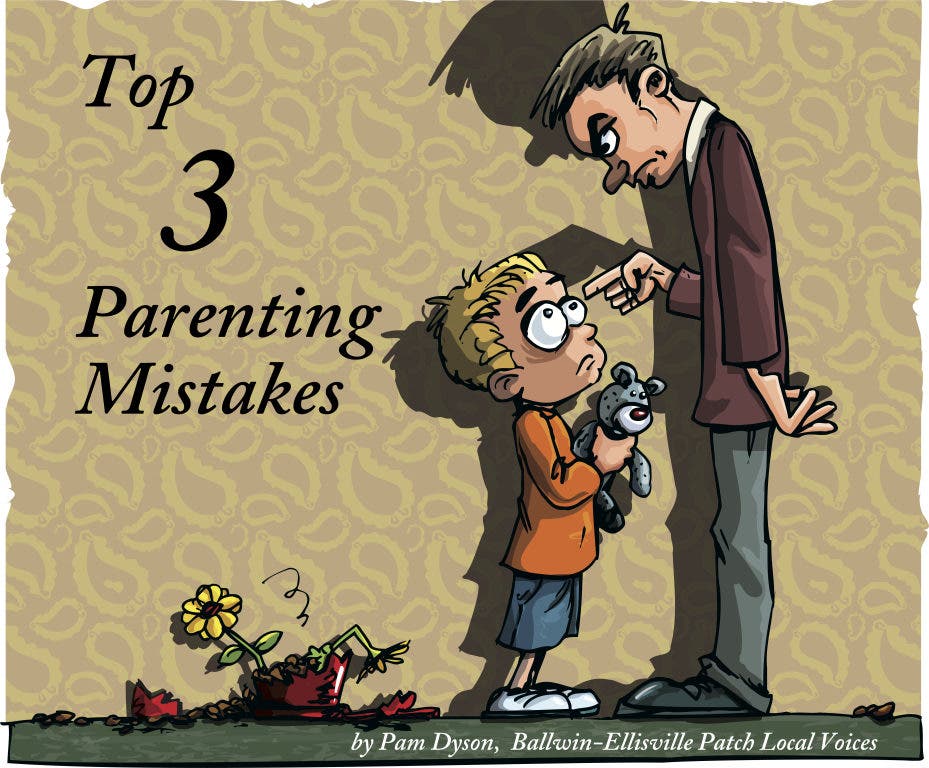
In my work as a parenting coach, I see parents repeatedly making the same mistakes in their interactions with their children. Let’s take a closer look at the top three mistakes parents make and how you can correct them.
1. Dismissing Your Child's Feelings
"You've been mad long enough." "It's silly to feel that way." "You're too sensitive." Ever say those things to your child? When you do, you're dismissing your child's feelings and your child doesn't feel heard or understood.
Think about it this way: If you called a friend and shared that you'd had a terrible day (a flat tire, a sick pet, the washing machine stopped working, etc.) and your friend said, "Get over it. You’re making too big of a deal out of this,” how would you feel? Brushed aside? Dismissed? Chances are your child feels the same way if you dismiss what he or she is feeling.
Try saying something like, "That sounds really frustrating," or "I can see why you're mad," the next time your child is expressing an emotion. I can almost guarantee your child will react differently once they feel heard and understood.
2. Not Following Through on Consequences
The only thing worse than not having rules and consequences is not enforcing consequences. Do you threaten your child but never follow through? Are your consequences so unreasonable that you simply can't follow through with them?
Find out what's happening in Ballwin-Ellisvillefor free with the latest updates from Patch.
Let's say your child leaves his bike in the driveway. You tell him three times to put his bike in the garage and he simply ignores you. You're frustrated so you resort to this threat, "If you don't put your bike in the garage, I'm going to throw it in the trash!" Your child continues to ignore you. Why? Because he knows you'd never throw his bike in the trash.
In the above scenario, consider instead saying, "If you don't put your bike in the garage, you won't be allowed to ride it for a week." This is a more reasonable consequence and you've now given your child a choice. He can choose to put the bike in the garage or he can choose to lose it for a week. It’s his choice. Just make sure you follow through.
3. Over-Explaining Things
If you tell your child ten times to put his pajamas on and he doesn't respond, what makes you think the eleventh time will do the trick? Take a step back and look at the bigger picture. Are you using too many words? Many children tune you out when you ramble on and on and on. Be matter of fact and state only what needs to be said.
Find out what's happening in Ballwin-Ellisvillefor free with the latest updates from Patch.
But what age is the child you're explaining things to? If your child is a preschooler, he's not developmentally able to be rational—a cognitive ability that doesn't begin to emerge until around age seven, so use as few words as possible. Over-explaining often turns into a verbal tug-of-war and the next thing you know, you and your child are arguing and the original subject matter is forgotten. It takes two to argue so if you remove yourself from the argument, it can't continue.
Closing Points:
Not recognizing your parenting mistakes is almost as big a problem as not trying to fix them. Is what you are doing working? If not, then you probably need some new tools in your parenting tool box.