Neighbor News
Shifting Health Advice: "Eat This, Not That" Roulette?
In this world of ever-changing food theories and advice, how can we make the right choices, and feel and be healthy?
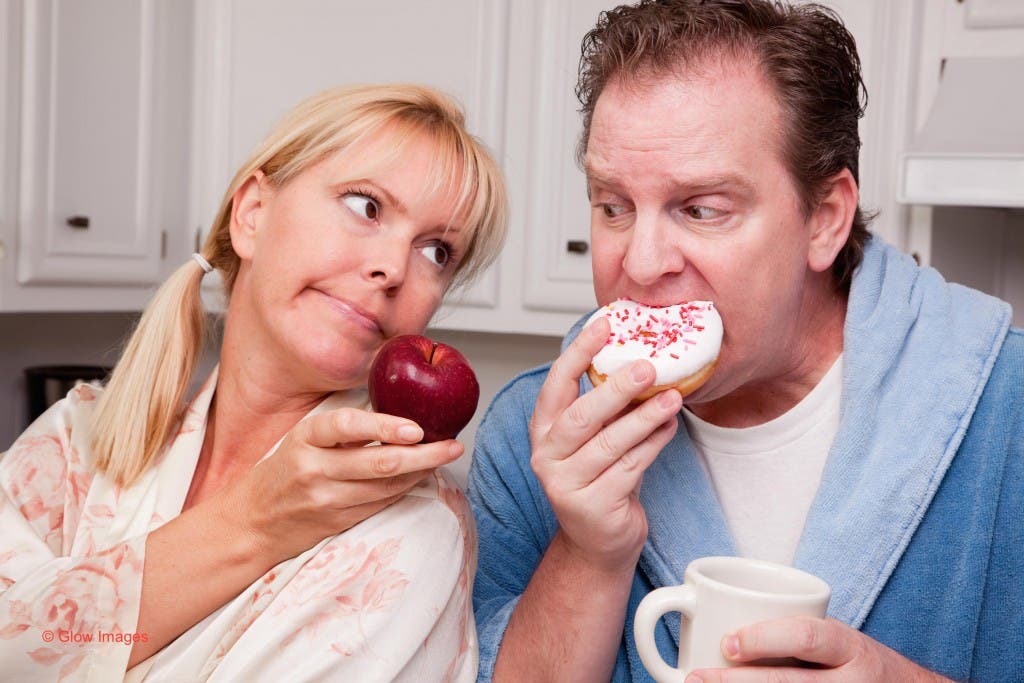
An article I read recently, entitled “Why butter and eggs won't kill us after all: Flawed science triggers U-turn on cholesterol fears,” really got me walking down a memory lane depicting my own changing views about food’s impact on health, and my resulting eating habits. It also prompted me to ponder how, in this world of ever-changing food theories and advice, we can make the right choices, and feel and be healthy.
The article recalls that we’ve been advised to stay away from high-cholesterol foods since the 1970s -- the same era that most of us in the U.S. were newly enamored with fast food drive-thrus, treats like Twinkies and Ding Dongs, and eating TV dinners while watching The Brady Bunch, Donny and Marie, or Wide World of Sports. I don’t remember knowing any better; I don’t think we were deliberately choosing to make poor eating choices.
Other headlines about the same recent cholesterol discovery read “your doctor lied!” and “...but sugar might kill you!” A host of questions rush at us:
Find out what's happening in Ballwin-Ellisvillefor free with the latest updates from Patch.
- How do we know who and what to trust?
- If we’ve been eating the wrong things -- based on inaccurate recommendations -- all these years, are we doomed?
- How do we cope with fears that what we’re eating these days might be found unhealthy down the line?
- How can we make healthy choices that won’t shift with the sands of time?
Really, it can be all-consuming and exhausting.
Despite incredible access to quality and quantity of wholesome food, and to good diet information, the U.S. ranks in the top 10 countries for poor eating habits, according to a 2015 study covering 90 percent of the world population, and reported in The Daily Mail.
Find out what's happening in Ballwin-Ellisvillefor free with the latest updates from Patch.
This has prompted me to look at my own eating habits and even question if how we think about food is actually more powerful than the attributes of the food itself. And, perhaps being fixated on food doesn’t make us healthier.
Like most of us, how I think about food -- and thus what I choose to eat -- has changed significantly over the years. On the surface, those changes might be attributed to the dramatically increased awareness and availability of unprocessed, whole and organic foods. There’s also influence from conventional wisdom or slogans like, “you are what you eat.” But the subject can spur even deeper questions such as, what defines and constitutes me? And, am I a perpetually vulnerable being, or is there something more profound, impervious and secure that defines me?
I had the most reason to fixate on both nutrition and weight after each of my two children arrived. Ironically, because I was so focused on caring for each little one, I didn’t have too much time to think about myself, or about strict adherence to a fitness and nutrition regimen. In retrospect, maybe that actually was best for me!
One of the most well-known admonitions from Christ Jesus in his Sermon on the Mount sheds light on what I experienced: “Therefore take no thought, saying, What shall we eat? or, What shall we drink? ...but seek ye first the kingdom of God and His righteousness; and all these things shall be added unto you.” (Matthew 6: 31, 33)
Certainly, at that time, my thought was focused on caregiving -- including many decisions and logistics that were not “all about me.” This verse assured me that the demands to focus on my child(ren) didn’t need to have a negative ripple effect on my own health (and, in fact, my “baby weight” did quickly fall off). But it goes deeper than unselfishness. When my top priority was strengthening my relationship to God, I found that I could trust God to naturally guide me and provide for me in a way that enabled me to thrive -- a lesson that’s held true throughout my life.
Mary Baker Eddy, a Christian theologian who tried many diet regimens to address her poor health, finally found her answer -- and her healing -- in the teachings of Jesus. She wrote in Science and Health with Key to the Scriptures, “Jesus never taught that drugs, food, air, and exercise could make a man healthy, or that they could destroy human life; nor did he illustrate these errors by his practice.”
So, maybe the attributes of food -- and changing wisdom about food -- do not mean we’re doomed after all. Maybe the practice of living unselfishly, lovingly, and thinking more about the spiritual aspect of things is the best way to stop playing a constant “eat this, not that” roulette game...and the best assurance of consistent health.