Politics & Government
Chesterfield, St. Louis County Work to Proactively Repair Potholes
A tough winter has proved damaging to local roads, though, and road crews can't be everywhere.


You’re driving down the road, perhaps with your windows down to enjoy the recent sunshine when, thunk. You hit a pothole.
The grimace-inducing sound is all too familiar at this time of year. It’s what some refer to as pothole season.
“It’s a running joke that every year is the worst year,” said David Wrone, spokesman for the St. Louis County Department of Highways and Traffic. Wrone admitted, though, that this winter had been a bad one for roads. The area has been confronted with a lot of warm weather right on the heels of cold weather.
Find out what's happening in Chesterfieldfor free with the latest updates from Patch.
“That kills roadways,” Wrone said. Most potholes start as crack in the road that widen as water freezes in them. They tend to pop up more often on well traveled streets due to wear and tear from vehicles.
In Chesterfield, knowing who fixes potholes on which streets isn’t always easy. The city maintains about 165 miles of streets, Chesterfield Public Works Director Brian McGownd said. The rest of the streets in town are maintained by the county or the Missouri Department of Transportation.
Find out what's happening in Chesterfieldfor free with the latest updates from Patch.
“The streets that have more traffic tend to be county streets, like Chesterfield Parkway or Baxter Road,” McGownd said. Chesterfield Airport Road, Kehrs Mill Road, Clayton Road, Wild Horse Creek Road, Olive Street Road, Long Road, Ladue Road and Eatherton Road are other examples of county-maintained roads.
Residents can call the city to report a pothole on any of the streets, said Mike Geisel, Chesterfield director of planning and public works. To report a pothole, call 636-537-4000 or email info@chesterfield.mo.us.
Both city and county crews try to be proactive when it comes to potholes. McGownd said Public Works crews are out on almost every city road every two to three weeks for other duties. When they see a pothole, they make sure it gets fixed. City roads don’t tend to get many, though, McGownd said. Chesterfield has made a habit of setting aside about $2 million a year for street reconstruction.
McGownd said if the city gets a call about a pothole on a city road, it will look at it within 24 hours. If it’s major, the city will have it repaired it within a day, McGownd estimated. If it’s minor, the city will usually get to it within 48 hours.
The county department of highways and traffic has five operating districts, and each one has its own patching crew, Wrone said. He said the county tries to be proactive, not reactive, but is responsible for more than 3,000 miles of road.
“We’re not omnipresent,” Wrone said. Patching teams circulate through the county at all times, but the amount of time it takes them to get to a pothole following a complaint can vary, he said.
At Monday’s city council agenda review meeting, Ward 4 Councilwoman Connie Fults asked Geisel if there was ever a point that the city would step in to repair a county road.
Fults asked specifically about Baxter Road at Benton Taylor Drive, near the entrance to the Baxter Pointe subdivision.
“Another couple of days and we’re going to have to put some cones on there,” she said. “It will take your tire.”
Geisel responded that he hopes the potholes aren’t extreme enough for the city to take over their repair because it takes resources away from residents. The city works closely with the county to ensure the roads are repaired as quickly as they can be, he said, but he also added that the winter had been tough on the roads.
Geisel said the snow and winter weather on March 14 might have caused more potholes and damaged those that were already fixed. When a snow plow hits a patched pothole, it can cause the patch to pop right up from the road, Geisel said.
Both the city and the county are using a less permanent fix on potholes at this time of year. Right now, McGownd said, they simply clean out the hole and fill it with asphalt that is made to set in colder temperatures.
“Everything now is buying time until the weather get better," McGownd said. Usually by May the weather is good enough for the departments to use a more permanent fix. Road crews will drill down to stable concrete and repair the hole from that level up with a mix that sets in warmer temperatures.
“It takes time to do the better job,” McGownd said.
The good news is that there is an end in sight. In a few weeks, most of the holes will be repaired.
“The worst of it is done before the late spring,” Wrone said. That is until next year, which, like every year, is sure to be the worst for potholes yet.
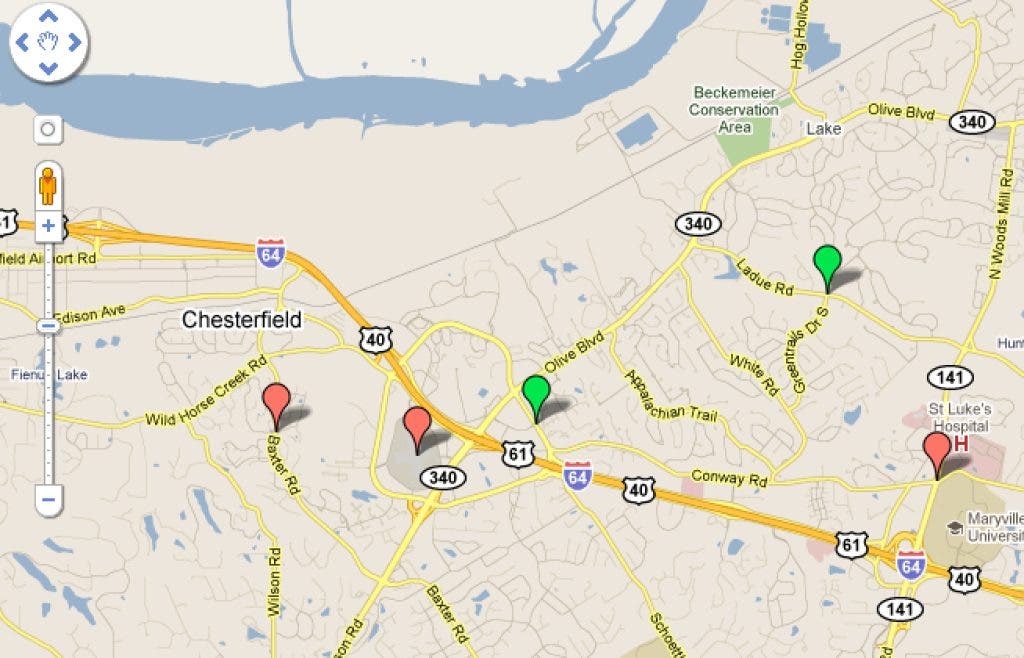
Have a pothole on your street that you hit every day? Add it to Chesterfield Patch’s map.
Get more local news delivered straight to your inbox. Sign up for free Patch newsletters and alerts.