Schools
Rockwood Fifth Graders' Trek to Smoky Mountains Yields Knowledge, Fun
Fifth grade students in the Rockwood School District have the chance to get hands-on science experience in this unique field trip.

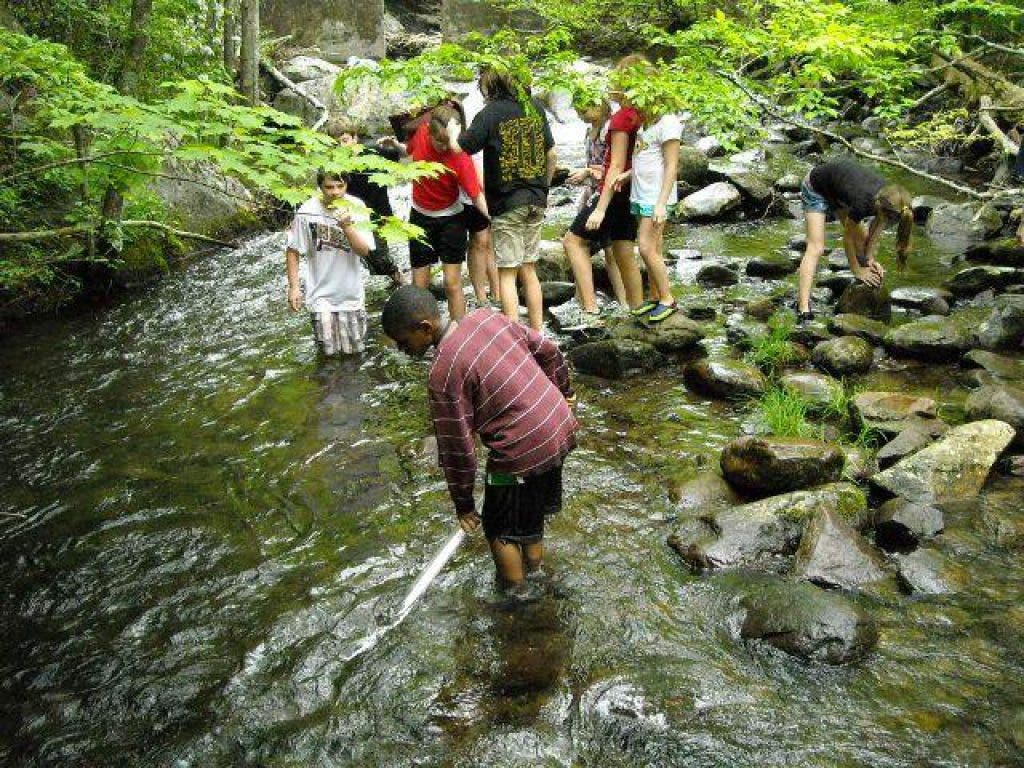
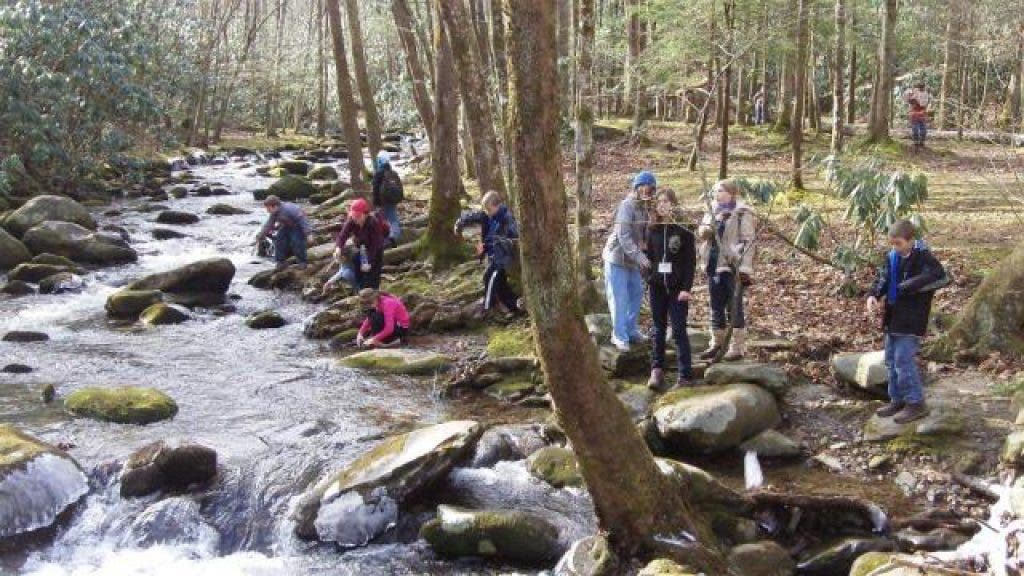
There’s no cellphone service. No Internet access. Other electronic gadgets are off limits too—no iPods, no video games. It’s just kids, teachers and nature.
They go on daylong hikes, chase salamanders, paint their faces with paste made from minerals, spend time in a science lab looking at the invertebrates that live in water. It's a field trip unlike any other.
Each year, hundreds of fifth-graders in the clamor onto buses for the long drive to the Great Smoky Mountains Institute at Tremont, a nonprofit in the Great Smoky Mountains National Park that focuses on science education.
Find out what's happening in Chesterfieldfor free with the latest updates from Patch.
There, the students spend three days exploring and learning about the nature around them. And they have a lot of fun, too.
"The most important part is the learning aspect," fifth-grader Christian Hulett said before he took the field trip in May. But, he admitted, that might fade amidst all the fun the students have.
Find out what's happening in Chesterfieldfor free with the latest updates from Patch.
"It's education, but it's fun education," Kehrs Mill Elementary School fifth-grader Caroline Kreh said.
For example, students take an all-day hike on the trip, where they learn about things such as predator-prey relationships, camouflage and more.
“Hiking is a means to an end,” said Jeff Puls, science curriculum coordinator for the Rockwood School District. “They’re using the classroom around them.”
Puls said taking the classroom outdoors, and in turn bringing the outdoors back into the classroom, is one of the biggest advantages of the program.
“In some cases, this is the first time that students have to be outdoors for any extended period of time and to think about their surroundings as a place where learning can happen.
“It excites the students. It gets them interested in science in a way that they haven’t had a way to pursue,” he said.
That's the crux of the optional trip, which about 600 fifth-grade students—about one third of fifth-graders in the district—took this year. The program, which is in its fourth year, costs families $375.
Funding for the program is on the list of . But the program’s not going anywhere. The Rockwood Community Education Department has partnered with the Rockwood Science Department to continue the trips next year.
“The Board of Education expressed a strong interest in seeing these trips continue, but the funding is no longer available in the operating budget,” said Mike Seppi, director of the community education department.
The price will change, since district funding was lost. The community education department is self-funded, so all of the costs of the programs are supported by fees, Seppi said. But there won’t be a change in terms of experience for the kids. The community education department will work closely with the science department and schools to keep the program similar.
Though the cost may rise, the price is an investment that can't be counted in dollars.
Before the trip, students are eager to explore.
“I’m excited to see what all there is out there, the different animals, plants...I haven’t been there,” Kreh said before she took the trip.
“Ms. Foley (his teacher) has been showing us pictures…it's really green, but I thought it would be rocky," Hulett said. Hulett said he's seen several pictures of the Smoky Mountains in a thick fog.
"I want to feel what it's like to be in thick, thick fog," he said. "I bet it's really humid."
And when they come back, they tend to be much more engaged in their science classes.
"Before, I didn't like life sciences…then we went, and I learned so much and had so much fun. Now I really do like it," fifth-grader Jake Szweda said. Szweda, who took the trip in December, said now that he's back, he thinks about the different species of trees all around him, even in his own backyard.
"I see things different. We learned a lot about the harmful effect of things humans do. I feel guilty now if I throw a candy wrapper in the street," Wild Horse Elementary fifth-grader Mahika Mushuni said. The students learn a lot about stewardship of the environment—how even one piece of trash left behind at a picnic can impact the animals in the area.
They learn a lot about how food gets to the table and what happens to food waste.
“Tremont does quite a bit of teaching around that. They explain how the food doesn’t just show up. Someone had to deliver it, package it, etc.,” Puls said.
After each meal, the students weigh the amount of food that they put on their plates, but didn’t eat. The goal is to have nothing left over by the end of the weekend. "We had a hard time at breakfast because there would be a lot of leftover milk…There was a learning curve. Ketchup counted, anything counted," Wild Horse Elementary School science teacher Suzanne Whitmore said.
"We would pressure everyone to drink all their milk. I don't like soggy cereal, though, so I had to learn to pace myself with it," Szweda said.
The trip is about more than science, though. For many students, this is the first time they’ve been away from home without their parents. Any homesickness typically goes away quickly though, Puls said.
"It was fine because you weren't thinking about them. You didn't have time to think about them. At night you would just dream about the day and tomorrow," Szweda said. Szweda said one of the highlights of the trip was the all-day hike. Puls said that was a common favorite.
“The experience itself is unique. They’ve never done anything like that, where they literally have to rely on themselves to carry the things they need for the day,” Puls said. “It’s probably a favorite because it gives them some self-reliance, self-confidence.”
Because each trip includes students from several elementary schools, in many cases students are also meeting each other for the first time. They quickly form friendships, which could ease the transition to middle school if students will attend the same school the following fall.
“Just the process of making new friends is most important,” Puls said. “They get practice.
“I hear from parents a lot that they notice a change. The kids come back more grown up, more mature,” Puls said. “That’s part of the process, too.”
Get more local news delivered straight to your inbox. Sign up for free Patch newsletters and alerts.