Health & Fitness
Learning Valuable Fire Safety Lessons Through Losses
There are lessons to be learned from other's tragedies. This is true regarding a fire that occurred in the Monarch Fire Protection District Monday.
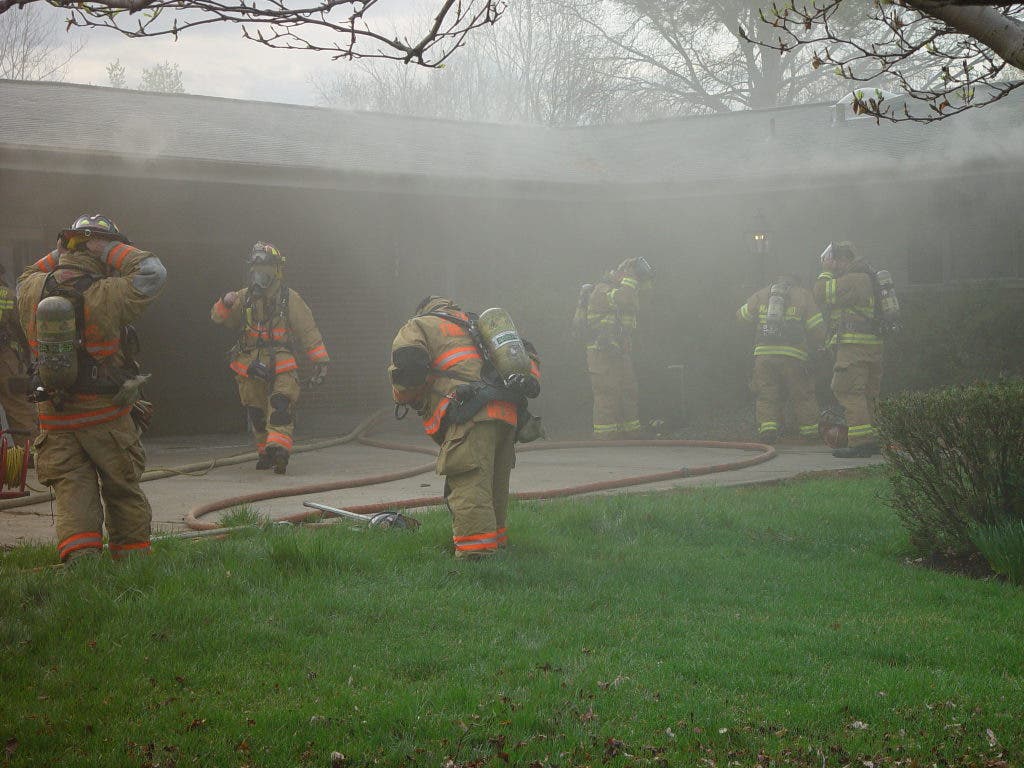

On Monday, March 19, 2012, The fire was called in as a house fire with persons trapped, and went to 2 alarms. Upon arrival, we encountered heavy smoke and fire and two of the occupants in the front yard – one with significant injuries. The cause has not yet been determined. There are lessons to be learned from this fire.
1. Make sure you have WORKING smoke alarms in your home. This point cannot be stressed enough. You hear this all the time, and still, an inordinate number of homes do not have working smoke alarms. The Fernway fire resulted in one of the occupants receiving significant burns and life-threatening smoke inhalation injuries. He was admitted to a local hospital, and is still in critical condition. There were smoke alarms in the house, but according to the homeowner they were not working because the batteries had never been changed. Had the smoke alarms sounded in this home, the occupants likely would have been alerted much sooner, and probably not suffered injuries this severe, if any at all.
2. Crawl low in smoke. A second occupant escaped without any significant injuries, and in fact, went back to rescue the severely injured victim. Why did one make it out virtually unscathed and the other in critical condition? The difference, we believe, is in how they traveled in their attempt to escape. The second occupant told us that, when he encountered the smoke and heat, he dropped to the floor and crawled to get out. We believe the burn victim tried to escape while walking or running upright. He collapsed at the door he was trying to get out. Crawling low in smoke not only keeps you under the thickest smoke, but also the extreme heat of the fire. In most fires there is a definite line, or level, of heat. Under the line, the heat may be survivable; and above the line it may be too hot to survive. This line descends, with the progression of the fire, from the ceiling toward the floor. If you stay below this line, your chances of survival are much better.
3. Make and practice a home fire escape plan – and go over it with everyone staying at your home. In the Fernway fire, the burn victim traveled past the room on fire in his attempt to get out, while the second occupant did not. Had the burn victim realized he could have escaped through the bedroom window he might have suffered only minor injuries, if any at all. This point is made without knowing how much smoke he may have breathed in before he awoke – he may have been disoriented due to the amount of poisonous gases in the smoke. And this goes back to the first point.
Also, it should be pointed out that if the home had been equipped with a residential fire sprinkler system, the entire scenario would most likely have been very different. There not only would have been no injuries, but in all likelihood the home would probably still be fit for occupancy. As it is, the home will need substantial repairs and will not be habitable for, at least, many months.
Roger Herin is Fire Marshal for the Monarch Fire Protection District, which is based in Chesterfield and also serves parts of Creve Coeur, Ballwin, Wildwood, Maryland Heights and parts of unincorporated St. Louis County