Health & Fitness
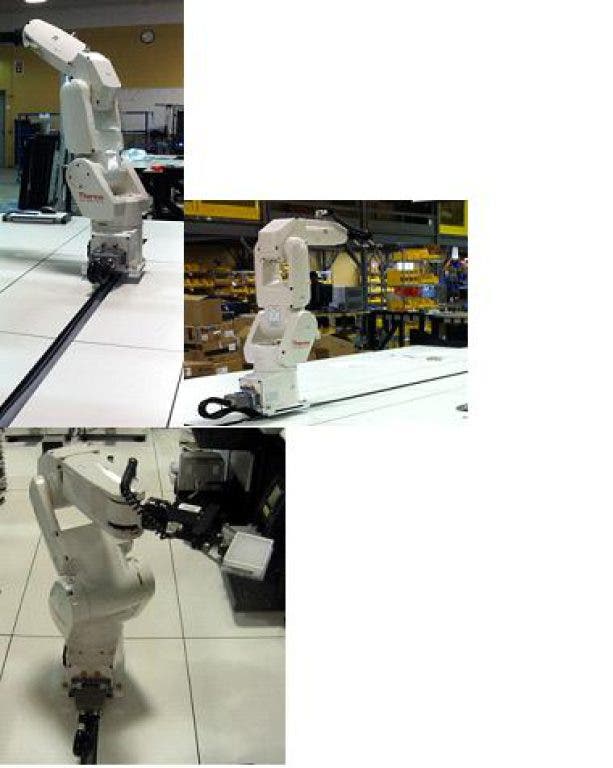
The Danforth Center's New Robotics System takes on Global Challenges--Now They Need Names!
The Danforth Center's new biocomputing abilities, its gene sequencing, and its robotics, it's accelerating everything.


Dr. Todd Mockler is a relatively recent addition to the , having
joined the team as an associate member in August of 2011. His lab is working to
understand the control of plant growth and plant responses to the environment,
specifically how plants deal with stresses such as drought, flooding or cold.
The lab is mainly focused on model grasses that are related to cereals (rice,
wheat, corn) and are also related to biofuel crops such as switchgrass and
miscanthus.
Understanding how plants work provides the necessary information to
improve crops in order to meet the demands of a growing global human population and the challenges of a changing environment.
Find out what's happening in Creve Coeurfor free with the latest updates from Patch.
Q: Your lab is getting ready to receive a large robotics system,
something that really hasn’t been seen before at the Danforth Center. How will it work, and what aspects of research will it improve?
So this robotics system that we’re getting allows us to use a molecular
biology technique called Yeast 1 Hybrid. What’s important about that technique
is it allows us to interrogate when a protein physically binds to DNA.
Find out what's happening in Creve Coeurfor free with the latest updates from Patch.
There are certain proteins in all organisms called transcription
factors that bind to DNA and act as switches to turn genes on or off.
We know for example that an average plant has about 2,000 of these transcription factors. For only a handful, meaning maybe 20, we know what genes they actually regulate. So we know about transcription factors, we know they bind to DNA, we know that they control gene expression, but in a one-to-one way we can’t say ‘this one controls this gene, this one control that gene.’ That’s uncharted
territory.
This new robot can perform about 200,000 of these DNA protein interaction
assays per week. A person can do 2,000 manually, and that would be a person with a pipette working 40 hours a week, and it would be monotonous and grueling. And the human error rate is such that there would be a lot of mistakes. So this robot will be able to do the work of 100 people per week.
What we’re going to do is systematically interrogate all the possible combinations of the DNA binding proteins in the plants that we’re interested in against all of the regulatory DNA next to the genes. Therefore we will then be able to say ‘this particular DNA binding protein controls these 100 genes, another one controls these five genes,’ and so on.
That way we can methodically figure out the network of interactions. It’s
almost like understanding a wiring diagram like a circuit board. When we have
that info, then we will be able to start making educated guesses about which
genes to tweak to make certain effects in the plant.
Q: Was there a robotics system at your previous lab?
No. A big part of my decision to move here was knowing that we would be able
to invest in this. It’s a direction scientifically that I’ve wanted to go for a
long time, and now it’s possible.
I’ve been working on trying to understand plant responses to the environment
for around 15 years, and trying to understand plant stress responses for 10. And
now the technology to do it the way I want to is at my fingertips.
The Center’s new biocomputing abilities, its gene sequencing, and its
robotics, it’s accelerating everything. Plant biology is a little late to the game, compared to the pharmaceutical industry, but that means that we’re
pioneers. I can only think of two other plant labs that have invested in this
kind of automation. Up until now people have basically performed molecular
biology research like they did 20 years ago. We’re going to be at the forefront
of this.
There’s always going to be a place for the tinkering scientist inventing
something new, doing something on a small scale to develop the technology to the point where you can automate it. But the automation will definitely lead to
faster discoveries.
Q: From a humanitarian perspective, how can this technology be
used?
When we use the technology to understand the ‘parts list’ and the ‘wiring
diagram’ of a plant, then we can make directed modifications. It’s like
engineering. For example, we might identify a DNA binding protein that’s central
to plant drought stress response, and then that becomes a candidate for
manipulation in corn or wheat.And we’re going to make these discoveries much faster than traditional methods, therefore leading to faster translations. So instead of taking approximately 15 years for the next drought resistant soybean, maybe it will be five years. I can’t quantify exactly how much, but it will be significant.
Want to help name our new robots? Visit our Facebook page to vote.