Health & Fitness
FDA Allows Fly Eggs in Popular Foods
Learn an interesting and gross fact about processed tomato products!

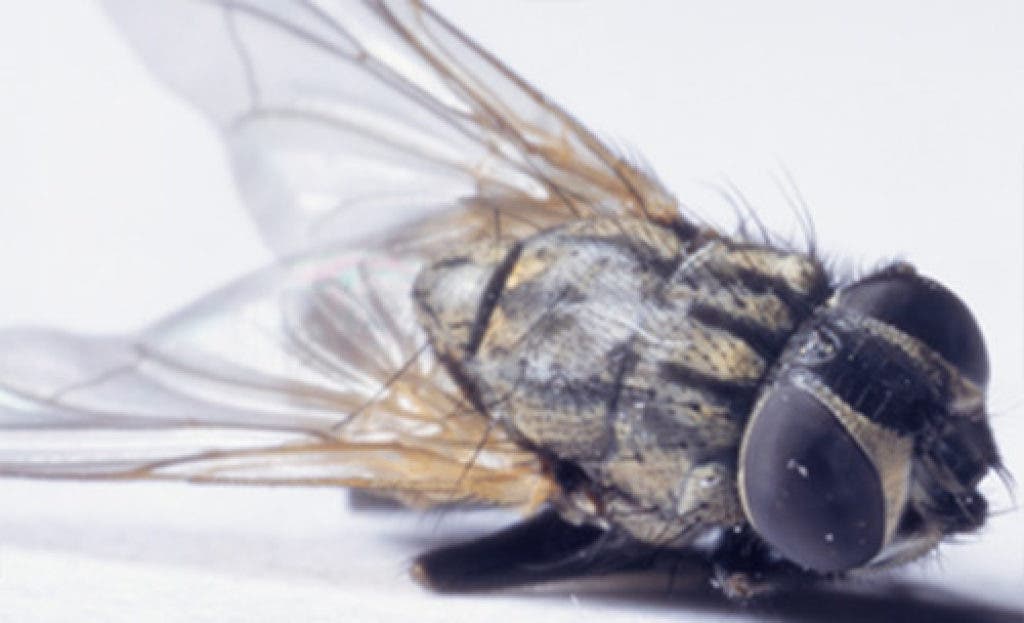
If you’ve seen the classic Disney movie, The Lion King, you might remember the scene where Simba is far from home and decides to try “grub” for the first time to satisfy his desperate hunger. His response after the first bite is “Slimy….yet satisfying.” The audience is naturally appalled and disgusted at the thought of tasting what Simba has just eaten.
But do you know many Americans eat “grub” often and don’t know it!?
There is nothing satisfying about this terrifying reality: According to the Food and Drug Administration (FDA), a shipment of canned tomatoes can contain multiple maggots and/or fly eggs before it is seized and disposed.
Find out what's happening in Eureka-Wildwoodfor free with the latest updates from Patch.
If that’s not enough to make you cringe, here are the numbers:
- Canned tomatoes are acceptable for human consumption until 10 or more fly eggs or 2 or more maggots are found per every 500 grams. A typical 14.5 oz. can is 411 grams.
- For tomato juice, the threshold is 10 or more fly eggs or 2 or more maggots per every 100 grams.
- For tomato puree, it is 20 or more fly eggs or 2 or more maggots per 100 grams.
- For tomato paste, pizza and other sauces, it is 30 or more fly eggs or 2 or more maggots per 100 grams.
If this sounds too crazy to be true, you can read the policies directly on the FDA website here.
Find out what's happening in Eureka-Wildwoodfor free with the latest updates from Patch.
Processed tomatoes accounted for more than half of tomato consumption in the United States in 20001. With more Americans eating processed food each year2, the chances of consuming tomatoes from a tainted batch will only increase. And it’s not just tomatoes.
Food inspectors don’t recommend legal action unless a shipment of canned mushrooms contains:
- An average of 20 or more maggots per 100 grams
- Or, an average of 5 or more maggots that are 2 mm or longer per 100 grams3.
For a more extensive list of food that can be contaminated with insect or rodent filth, as per the FDA, click here.
For reasons other than consumption of insect eggs and fragments, canned food poses another threat to your health. Growing research suggests that the estrogen-mimicking compound bisphenol-A (BPA) found in plastics, is used as a lining in many cans. BPA is linked to elevated risk of diseases including heart disease, cancer and diabetes4.
What can you do to avoid these unwelcome toxins?
- Blend some of your produce into smoothies for an easy and delicious way to take in vital nutrients. (You can find great recipes on the Maximized Living website.)
- Shop at your local farmers’ market. This is a great way to spend time outdoors and support your local community. Plus local produce is more nutritious than produce that has traveled across the country or sea to get to your grocer’s shelf.
- If convenience is a big deal for you, buy fresh, whole food that requires minimal or no preparation—such as apples, bananas, oranges, pears, raw nuts, raw seeds, pre-washed bagged lettuce, carrots and more.
1: http://www.ers.usda.gov/Briefing/Vegetables/vegpdf/TomatoConsumption.pdf
2: http://www.ers.usda.gov/amberwaves/march10/features/trackingacentury.htm
3: http://www.fda.gov/ICECI/ComplianceManuals/CompliancePolicyGuidanceManua...
4: Lang IA, Galloway TS, Scarlett A, et al. Association of urinary bisphenol A concentration with medical disorders and laboratory abnormalities in adults. JAMA. 2008 Sep 17;300(11):1303-10.
There isn’t one diet for all people! Learn the Core and Advanced nutrition plans at Recipe Night – and give your family a lifetime of great health. Go to www.212DegreesOfWellness.com to find out the next event!