Politics & Government
The Order of Masonry and Signs
Florissant Planning and Zoning Commission talks brick and size during Monday night's meeting.


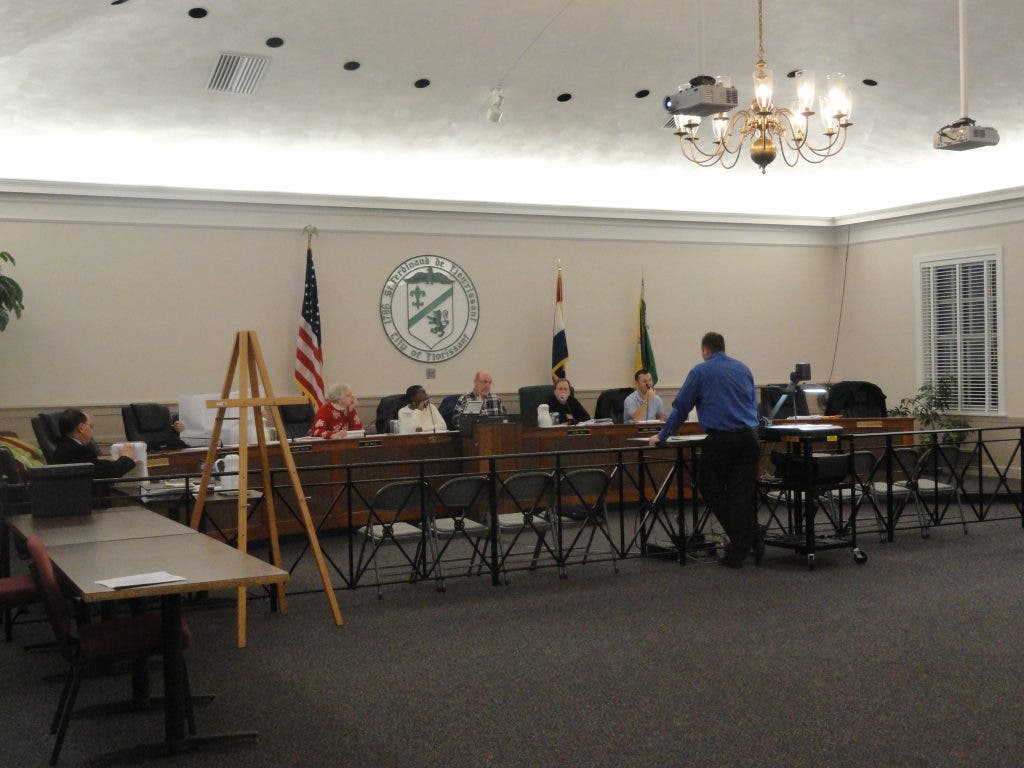

The Florissant Planning and Zoning Commission stood its ground when it came to brick and signage in town during Monday night’s meeting.
Several commissioners took issue with the size of signage and the 100 percent masonry ordinance, which created different outcomes for the petitioners.
Randy Lindsey of ArcVision presented two requests to the commission for exterior renovations to two Taco Bell stores in Florissant; however, the petitioner requested the covering of the brick walls with an exterior insulation and finish system, also known as EIFS. EIFS resembles a stucco wall and allows for insulation to the exterior rather than the interior.
Find out what's happening in Florissantfor free with the latest updates from Patch.
Building Commissioner Phillip Lum said that the masonry ordinance reads that, “all buildings in commercial and industrial areas must be 100 percent masonry” for its walls.
Lindsey said that the use of EIFS is part of the company’s new exterior look in its franchises across the country.
Find out what's happening in Florissantfor free with the latest updates from Patch.
Commissioner Jane Boyle said that she would not support covering brick.
The commission failed to recommend each request to the Florissant City Council.
Another masonry concern came with petitioner Mark Martin of Dierbergs.
Martin made a request for the exterior design of “Building D,” which will sit in the Dierbergs Shopping Center, and the design requested a sign on the east and west sides of the building for tenants.
Again, commissioners told Martin that the walls must be 100 percent brick -- without the signage.
Martin contended that a previous request to “Building C” in 2008 was approved with signage on the brick and would like to match that building to the new building’s exterior.
“There is precedent set, but that does not guarantee the petitioner the same result,” Lum said in response to questions from the commission.
Lead commissioner James Ross said the petitioner could “roll the dice” with City Council to be approved with the signage.
The commission can only recommend approval or denial to the City Council, but the council has the power to amend or override an ordinance, such as the masonry ordinance.
In the end, Martin said he would amend the design to not include the signage on the east and west portions of the building before presenting to council.
The commission recommended approval 6-1 with the stipulation that the signs be removed from the design.
It’s the Size that Counts
The commission also went head-to-head with petitioners on the size of signs used for business.
Petitioner David Kochalka, who represented the Firestone Service Station company, presented amended designs to the commission with one less sign but with a much bigger look.
Commissioner Lee Baranowski said that he could not accept a 25-foot sign because he thought it took advantage of the neighboring businesses.
“It’s our brand,” Kochalka said. “People understanding where the store is is the most important part of our business.”
Building Commissioner Lum intervened and said that the sign did comply with city code.
Baranowski requested a reduction of the sign to 6-by-10 feet, 60 square feet, for the business.
Kochalka continued to protest that the sign is in compliance, and the design meets all of the Florissant codes and ordinances.
Commissioner David Call pointed out to the commission that it was inappropriate to fight about the size of a sign in the meeting, as it would have to make a recommendation to the City Council regarding the size of signage in the future.
The commission recommended the request for approval by a vote of 6-1.
In another sign debate, Joe Phillips of Piros Signs requested approval for a wall sign of 82 square feet. Normally, a wall sign can be as large as 40 square feet.
Phillips pointed out that the incoming Family Dollar business will occupy five to six storefronts, which is the reason for a larger request.
Lum said that the commission could approve a wall sign larger than 40 square feet in unusual circumstances, and he considered this to be an unusual circumstance.
Commissioner Baranowski said that he believed the size of the building accounted for the size of the sign.
The commission recommended approval of the sign to the council by a vote of 5-2.
Get more local news delivered straight to your inbox. Sign up for free Patch newsletters and alerts.