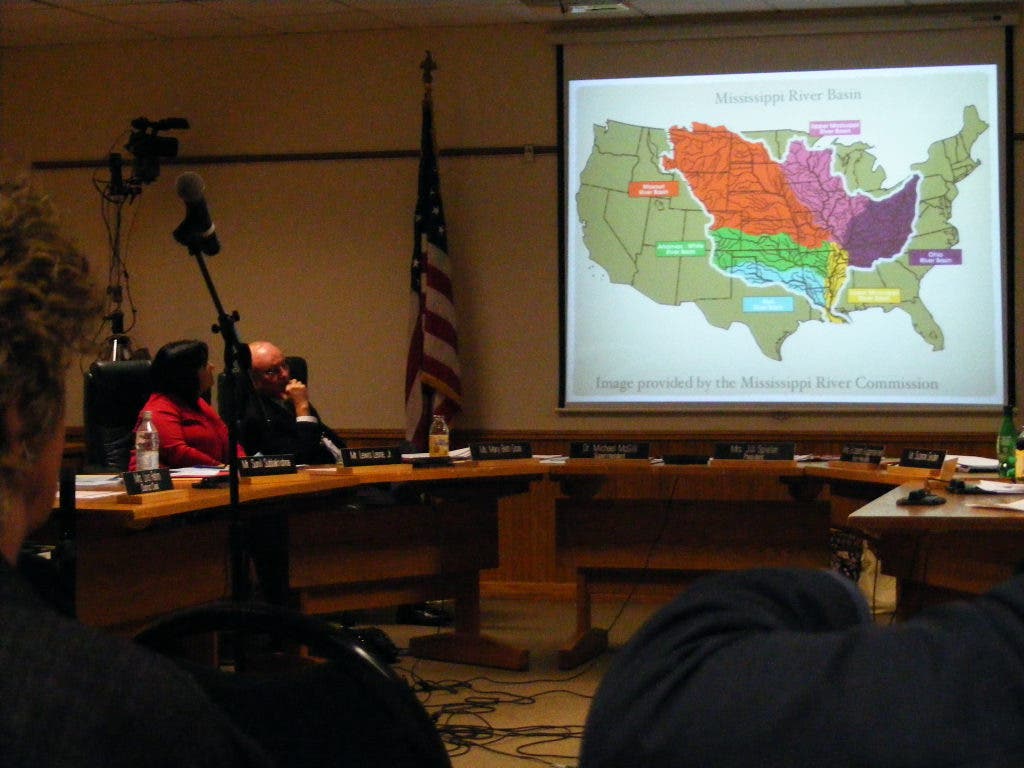
As the largest watershed in the United States, the Mississippi River Basin is something of a workaholic.
The Mississippi River basin drains all or part of 31 states, irrigates the country’s bread basket, attracts hundreds of thousands of tourists, cools several power plants, and supplies drinking water to 15 million people. It also creates jobs.
"People underestimate how crucial water is to a strong economy,” says Hanys Kubik, who manages the Great Waters Brewing Company, a producer of food and specialty beers in St. Paul, Minnesota. “If businesses like ours have to pay more to find water sources or purify water, that's money that can’t be spent on say, more jobs at the brewery. People take [clean water] for granted and forget about that. Clean water is as much a job creator as any."
Find out what's happening in Hazelwoodfor free with the latest updates from Patch.
As jobs and the economy continue to grab the headlines, some business owners get uneasy when these issues are put at odds with environmental protection. In a new report, Water Works, the nonpartisan Economic Policy Institute and other contributors suggest that simply improving the U.S. water infrastructure could create 1.9 million American jobs, add $265 billion to the economy, and ensure that businesses across the nation receive the safe, untainted water that they need. With the national unemployment rate hovering at 9%, the plan could employ one out of every seven people who are currently out of work. For the businesses in the Mississippi River Basin, such an effort would help ensure an ongoing supply of the safe, clean water they need to survive and thrive.
The safety and cleanliness of the Mississippi has long been under siege by high levels of nitrogen and phosphorus. Although both of these nutrients are vital for all forms of life, excessive “loads” of the two can enter waterways through fertilizer, septic tanks, storm water, and manure, contaminating otherwise clean water sources. Phosphorus in particular can cause make water taste and smell bad, which is unacceptable for people like Kubik who work in a field where fresh water is king.
Find out what's happening in Hazelwoodfor free with the latest updates from Patch.
As the overseer of operations and Great Waters’ 55 employees, Kubik understands the value of safe water to the business. He explains, “Clean water is the most important ingredient in everything that we do. If we lost access to this resource, it’d be catastrophic to our business.”
Kubik is not one to exaggerate. Great Waters has gained widespread fame for the “holy water” used in its 85 hand-crafted beers. Having been built at the original site of St. Paul Cathedral in 1997, the company became known for water that is “divinely inspired.” To Kubik and his staff, however, the company’s only blessing is the fresh water on which they depend. He states, “Our business model simply wouldn’t work without clean water every day.”
This storyline holds true farther south in the Basin. Deters Frozen Custard is nestled in the college town of Quincy, Illinois, and has been serving its natural frozen custard since 1892. Lacey Bringaze, Sales Associate and one of 10 employees that make up the Deters team, says that the quality of the company’s product depends on local clean water. “We use tap water to sanitize our machines and keep bacteria from building up on our scoopers,” explains Bringaze.
Deters is fortunate to have avoided water pollution thus far, as Illinois agriculture often contributes to elevated phosphorous levels in the Mississippi. If the problem were to arise, however, Bringaze predicts dire consequences. “We’d have to pay to get clean water shipped in or get extra water from elsewhere,” she says. “I know that paying for these expenses would devastate our small business that has been in the community for so long.”
These sentiments extend to Broussard’s Cajun Cuisine, a Midwestern company with Southern cartes du jour. Broussard’s sits right along the Mississippi River in Cape Girardeau, Missouri, and produces distinctive Cajun dishes for both retail and catering services. Unfortunately, phosphorous pollution downstream threatens to debilitate this culinary gem.
Phosphorous is a major factor in the Gulf of Mexico’s “dead zone,” where shrimp and other Cajun delights have bred for many years. Copious amounts of the nutrient flow down the Mississippi River and into the Gulf, killing certain forms of aquatic life and making the area inhabitable for others. The depletion of the area’s seafood industry is a major threat to coastal state economies and businesses like Broussard’s that depend on Southern seafood supplies.
One of Broussard’s servers, Britney Amick, understands that clean river water is important not only to her job security, but also to that of her 24 colleagues. Amick states, “We use regular water that comes from the river here, and if the water wasn’t clean, we’d have to eliminate a lot of the things we serve and would possibly go out of business.”
The concerns of Great Waters Brewing Company, Deters Frozen Custard, and Broussard’s Cajun Cuisine ripple throughout the Mississippi to all small businesses that rely on the Basin’s clean water. For these companies, water is more than an ingredient, cleaner, or ecosystem. Rather, it is the reason that “open” signs hang from their doors and jobs are created in their communities.