Community Corner
Money Matters: Free Advice for People Who Make Their Livings At Home or Remotely
"Patch" provides free advice from a Maryland Heights accountant and others who've been there and done that when it comes to mastering the financial side of "The Virtual Life".

Perhaps you paid through the nose, got a refund, or came out about even with your 2010 federal and state taxes. Whatever the case, preparing tax returns makes us take a hard look at how much money we earn. Before 2011 slips further from our collective grasp, I decided to check in with a few experts for their tools, tips and insights about making and keeping money.
FREE ADVICE FROM AN ACCOUNTANT
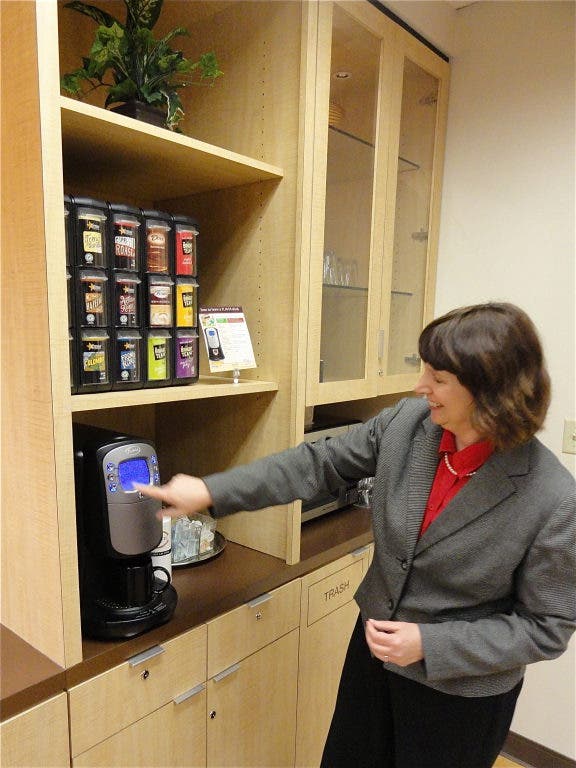
I met , when I visited the in Maryland Heights earlier this year Roberg not only provides accounting and tax preparation for small businesses, she is one.
People may not want to think about taxes again so soon after April, but if you have your own business--especially if you're just starting out from home or "remotely"--it seems like a good idea to get some things in order. What are three basic tax tips people should know?
No. 1 has to be: Know what kind of company you are for tax purposes. Many small businesses file papers to become an LLC (limited liability company).
What they don't realize is that there's no such thing as an LLC tax return. For tax return purposes, if you're a single owner of the company you can be a sole proprietor, which means you file a Schedule C for your business as a part of your regular income tax return; or you can file as a sub-chapter S corporation if you file the proper paperwork to do so.
It's a good idea to sit down with a professional and talk about your business, where it is now, and what you plan for the future to determine the best tax strategy for you. People often ask, "Is it better to be a sole proprietor, S corporation, or a C corporation?" My best answer is, "It depends." It's best to take your individual situation and compare all the numbers side by side and make the best decision from there.
No. 2 is: Document everything. Keep an appointment book, save receipts, keep track of your mileage. If you take a client to lunch, write "lunch with Bob Jones--discuss deal" on the receipt. "Lunch with Bob Jones" should also be in your appointment book. You should also write the mileage to your lunch meeting near the memo. With record keeping like that, you're golden if you get audited. People often ask me, "Can I deduct this or that?" Basically, if you spend money for your business that is a normal expense for your business, then it's probably deductible. If in doubt, document it and save the receipt, much better than not having the receipt and asking after the fact. You can always call your accountant before the event or purchase to be sure.
No. 3: If you're just starting out, set up a space for your home office. Make that space your "administrative office.” That way, even if you have another office to go to, you'll still be able to claim the home office deduction, and every time you drive some place for work it will count as business mileage.
How can home-based workers with their own businesses determine whether to get professional help, for example, an accountant?
You know yourself best. Where are your weaknesses? A resource that I found to be helpful when I started my business was the Small Business and Technology Development Center at UMSL. It's part of the U.S. Small Business Administration. They have a worksheet to help you evaluate your business plan, the have a business start-up kit, and you can even meet with one of their counselors and talk through your idea. I honestly believe that the information and advice they gave me made a very positive impact on my business. I can't thank them enough.
Does it make sense to also have a bookkeeper, or are there software and other resources than can do the job? What are the differences in the services a CPA and a bookkeeper can offer?
Tax people always answer questions like that with, "It depends." For example, with my business, I write maybe three checks a month. Granted, I have fancy accounting software because that's my line of work, but to be quite honest, if that wasn't what I did for a living, I wouldn't bother with a bookkeeper or fancy software. On the other hand, if you have a lot of accounts and are running several transactions, then maybe you want to buy Quickbooks or some other program.
Find out what's happening in Hazelwoodfor free with the latest updates from Patch.
Generally, a bookkeeper can keep track of your income and expenses, they often do payroll services, and they should be able to prepare a balance sheet for you. CPAs generally can do what they specialize in, some (but not all) CPAs specialize in taxes. Some do audit work, some also handle bookkeeping services. When you hire a CPA, it's important to know what you want him to do and be sure to ask if that's his field.
Here's a good rule of thumb: If the cost of hiring the professional will put you out of business, then you might want to think twice before hiring out.
How likely is it that the IRS will come down hard (audit) someone who has just started a home-based business and may not have dotted their i's and crossed their t's when it comes to paying taxes?
Let's say that you hire an employee and pay W2 wages, but you didn't actually pay the withholding to the IRS. That will put you into a world of hurt that you don't want to go to. I cannot stress this enough, if you hire employees you must pay the employment taxes.
Let me rephrase your question a little. You said, "How likely is it that the IRS will audit someone...when it comes to paying taxes?" There's really two different questions there. 1. How likely is a new business to get audited? and 2. How hard will the IRS come down on you for owing taxes?
About getting audited: For what it's worth, a new business is more likely to get pulled for a visual audit because of something called a "DIF" score, but the IRS agent will note that it's a new business and will forego actually auditing the new business if the expenses seem to make sense. My three best tips to avoid an audit: 1. File your taxes on time; 2. Electronically file your return; and 3. Don't make stuff up.
Don't make stuff up. It sounds pretty simple, but it's very true. Here's an example: Let's say you're doing your tax return, you don't have any receipts but you want to claim some expenses so you go, "Oh well, $300 for advertising sounds good, and I'll but 10,000 miles down for my mileage, and I'm pretty sure I can get away with $500 for utilities." The numbers sound good, but it's all made up. These things I just used are actually "audit flags." Instead, sit down and think: "For my advertising I went to Office Depot and printed some cards, I made some flyers and I put an ad on Google," then check your credit card or check book or bank statements. A lot of your expenses can be backed up, and your numbers will be pretty accurate if you take the time to think things through.
Can you share some of the pitfalls you've seen people fall into, when it comes to correctly keeping up with their taxes?
Pitfalls for the self-employed: The biggest is that sole proprietors pay 15.3 percent self-employment tax on top of their regular income tax. For many people, that puts them into a 40 percent tax bracket. If your business is making a profit, it's really important to pay estimated taxes and keep up with your tax payments. Once you fall behind, it's really difficult to climb out of a hole.
Self-employed people are more likely to be audited than wage earners, but don't let that scare you out of starting your business. Good records and good planning are your best defense.
ENTREPRENEURSHIP ON THE GO
Brent Kirkpatrick'sis on the move, literally. He runs Kona Ice, a mobile vehicle that offers authentic Hawaiian shaved ice snow cones and ice cream. Customers get to pick and dispense their own snow cone flavors from the “Flavor Wave” System attached to the side of each vehicle, or Kona can make them for you.
On a scale of one to five (with five being "superstar"), how savvy about financial matters when you first started your business? I am thinking of everything from tracking your sales, to paying vendors, bookkeeping and paying your taxes.
Find out what's happening in Hazelwoodfor free with the latest updates from Patch.
Three.
In hindsight, what might you have done differently in terms of money matters?
I would have set up QuickBooks to be ready Day One of the creation of the business. I would have also treated my business plan as a "living document" that is updated and tweaked as time goes on, instead of just working on the business plan initially and putting in a drawer.
Do you have an accountant and/or a bookkeeper to help you with your business? If so, how/when did you decide you needed this kind of help?
I have done the bookkeeping myself, but will be handing that off this year. My time and expertise can be better utilized in other areas of the business that needs attention, rather than on bookkeeping.
Can you share your favorite software, apps, or other tools? Resources that other budding entrepreneurs can make use of without too much of a learning curve?
QuickBooks for not only the day-to-day bookkeeping, but to track and project sales. I use Twitter, Facebook and LinkedIn to market my business and let people know where the vehicles will be. It allows people to track where we are and request visits from our Kona Ice vehicles. I am also big on keeping and maintaining an accurate data base to keep in touch with my customers and potential customers.
Anything else you'd like the share, stuff you think people should know about this topic?Surround yourself with good people and get out of their way. My "job" is to set the tempo, atmosphere and vision of the company going forward.
Get more local news delivered straight to your inbox. Sign up for free Patch newsletters and alerts.