Arts & Entertainment
Local Artisan Crafts Handmade Soaps
Elizabeth Lemp makes soap from scratch at her Webster Groves home, creating such concoctions as Mandarin Lime, Lemon Mint and Brown Sugar Fig.
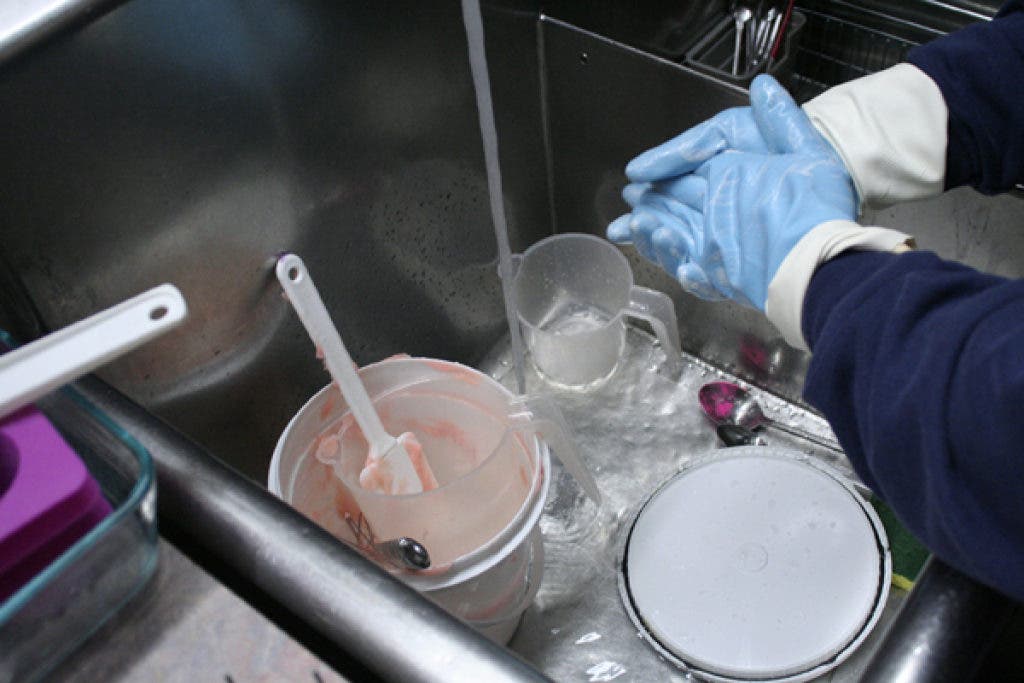


Step into Elizabeth Lemp's basement on soap-making day, and you will be greeted by a colorful bouquet of aromas, from lavender and pumpkin spice to hot cocoa and peppermint.
The shelves of Lemp's soap kitchen are lined with bottles of oils and fragrances, the floor stacked with buckets and boxes of hard oils. She follows a precise recipe, involving melting, measuring, pouring, mixing and waiting. Her method is part chemistry, part art and part luck.
Lemp began making soap about three years ago, after struggling to find a store-bought product that would not irritate her skin. She found that handmade soap was the only thing that worked for her, so she set about learning to make it herself. Through a lot of research and trial and error, she learned and honed her new craft. Now, she knows everything from where to get the best ingredients, to how they react with one another, to how best to package and display her creations.
There are three processes for soap-making, Lemp explains. The first, melt-and-pour, is how she and many other soapers started out. You order a block of soap, melt it down, and pour it into a mold. This method allows for more creativity in presentation, but not in composition.
"I don't really like making the melt and pour too much. I like being creative this way," she said. "Other people who only make (melt-and-pour) call it handmade soap. It's still handmade, but I prefer to make my own. I kind of feel like its cheating…but it's not. It serves its purpose."
The techniques Lemp prefers now, as a more advanced soaper, are called cold process and hot process. With these, she is able to choose which combinations and proportions of oils and fragrances to use, and get creative with add-ins like cocoa powder and poppy seeds.
Lemp said that much of her inspiration, and even an ingredient here and there, comes from her other favorite pastime, gardening. Sometimes she is able to use things like poppy seeds from her own garden, but she had found over time that things like rose petals don't work as well in soap as you might think.
"Not very much can survive the saponification. The only things you can really use are calendula petals, dried—they won't change colors," she said. "You can put lavender (buds) on the top, but, if you mix it in, it looks like little rat poop—black spots—it looks really nasty.'"
Soap-making is not all pretty scents and flower petals, though. The chemical reaction that produces soap, called saponification, involves combining oils with lye. Lemp wears protective gloves and glasses when she is mixing and handling the lye, because just a drop of it can cause a painful burn. No need to fear that bar of soap in your shower, though—once the saponification process completes, there is no lye left.
"When people tell you they don't have lye in their soap, technically they really don't…if they made it right, but you can't make soap without lye because otherwise you'd just have a cup of oil," Lemp said.
As an art form that depends on a delicate chemical reaction, soap-making can sometimes be quite unpredictable. No matter how precise Lemp is in measuring out the proportions of hard oils, soft oils and lye, sometimes the fragrance oil she uses for scenting the soap will cause the saponification process to happen too quickly. Soapers call this "soap on a stick," because it can make the mixture harden so quickly that it can't even be poured into its mold.
"You always have to be prepared for that to happen cause sometimes it will, and a lot of times with florals it will," Lemp said. She was using a scent called "blooming tulips" that day, and almost ended up with soap on a stick, but acted quickly enough to still be able to tint and pour it.
"I usually don't have problems, but things happen," she said. "There's a lot of determination that goes into making soap, and you have to be willing to fail."
Lemp sells her soaps and other products, including body washes, lotions, lip balm and candles, online through her Etsy store: A Breath of French Air. She has been on Etsy since May 2007, and has found it to be a useful way to meet other soapers and artisans to commiserate and exchange trade secrets.
Now Lemp's soaps can also be sniffed and purchased in person, at a shop called Fusion that she started with nine other local artists from the Etsy community. Fusion is located in , and is open Wednesday through Sunday.