Sports
Part 3: Concussions and the Brain Test
This third and final article in our series on concussions and high school athletics explores the steps schools are taking to ensure a student athlete is ready for play following a head injury.
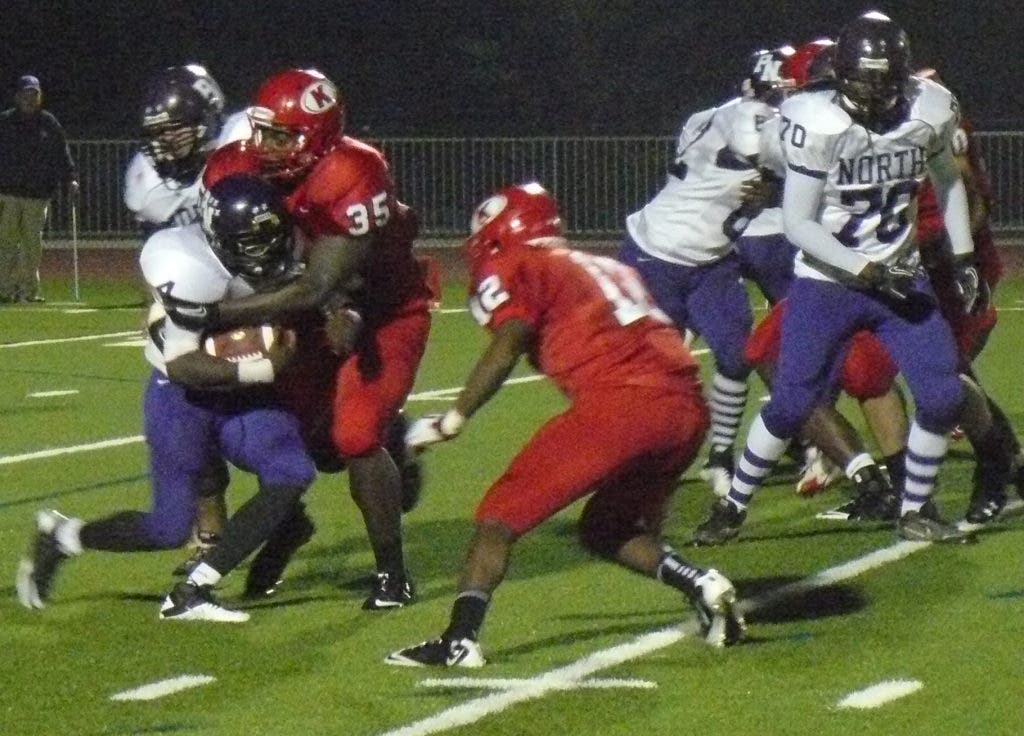
Preseason baseline testing for concussions, a relatively new offering at the high school level, is becoming common place at many schools in St. Louis County.
“I had never heard about it before,” said De Smet coach Pat Mahoney, who began offering the testing a couple years ago. “As soon as we found out about it, we started offering it. I didn’t know there was such a thing, but when the doctor brought it up, I said we need to do that.”
Baseline testing involves a series of exercises to test brain function at the beginning of a season. If an athlete suffers a concussion during the season, he or she retakes the test and the results are compared by a trained medical professional. The differences will alert the professional of cognitive changes that may indicate the athlete is not ready to return to the field.
Find out what's happening in Kirkwoodfor free with the latest updates from Patch.
While the state of Missouri passed a law this summer aimed at protecting youth athletes, greater understanding has led to the offering of baseline testing at many schools.
“With an increased awareness of it, we thought it was a good idea and something to do to keep the kids safe,” Seckman athletic trainer Larry Sanders said. “It’s one more tool we can use to provide the safest environment for them.”
Find out what's happening in Kirkwoodfor free with the latest updates from Patch.
Sanders cautioned concussions can happen to any athlete, not just football players.
“Concussions happen throughout the year in any sport, whether it’s cheerleading, football, soccer, volleyball,” he said.
At MICDS, baseline testing, which has been offered for four years to Rams athletes, is just part of a larger concussion education program.
“We have brought in national recognized speaker and author Chris Nowinski in to speak with our coaches and student body,” MICDS athletic trainer Stacey Morgan said of the author of Head Games. “In addition, we speak to every team in the preseason regarding concussions and their responsibility.”
Nowinski is the co-founder and president of the Sports Legacy Institute, a non-profit organization dedicated to solve the sports concussion crisis.
MICDS has also had a neurologist on its football sidelines for 32 years, well before concussions were a concern for most athletes.
For athletic trainers and coaches, the challenge can sometimes be keeping the athlete off the field for games and practices. Some coaches resort to hiding equipment from a concussed athlete, but that wasn’t necessary for senior wide receiver Dan Lohse, who still talked often with the trainers at Vianney about returning to the field early.
“I nagged my athletic trainer here so many times to come out and play,” said Lohse, a High Ridge resident. “I even joked a couple times that I was going to put my pads on and play. They just kept saying no.”
Given the new state law, Lohse was required to sit out for at least 24 hours, or until a medical professional gave him clearance to return. He was out for a week.
At U. City, coach Carl Reed is very familiar with the dangers of concussions as a former collegiate football player diagnosed with post-concussion syndrome. He suffered from severe headaches and nausea for weeks after his college career ended at Austin Peay State University during his junior year.
“I’m very sensitive to any of my players showing any symptoms of concussions because it’s a very serious thing,” said Reed, who noted the physicals for U. City football players include a concussion test. “It was something I don’t want anyone to have to go through.”
U. City and De Smet are among those who check helmets more frequently than required.
“We are constantly improving our helmets,” said Mahoney, the De Smet coach that had 20 concussed football players over the last two seasons. “The new rule is that they have to be replaced after 10 years, but we test ours every year. If it’s a bad hat, it leaves.”
Some schools are working now to implement baseline testing for winter sports.
“We plan on starting ImPACT baseline testing this winter for our high-impact sports,” Eureka activities director Jason Green said of the programs in the Rockwood School District. “Some of our coaches and myself started discussions about this last year, and it continued with the Rockwood ADs and (Rockwood School District’s Executive Director of Secondary Education) Dr. Jim Wipke this fall. In the end we decided that this would be a good way to improve how we protect our students.”
Other athletic programs are holding off on further testing.
“We are following the new state law,” Webster Groves activities director Jerry Collins said. “As it is very new, we have not had time to implement anything additional. (We’ll have) no additional testing at this time, but I am sure our methods of education will naturally change and improve from year to year.”
Said Maplewood-Richmond Heights athletic director Malcom Hill: “We have a team doctor at all games, and if the doctor suspects any type of head injury the player cannot enter back into the game. … We follow the by-laws of the MSHSAA.”
Related content: