Health & Fitness
Roberts of "Little Rock Nine" Speaks to MRH Students
MRH freshmen speak to one of the Little Rock Nine as part of their curriculum enrichment.
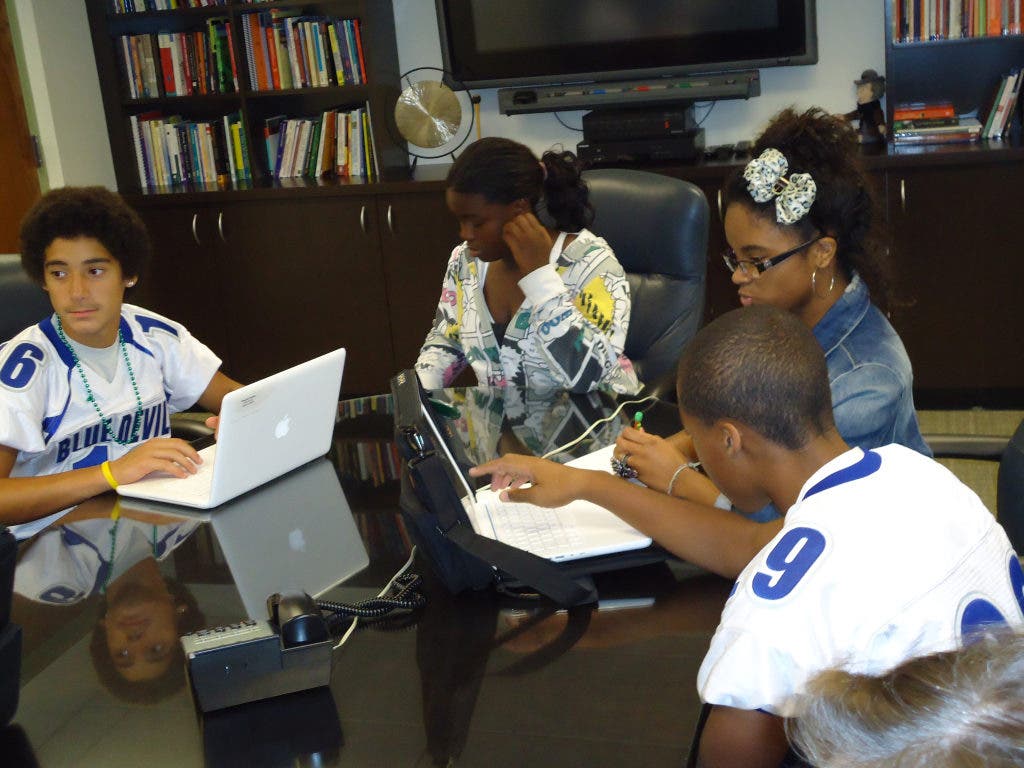
On Friday, September 23, the freshmen Honors English class, alongside teacher Miranda Ming, conducted a telephone interview with Dr. Terrence Roberts, who was part of the original “Little Rock Nine” as part of their Power of Language: Writing Workshop Unit.
“I didn't think we were going to get to speak to someone who experienced it up-front like that. It was nice to get direct information,” said freshman Anna Wermuth.
The “Little Rock Nine” came into the national spotlight when nine African American students enrolled at Little Rock Central High School in 1957 after Brown vs. Board of Education ended segregation in public schools. The NAACP (National Association for the Advancement of Colored People) enrolled nine students into the high school after the school board agreed with the students’ good grades and attendance.
Find out what's happening in Maplewood-Brentwoodfor free with the latest updates from Patch.
“I had 100 percent support of my family to be enrolled in an all-white school,” said Roberts.
All of the “Little Rock Nine” students, as well as Roberts, were harassed by the white students even before they entered the school. MRH students asked him what it felt like, and Roberts replied, “Consider what possible things one human being could do to another in a negative way. That’s what the students did to the new students.”
Find out what's happening in Maplewood-Brentwoodfor free with the latest updates from Patch.
However, Roberts told the MRH freshmen that he didn’t give up. “Once you decide that you truly want to educate yourself, you don’t give up. I was determined from a very young age to educate myself, and I was not going to be set back and intimidated by other people,” said Roberts.
Students like freshman John Ahn said it was rare to have such an opportunity to speak with living history. “I was still shocked that someone that was such a significant part of our history would spend his time with us and answer our questions. I felt like I had a very rare privilege and an obligation to MRH to represent our school the best that I could.” said Ahn.
Roberts added that if he could go back and change anything, he would have tried to talk more to the students who harassed him.
“I think I may have done some things differently, put forth a greater effort to get some communication with the racist students. I wish I had talked to them about their feelings and thoughts, instead of just taking the malice and violence,” said Roberts.
Roberts wrote Lessons From Little Rock in 2009, which gives different perspectives in the book about the event that’s not found in textbooks. Originally, the interview was planned with Thelma Wair, spokesperson who is part of the Little Rock Foundation. When Wair couldn’t make the phone call, the class was transferred to Dr. Roberts.