Community Corner
Two Missouri Astronauts Chosen To Fly SpaceX's Dragon
"This accomplished group of American astronauts...will launch a new era of human spaceflight," said NASA administrator Jim Bridenstine.


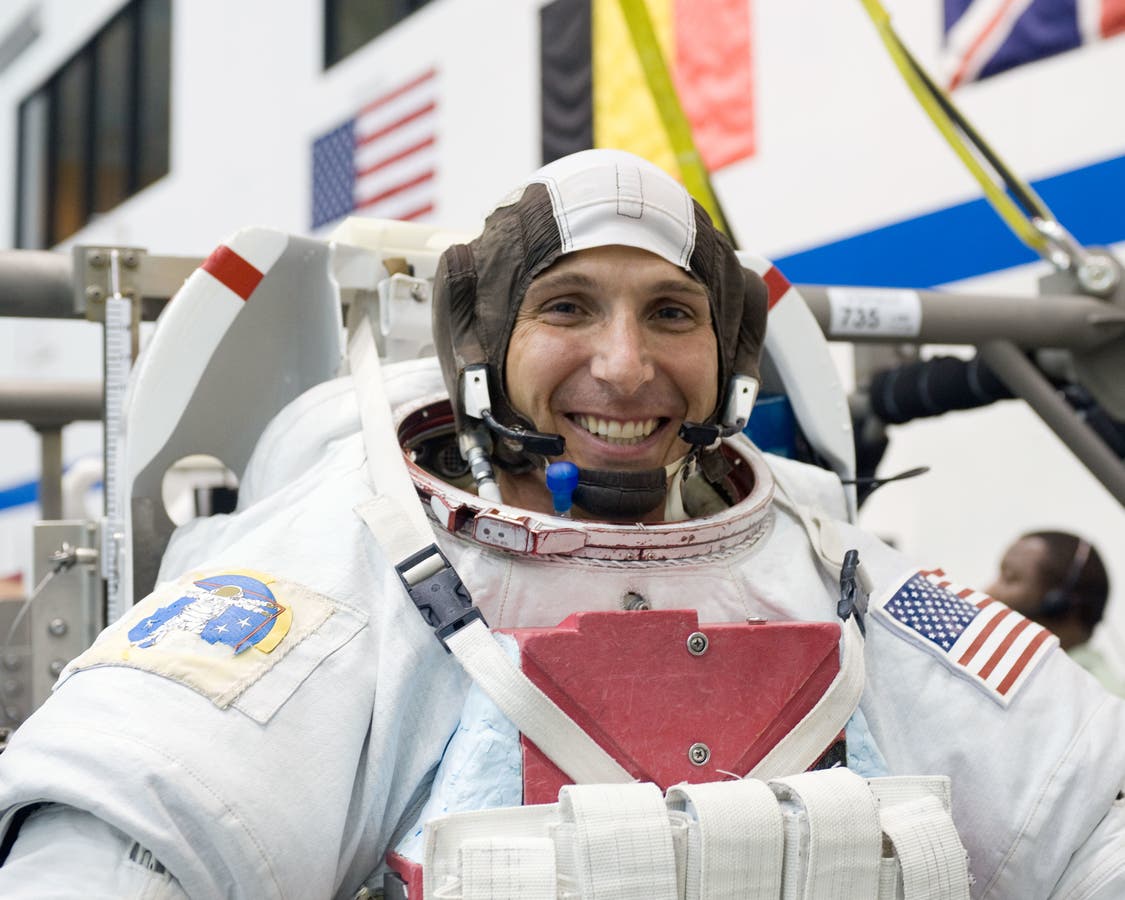
MISSOURI — Air Force Cols. Robert Behnken, from St. Ann, Missouri, and Michael Hopkins, from Lebanon, Misouri, will be among the first NASA astronauts to fly SpaceX's Crew Dragon spacecraft, the space agency said Friday.
According to a news release, Behnken was selected as an astronaut in 2000 and has flown two missions on the space shuttle Endeavour — STS-123 in March 2008 and STS-130 in February 2010 — spending more than 700 hours in space and conducting six space walks.
Hopkins grew up on a farm near Richland, Missouri, and worked as a flight test engineer in the Air Force before being selected as an astronaut in 2009. He has spent 166 days on the International Space Station and conducted two space walks.
Find out what's happening in St. Louisfor free with the latest updates from Patch.
Behnken was among five astronauts assigned to test fly the Dragon, as well as Boeing's next generation space craft, the Starliner — America's first crewed space craft launched since the retirement of the space shuttle in 2011. Hopkins and three others will fly the space craft's first missions.
(For more stories like this, subscribe to Patch newsletters and breaking news alerts. You can also download the free Patch app for iPhone and Android.)
Find out what's happening in St. Louisfor free with the latest updates from Patch.
- Robert Behnken, Missouri (Dragon test flight)
- Douglas Hurley, New York (Dragon test flight)
- Michael Hopkins, Missouri (Dragon mission 1)
- Victor Glover, California (Dragon mission 1)
- Eric Boe, Florida (Starliner test flight)
- Christopher Ferguson, Pennsylvania (Starliner test flight)
- Nicole Aunapu Mann, California (Starliner test flight)
- Josh Cassada, Minnesota (Starliner mission 1)
- Sunita Williams, Ohio (Starliner Mission 1)
“The men and women we assign to these first flights are at the forefront of this exciting new time for human spaceflight,” said Mark Geyer, director of NASA’s Johnson Space Center in Houston. “It will be thrilling to see our astronauts lift off from American soil, and we can’t wait to see them aboard the International Space Station.”
NASA worked closely with both SpaceX and Boeing to design and develop their new space craft, which resemble — but are much larger than — the Apollo capsules that took Astronauts to the moon almost 50 years ago. The new craft will be able to carry up to seven astronauts to the International Space Station, which NASA says will allow its scientists to conduct cutting-edge research and lead to a better understanding of long-duration spaceflight, paving the way for possible missions to Mars and the near-Earth asteroids.
NASA is developing its own spacecraft, the Orion, for those more demanding future missions.
"NASA’s continuous presence on the space station for almost 18 years has enabled technology demonstrations and research in biology and biotechnology, Earth and space science, human health, physical sciences," the space agency said in a news release. "This research has led to dramatic improvements in technology, infrastructure and medicine, and thousands of spinoff technologies that have improved quality of life here on Earth."
Some of those technologies include memory foam, digital camera sensors, GPS, freeze-dried food, cochlear implants, and M&Ms (which were developed so that astronauts could enjoy chocolate in space with it melting on their instruments).
If NASA has anything to say about it, there will be plenty more amazing technologies to come.
“Today, our country’s dreams of greater achievements in space are within our grasp,” said NASA administrator Jim Bridenstine. “This accomplished group of American astronauts, flying on new spacecraft developed by our commercial partners Boeing and SpaceX, will launch a new era of human spaceflight."
Photo 1: Nine U.S. astronauts pose in front of mock-ups of the space craft they will soon fly (NASA/Johnson Space Center); Photo 2: Col. Robert Behnken (Bill Stafford/NASA); Photo 3: Col. Michael Hopkins (Bill Stafford/NASA)
Get more local news delivered straight to your inbox. Sign up for free Patch newsletters and alerts.