Neighbor News
Of Icebergs and Health Alarms. A Spiritual perspective to human vulnerability.
My article is focused on the growing evidence that what we think directly influences our health. (photo: author is man with thumbs up.)

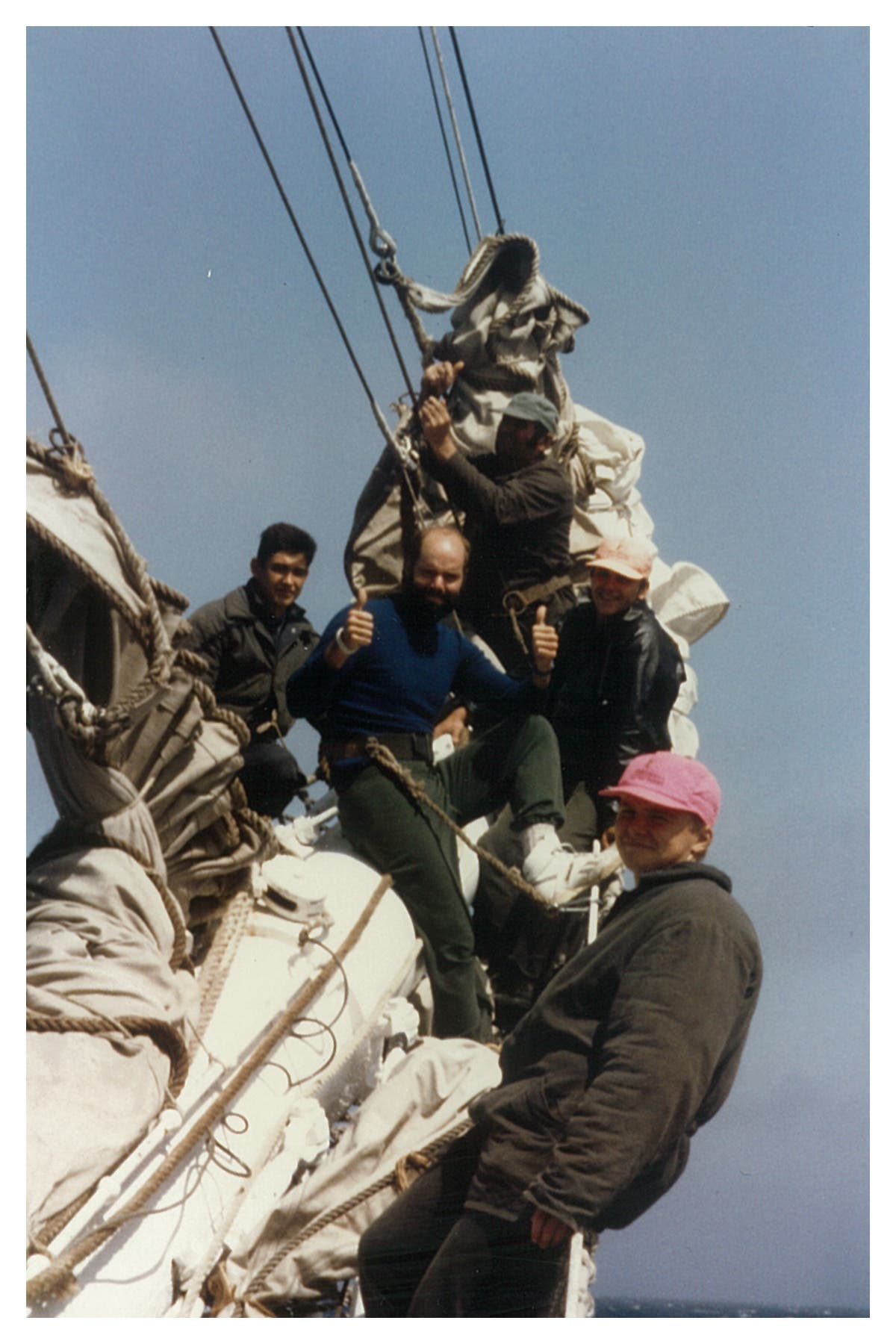
I was somewhere off the coast of Newfoundland towards sunset that evening when a rumor swirled about the ship indicating that the radar could not identify icebergs. With binoculars, I could make out several icebergs in the distance. A Titanic tremor of anxiety gripped me as I contemplated a midnight crash into an iceberg.
I never determined the source or accuracy of the rumor, probably because I was one of twelve non-Russian or Ukrainian speakers onboard. Nevertheless, I didn’t ruminate about the dreaded prospect of having to abandon ship that night. A spiritual calm soon replaced the alarming thought of being in imminent danger. Since childhood, I’ve been a big fan of King David and the promise of safety and deliverance from peril found in his Psalm 139 “If I take the wings of the morning, and dwell in the uttermost parts of the sea; even there shall thy hand lead me, and thy right hand shall hold me” I drifted off to sleep that evening with the assurance that all would be well. And so it was.
Though probably no one reading this will experience anything so jarring as an iceberg collision, everyone will confront a health alarm and have to decide on an appropriate course of action. As I write, there is a rampant fear and misinformation going on about how to effectively respond to the Ebola outbreak in Africa. The US media has contributed to this with its coverage of the arrival and medical treatment at Emory University Hospital of two American doctors, infected with the Ebola virus.
Find out what's happening in St. Petersfor free with the latest updates from Patch.
And, while some elements of the media seem bent on stirring up fear here in the US, Dr. Diawara, who heads up the Red Cross Society in Guinea, recently made this thought provoking statement “Panic is our worst enemy.”1
No one denies the importance of being prudently informed, but the risk needs to be put in perspective so that undue fear doesn’t engender stress, which author David Ropeik says “is definitely bad for our health.”2 Paul Wolpe, who is a bioethics professor and the director of the Center for Ethics at Emory University, wrote this arresting statement, “The U.S. has a history of irrational panic over disease and other perceived dangers…”3
Find out what's happening in St. Petersfor free with the latest updates from Patch.
Health researcher and theologian, Mary Baker Eddy, long ago made the connection that fear and disease often go hand in hand. In many instances in her writings and public talks she made the connection that, “Disease is a thing of thought manifested on the body; and fear is the procurator of the thought which causes sickness and suffering.”4
Rumors, speculations and dire warnings should be properly evaluated against the perceived or potential risks. Sailing at dusk towards what looks like a mine field of icebergs on the horizon can summon the same feelings of fear and dread one might have when faced with predictions of pandemic infection or a preliminary diagnosis. In both cases, it’s helpful to do more than simply think positively. What really brings relief from the fear and stress is a deeply felt conviction that there is a divine remedy at hand, no matter what the circumstances.
Whether at sea, in an airplane, or onshore I like to think of God as being at the helm of my thinking, providing daily guidance, protection from danger and maintenance of my health.
Steve Drake is a self-syndicated Missouri columnist and writes on the growing evidence that what we think directly influences our health. He is also the media and legislative representative for Christian Science in Missouri.
1. http://www.csmonitor.com/Commentary/the-monitors-view/2014/0803/How-calm-can-counter-Ebola
3. http://www.cnn.com/2014/08/05/opinion/wolpe-ebola-brantly-trump/
4. Rudimental Divine Science by Mary Baker Eddy Page 10:15 http:/christianscience.com