Community Corner
Preparing For Your First 5K
3.1 miles may seem impossible now, but in 6 weeks, it could be a breeze.

I was never a long-distance runner during my teen years. I was never a sprinter either, which left me somewhere in the middle of the track and field pack.
Long-legged and gangly, I could practically step over hurdles, so while speed was not my friend, the ability to leap tall objects in a single bound landed me a spot on the shuttle hurdle relay team.
What I considered then my first experience with long-distance running was an 800-meter race where I placed last. As I lay gasping for breath by the side of the track, I honestly thought I was going to die.
Find out what's happening in St. Petersfor free with the latest updates from Patch.
And that was when I was “in my prime.”
But for a teenage girl, a boy can change everything.
Find out what's happening in St. Petersfor free with the latest updates from Patch.
I initially joined our cross-country team to impress a boy, but I discovered instead a love for long-distance running. A 5K race is 3.1 miles. The best thing about running 3.1 miles is that I may never have come in first, but I never came in last either.
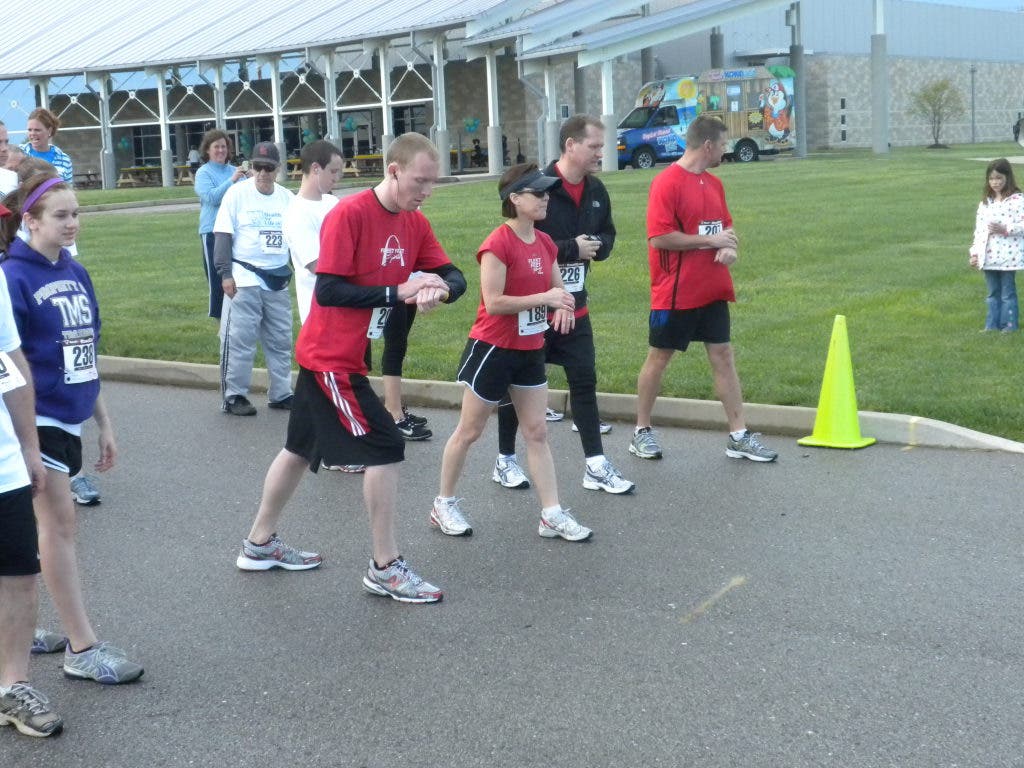
As an adult, I’m much less competitive and much more social on my runs. Most 5K races are and there are family-friendly events and activities for kids of all ages. Most of the ones I’ve participated in have included a one mile fun run for kids and an icee truck for kids of all ages.
Even if you don’t win a trophy, registering for a race gets you a cool t-shirt you can wear to impress your friends and sometimes coupons and running goodies. There are free snacks provided, and I’ve been to a few where there are masseuses set up and ready to rub you down.
If you’ve never ran a 5K, or it’s been awhile since your last run, you’ll need to train first. Here are a few suggestions for training for your 5K:
- Set a goal. Look at a list of available races coming up and select one that is at least 6-to-8 weeks out. This will give you enough time to train without injuring yourself. Decide if you’re running for fun or you want to compete.
- Map out a course. Starting out you may want to use a local high school track. Each lap is a quarter of a mile, so it’s easy for figuring out just how far you’ve gone. You can also use your cars odometer to measure a loop around your neighborhood.
- Start running. Don’t try to run three miles right out of the gate. Instead, start small and move up in increments. I suggest beginning with two laps around the track, or half mile. Try to get in three runs per week and move up in distance a half mile each week. For example: During week 1, you would run a half mile on Monday, Wednesday, and Friday. Week 2, you would run a half mile on Monday and Wednesday, and 1 mile on Friday. Week 3, you would run 1 mile on Monday and Wednesday, a mile and a half on Friday. And so on.
- Walk if you need to. If you need or want to walk, walk. The important thing is you get the distance in. Your endurance will increase with time.
- Hydrate, hydrate, hydrate! Drink lots of water to replace the fluids you’ll sweat out. Gel packs and special electrolyte drinks are not necessary at this distance.
- Streeeeetch! Always stretch your legs before and after a run. This will help prevent injury and soreness.
This is the prime time for 5 K races and there are many to choose from. You can find a list of races at Fleet Feet or at St Louis Track Club. You can also keep track of your miles at websites such as dailymile or Runkeeper.
Running a 5K is a fun, rewarding way to get in shape. Grab a few friends and run together for a charity that’s close to your heart or run to look fabulous in a swimsuit this summer. There are never any losers at a 5k.