Health & Fitness
Purchase Flowers Now to Attract Butterflies And Hummingbirds All Summer Long
As you head out to purchase flowers for your garden, give some thought to bringing some home that will attract butterflies and hummingbirds to your home.



Shopping for flowers to plant in your garden is so much fun this time of year.
The nurseries and big-box stores are stocked with plants of every color and size imaginable. We all have our favorites that we purchase year after year, but have you ever considered purchasing plants specifically to attract hummingbirds and butterflies to your garden?
It’s not difficult at all. You have probably brought home some great wildlife attracters without even knowing it. Did you know that the herb, parsley, is the number one host plant for swallowtail butterflies? Another herb, fennel, is a great host plant as well.
Find out what's happening in Town And Country-Manchesterfor free with the latest updates from Patch.
Some flowers that you may already have in your garden are butterfly “nurseries” too. Sunflowers, hollyhock and coneflower are plants that the butterfly will commonly lay eggs on. In 10 to 14 days the larvae emerge, making their way into the world, growing and changing as they become beautiful butterflies.
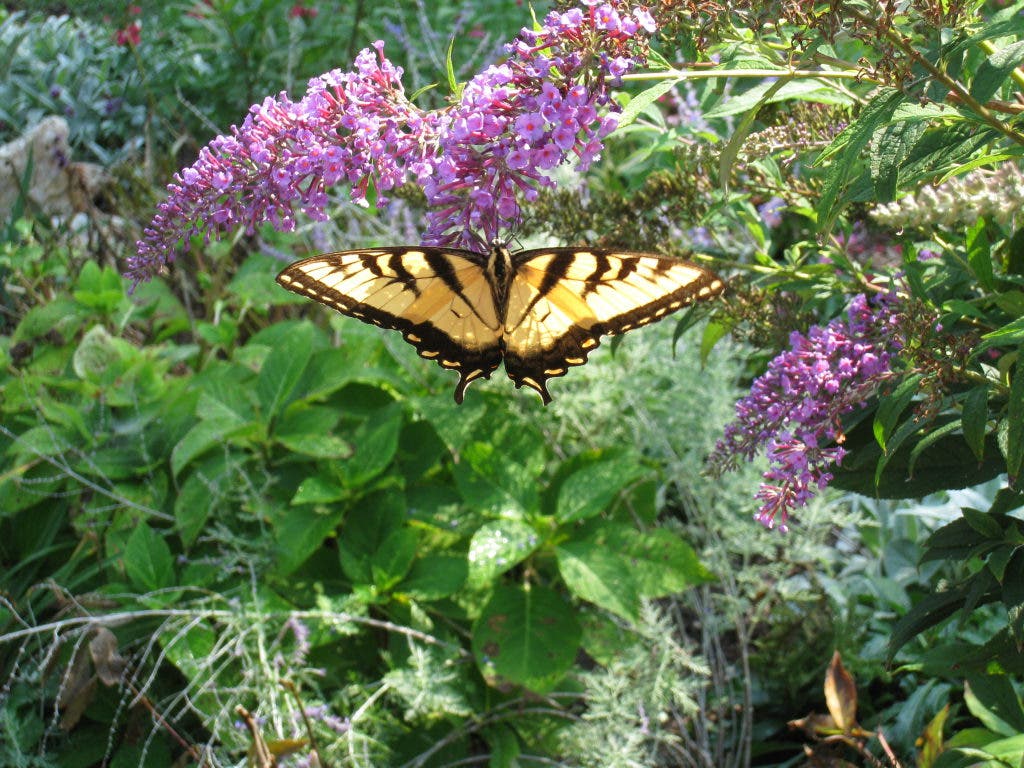
A wealth of nectar plants entices butterflies and hummingbirds to visit your garden. My number one choice would have to be the butterfly bush. The array of colors and selection of sizes is amazing and the sheer number of butterflies that come to visit will astonish you. The Butterfly bush (the botanical name is Buddleia) can max out at over six feet tall, or be as short and one foot tall. The new, shorter introduction is called “Low and Behold” Buddleia. It’s not very hard to find, and is perfect if you’re short on space. Butterfly bush are available in colors from deep purple, to pale lavender, to pink to yellow. You’d be hard-pressed to find one you don’t like!
Find out what's happening in Town And Country-Manchesterfor free with the latest updates from Patch.
My second choice for attracting butterflies has to be Asclepius. There are annual and perennial varieties; both do a great job of luring winged visitors to your garden. To round out the list of nectar plants I’d be remiss not to mention Bee balm (botanical name Monarda) Lantana, Nicotiana, Verbena bonariensis, Columbine and Trumpet vine.
Trumpet vine has the most stunning, large orange flowers that a hummingbird can almost hide in it! Verbena bonariensis is commonly called, “Stick Verbena.” It is about 3 feet tall and as thin as a stick. Goldfinches adore the plant as much as butterflies and will perch on top of it to pick the seeds- it’s really comical to watch the nimble finch swing back and forth while plucking seeds from the deep purple flowers.
Columbine is great to have in your garden as a predictor of the hummingbird’s arrival. Ask anyone who grows it when they see the first hummingbird in spring. A common reply is, “They come when the columbine bloom!” It reminds me of the question, “What came first, the chicken or the egg?” Gardeners ask, “What comes first, the columbine’s bloom or the hummingbird’s arrival?” It’s a mystery!
So, on your next shopping trip to the nursery, think about purchasing plants to attract wildlife. Bring the kids or grandkids and make it a family event. In addition to some plants, pick up an identification guide depicting butterflies common to our area. Let the little ones pick out a few plants that provide a host or nectar. Make one of those plants Columbine and next year you’ll be able to ask; “What came first, the hummingbirds or the bloom of the Columbine?” At my house, the hummingbirds came one day after the Columbine bloomed!