Schools
Deadly Trend: Heroin Use on the Rise in St. Charles, St. Louis Counties
The Community Council of St. Charles County hosts a summit dealing with dangerous drugs and shares resources.


How can an adult spot a teenager who's hooked on heroin?
That was one question that arose during the Community Services Summit Tuesday. One high school counselor told Dr. Mary Case, chief medical examiner for St. Louis, St. Charles, Jefferson and Franklin counties, she doesn't know how to recognize students who are using heroin.
The counselor asked Case, “What do they look like?”
Find out what's happening in Wentzvillefor free with the latest updates from Patch.
“Well, the ones I see are dead,” said Case, who acts as coroner for the four counties.
Case, who spoke at the 13th Annual Community Services Summit at in St. Charles County, told participants that heroin deaths in St. Louis and St. Charles counties are on the rise.
Find out what's happening in Wentzvillefor free with the latest updates from Patch.
- 10 people died in St. Louis County from heroin overdoses in 2002
- 60 people died in St. Louis County in 2010
- 21 people died in St. Charles County in 2010
Dealing with an epidemic
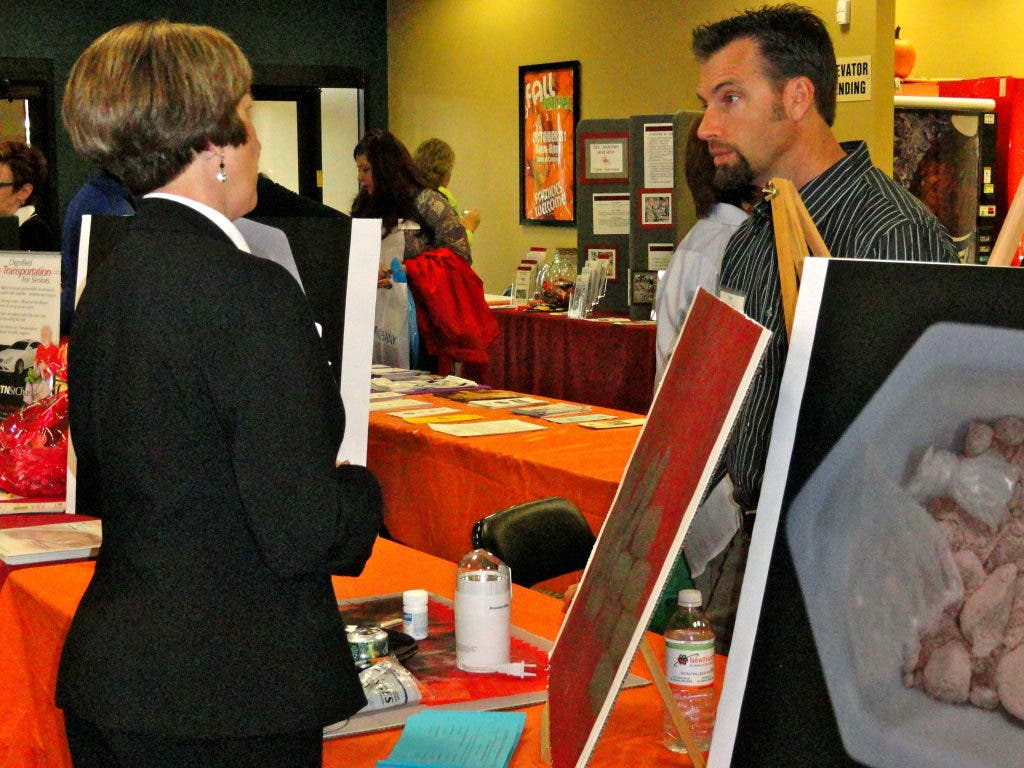
The Community Council of St. Charles County hosts the event each year, which includes breakout sessions on heroin and designer drugs.
“Schools are seeing the designer drugs and heroin, but they don’t know how to deal with it,” said Cindy Wynn, Community Services Summit coordinator for the Community Council of St. Charles County. “This is what they are dealing with in schools, social agencies and not-for-profits, so people wanted more information.”
Wynn, a former counselor in the St. Charles School District, helped found the Community Council to help not-for-profits, churches and social agencies share resources.
Focused on one thing
Case did more fully answer the counselor’s question about identifying heroin abuse. Heroin is a depressant, she said, so the students won’t show interest in school or any other activities.
“They’re sedated, not interested in the world around them. I would say they have one primary interest in their lives, and that is getting that drug,” Case said.
Matt Bargen, a detective with the St. Charles County Regional Drug Task Force, said rising heroin death rates fit with what police are seeing: more heroin use among young people. Part of the problem is that heroin is fairly cheap.
“I just had an ex-addict tell me it cost him $10 a dose about 30 years ago, and it’s pretty much the same price now,” Bargen said. “So, it’s pretty cheap, and the purity of it is higher now than it was back then.”
“It’s the good kids”
Case said the deaths are primarily white males who may have had close calls with overdosing in two or three weeks before they actually died.
James Adkins, district administrator for the Missouri Board of Probation and Parole's St. Charles office, said about 80 percent of all those who go to prison have some type of substance addiction. But some in law enforcement are surprised to find youth from middle class or even wealthy families using heroin.
“It’s really the good kids from good families, that’s what we’re seeing more and more,” Adkins said.
Linda Johnson, a counselor from Francis Howell Central, said although she attended a session on heroin, she also wanted to learn about restorative discipline.
“But I think it (drug use) is a concern for everybody,” Johnson said.
Back for more
Case said an addict can nearly die from an overdose and turn around and use more heroin within days.
Paul Cary said nothing about addicts surprises him.
“If you understand the diseased state of an addict’s brain, it’s not surprising at all,” said Cary, director of the toxicology lab at University of Missouri Health Care in Columbia.
“In an addictive brain, they’re not thinking with the frontal lobe, where thinking occurs. The pleasure centers are the only thing that drives an addictive brain,” said Cary, who spoke on problems posed by designer drugs.
More resources
There were several other sessions at the summit, such as "Fostering Connectedness in Youth," "Dealing with Grief and Bereavement" and "Understanding Cultural Diversity."
Sarah Keith, a counselor at , said the information on drugs was helpful, but she came to learn about resources in St. Charles County.
“I think the main reason I’m here is I’m seeing a lot of my students and families in need,” Keith said. “As a new counselor, it’s hard to get a grip on the resources available in the community. This gives us a good idea of the resources out there to help us.”
Get more local news delivered straight to your inbox. Sign up for free Patch newsletters and alerts.