Arts & Entertainment
Jazz, Civil War and Haiti Feature in New Shows at the Sheldon
An all-gallery opening reception will be held 5-7 p.m. today at the gallery in St. Louis.




Three days before the official opening for six new exhibitions at The Sheldon Art Galleries, art galleries director Olivia Lahs-Gonzales zipped through the exhibition space on a whirlwind tour.
“These are pretty stunning,” Lahs-Gonzales said, looking at the large photographs of Tim Simmons. “He uses a (large format) four by five camera. They’re amazingly detailed — you can see every blade of grass.”
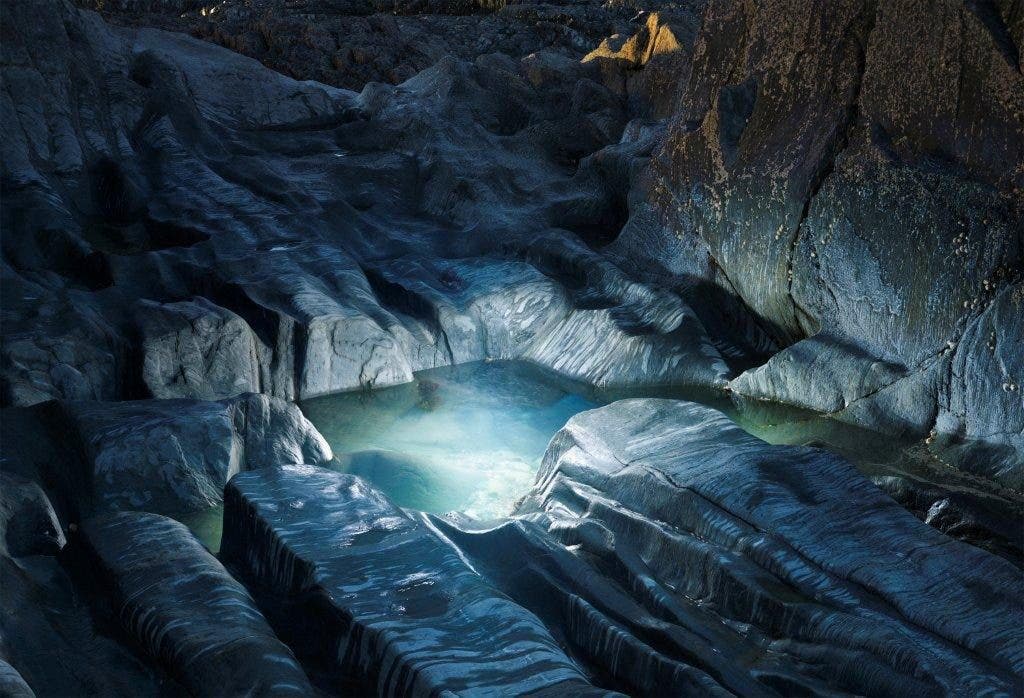
Simmons and Steve Giovinco have photos in the “Edge of Darkness” exhibit. The photos contributed by Simmons are all shot in darkness or near darkness, with artificial light introduced to highlight certain areas. Giovinco also shoots in dark or near dark conditions, but only uses available light.
Find out what's happening in Wentzvillefor free with the latest updates from Patch.
Lahs-Gonzales is excited to offer these works and others to the public, starting with an all-gallery opening reception 5-7 p.m. today.
“We’re extremely excited about this round of exhibits,” she said. “They really are top-notch, internationally recognized artists that we show here in an intimate setting. We put up text to explain the artwork, and everything’s very friendly and very homey, in a way, because the spaces are intimate. It’s just laid out in a way that invites people to linger.”
Find out what's happening in Wentzvillefor free with the latest updates from Patch.
In addition to “Edge of Darkness,” the other new exhibits are “Liquid Terrain: 20 Years of Works on Paper by Eva Lundsager;” “Art by Children of Artists;” “Made in the Shade: Paul Rudolph’s Florida Houses Revisited;” “The Beat Goes On: Instruments from the Hartenberger World Music Collection;” and “Northern Haiti: Human Landscape Photographs by Patti Gabriel.”
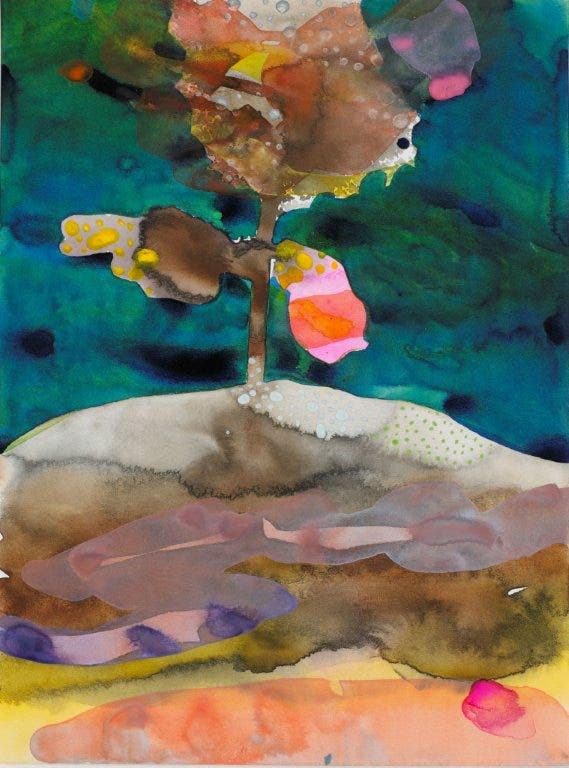
Lundsager’s brilliantly colored abstract works decorate the walls of the Bellwether Gallery of St. Louis Artists, the exhibition’s first room.
“Painting as a window into another realm is simply intoxicating,” Lundsager said in her artist’s statement. “It is escape and teleportation and freedom from our physical beings. The experience can be so very real. It’s a rush!”
Many of Lundsager’s works are untitled, which allows viewers to make their own interpretations. One piece, for instance, looks like an underwater dream, with purple, pink-spotted pufferfish swimming past multi-colored corals and sea grass, sharing space with sea urchins colored orange, green, brown and purple.
Lundsager reinforces this “open interpretation” in her statement by saying, “Abstraction is a means to pint thought processes as a response to visual and physical experience.”
The next room features art by children of artists, pieces done in crayon, colored pencil and ink, and watercolor. Subjects include pets, mermaids and dolphins, monsters and aliens. The space includes a kid-size table and chairs with colored markers, crayons and drawing paper.
“We’re a very kid-friendly place,” Lahs-Gonzales said. “We want to encourage children to come, and parents to bring their kids to see the shows.”
Bernoudy Gallery of Architecture
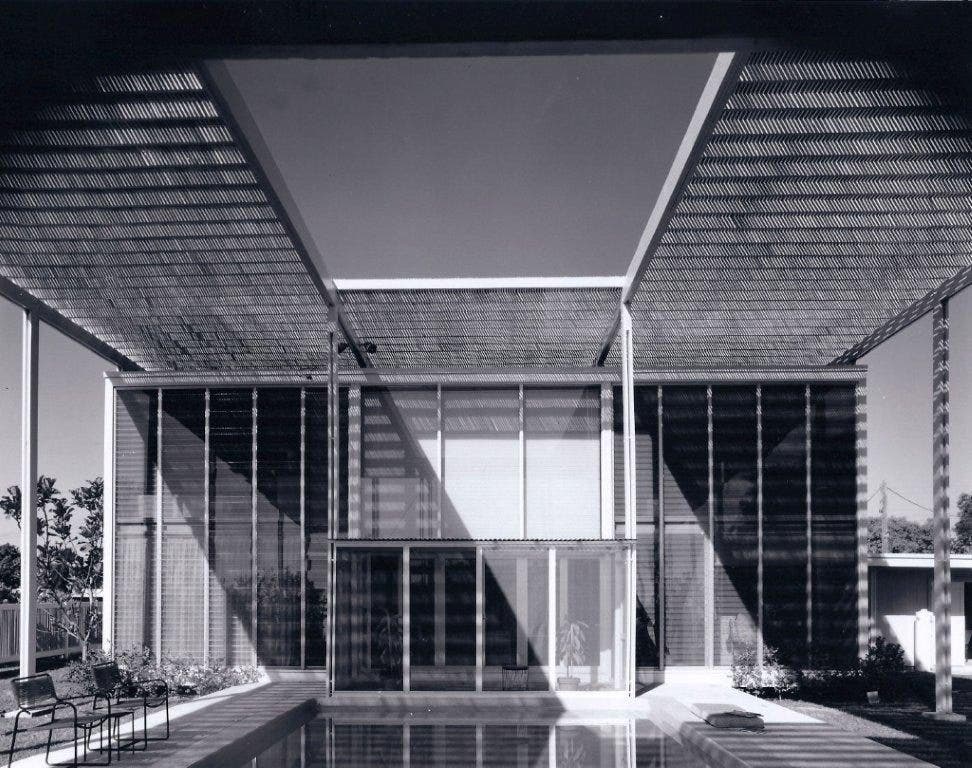
The next area – the Bernoudy Gallery of Architecture – offers photos, drawings and models of architect and teacher Paul Rudolph’s innovative home designs from the 1950s. His efforts are intermingled with models, drawings and full-scale prototypes from a studio project conducted at Washington University’s Graduate School of Architecture.
“It’s a fascinating view of this new, innovative work being done by these young architects as well as showcasing these stunning homes by Paul Rudolph,” Lahs-Gonzales said.
The exhibit is curated by Ken Tracy, visiting assistant professor of architecture at Washington University’s Sam Fox School of Visual Arts and Design. Rudolph’s home designs, captured in period black-and-white photos, represent his forward-thinking, no boundaries approach to architecture.
“Paul Rudolph was young – a little bit older than the students who are in the class – but nearly the same age when he was doing that work,” Tracy said. “I think it’s empowering for the students, in a way. There’s a juxtaposition, and a similarity, between the students’ work and what Paul Rudolph was doing.”
The Rudolph exhibit is followed by the Edge of Darkness works of Simmons and Giovinco. The picture-window sized photos by Simmons are particularly arresting. His “Rockpool #4,” taken in Devon, England, is a stunning photo of a pool of light-splashed water surrounded by granite-colored rock surfaces.
Nearby, his “Gairloch Path,” taken in Scotland, shows a path through the woods lit in great detail, with rolling hills in the background silhouetted against the fading pink-orange light of sunset.
History of Jazz
Around the corner, adjacent to Giovinco’s mood-filled photos, the History of Jazz hosts the Hartenberger World Music Collection. The collection, assembled over 35 years by Dr. Aurelia Hartenberger, includes everything from a clarinet and a piano formerly owned by Artie Shaw and trumpets from jazz great Clark Terry to an eye-catching, eight-foot-tall bass tuba that had two mouthpieces and could be played while seated or standing.
The exhibit also has drums, various brass instruments and a banjo from the Civil War, plus photos of the men who played them.
“Songs and music of the Civil War covered every aspect of the conflict, and every emotion,” according to the display’s accompanying text. “Music was played on the march, in camp, even in battle. Armies marched to the heroic rhythms of drums and brass bands. The fear and tedium of sieges was eased by nightly band concerts, which often featured requests shouted from both sides of the lines.”
There are also drums from African cultures, and many fascinating, ornately detailed sculptures representing world culture.
“From that perspective, it’s a real treat to have those up,” Lahs-Gonzales said.
Northern Haiti
The Northern Haiti exhibit is in the Nancy Spirtas Kranzberg Gallery, a separate exhibit space in the building’s lower level.
“That’s a fascinating show,” Lahs-Gonzales said.
The artist exhibit blends photographs taken in Haiti with sounds recorded there.
“So you’re really immersed in the culture and sounds of Haiti when you walk through the exhibit, because they’ve wired the whole gallery with speakers,” Lahs-Gonzales said. “So there are wonderful sounds of the forests of Haiti, the people, the ocean, playing through the gallery as you’re viewing the photographs.”
When to Go
The galleries are open noon to 8 p.m. Tuesday, noon to 5 p.m. Wednesday through Friday and 10 a.m. to 2 p.m. Saturday. The galleries are also open one hour before all Sheldon concerts, and during intermission.
“If you’re coming to a concert, come early, beat the traffic, grab a glass of wine and walk through the galleries,” Lahs-Gonzales said. “It’s always a nice way to unwind and start the evening before the concert.”
The Sheldon Art Galleries are located next to The Sheldon Concert Hall at 3648 Washington Blvd., St. Louis. Admission to the opening reception is free, and includes drinks and light snacks. Admission to the galleries is free, but donations are welcomed.
For more information, call The Sheldon at 314-533-9900.