Politics & Government
Bundy Trial Set To Begin Tuesday In Las Vegas
Charges from 2014 standoff pit Bundys who say they were peaceful protesters against prosecutors who say they were armed conspirators.


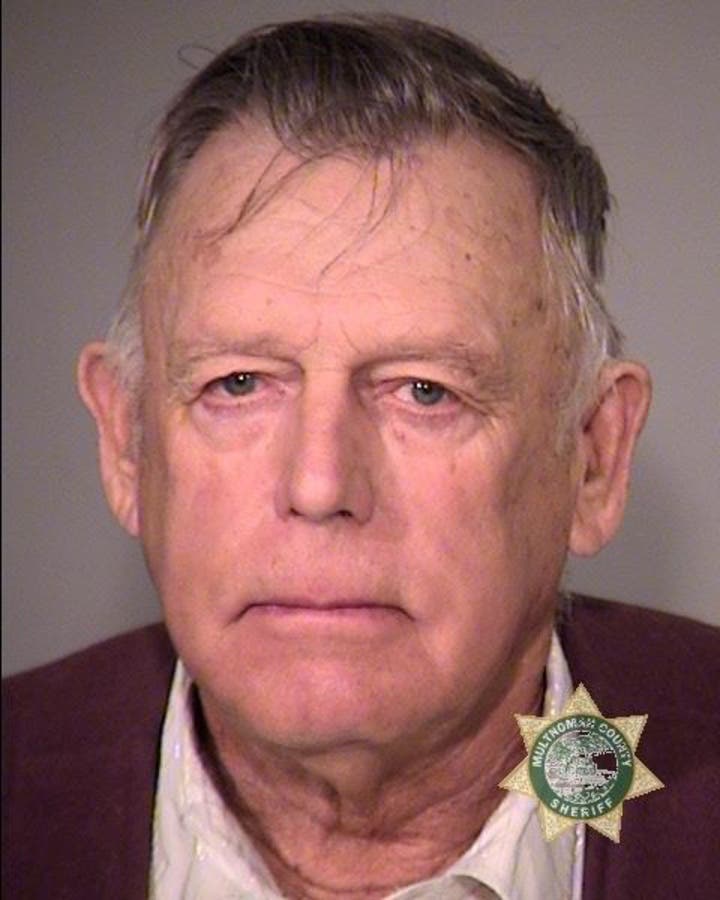
In a time when Americans are increasingly exercising their Constitutional right to protest, four men say they are charged with crimes because they protested what they viewed as government overreach. Prosecutors, on the other hand, say the men engaged in an armed conspiracy to prevent federal agents from doing their jobs.
Of course, there’s more to the story.
Starting Tuesday, 12 jurors will spend about four months hearing the case against Cliven Bundy, two of his sons – Ammon and Ryan – and an associate named Ryan Payne, a militant from Nevada. The four face weapons charges as well as charges of conspiracy, threatening and extortion.
Find out what's happening in Las Vegasfor free with the latest updates from Patch.
The charges stem from the 2014 confrontation at Bunkervlle, NV., where Cliven let his 1,000 head of cattle graze despite never having paid grazing fees to the federal government. After 20 years of no payments, the Bureau of Land Management decided enough was enough and sent agents to seize the cattle.
Bundy and his family called for assistance and were soon joined by hundreds of supporters – many of them armed, some of them snipers set up on a highway overpass. The BLM agents, badly outnumbered, eventually returned the cattle and retreated.
Find out what's happening in Las Vegasfor free with the latest updates from Patch.
And, for two years, nothing really happened. Bundy and his supporters were never charged and grew more confident. Then, in February 2016, Ammon and Ryan Bundy and other supporters seized control of the Malheur National Wildlife Refuge in Oregon.
A standoff there lasted 41 days and ended with the Bundy brothers being sent to jail.
On Feb. 10, Cliven flew to Portland to visit his incarcerated sons, but the FBI was waiting him at the airport. They sent him to Nevada, where prosecutors finally filed charges, and Cliven joined his boys behind bars.
Prosecutors in both states saw this as the simple crux of both cases: just because you disagree with the law doesn’t mean that you don’t have to obey it.
Cliven and his followers see it differently.
They think the federal government has no right to control the Oregon refuge lands where Cliven let his cattle graze. In court papers, Cliven’s lawyers compare him to Martin Luther King Jr. and allude to the standoff during the March on Selma that King led in 1965.
Control of the land is an issue that brings out strong emotions on both sides in Nevada and Oregon. In Nevada, the issue has been central in variety of incidents, from the treatment of wild horses to an ongoing dispute between the state and federal governments over plans to place nuclear waste at Yucca Mountain. And, of course, the 2014 standoff at Bunkerville.
When he first appeared in court, Cliven refused to enter a plea and said he didn’t recognize the court’s authority. Similarly defiant, Ammon and Ryan said they believed the federal government had no right to control the land and that, in fact, federal control of the land is illegal.
While prosecutors in Oregon and Nevada have been able to get some of those charged to plead guilty pre-trial, they have had little luck convincing jurors when the cases go to trial.
Ammon, Ryan and five others were acquitted in Oregon. It was a verdict, just days before the election of President Donald Trump, that left prosecutors stunned and acutely aware that things were changing.
From a presentation in Oregon that some considered overly complicated to the delayed release of information to the defense that probably should have been turned over earlier, the government has not always helped its own case.
There were two examples of that emerged Friday. For the first time in three years, the federal government disclosed it had set up a surveillance camera that relayed a live feed of people coming and going from the Bundy Ranch. It also admitted shredding documents with information on resources and operational details.
Prosecutors will argue that the Bundys and Payne conspired to stop federal agents from doing their jobs, while the defense will contend that their actions were a lawful protest against what they felt was government oversight of the fact that the federal government has no right to control public land.
Both sides will make their case to the jurors who were picked last week after four days of questioning. Sixteen people – seven women and nine men – were chosen from a pool of about 150. Twelve will serve on the jury, with four as alternates.
All of the jurors had to fill out two questionnaires: a standard one about their background and beliefs on issues such as guns and protests and another about the Oct. 1 massacre in Las Vegas that left 58 dead, hundreds wounded and prompted a three-week delay in the trial.
It will be closely watched by people up and down the political spectrum — from Trump associate Roger Stone, who has called for the Bundys to be pardoned, to environmental groups that fear acquittal of the Bundys will embolden those who ignore federal restrictions on the land.
"I hope you can see what we've been pushing for," Ammon Bundy’s lawyer in the Oregon trial told jurors. "What do you see? Government overreach.
"The government going too far.”
Photo courtesy Multnomah County Sheriff's Office
Get more local news delivered straight to your inbox. Sign up for free Patch newsletters and alerts.