Schools
Earthquake: Nevada School Tests Bridge Construction In Lab Test
The University of Nevada-Reno's acclaimed earthquake research lab put construction techniques to the test to better understand quakes.


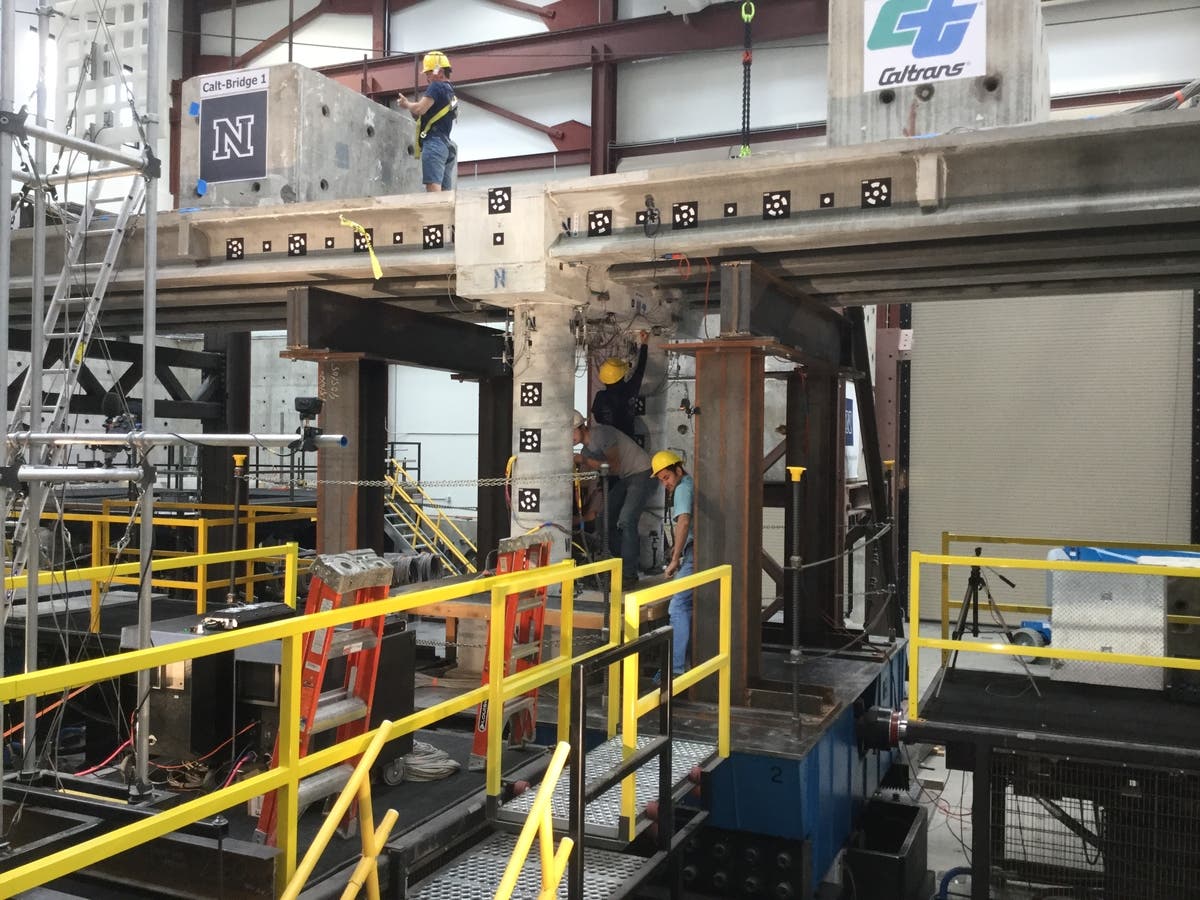
Thousands of miles from the scene of yet another deadly earthquake, where workers struggled through the remains of collapsed buildings hoping against hope, researchers at a lab in Nevada conducted an experiment in the hopes of improving construction techniques. They were at the University of Nevada, Reno's renowned Earthquake Engineering Laboratory.
And they were preparing to make a bridge shake.
The researchers had overseen the construction of a 100-ton, 70-foot long bridge on three very large shake tables that would mimic a 7.5 earthquake. The goal was to test five different principles of bridge construction using one very large model.
Find out what's happening in Las Vegasfor free with the latest updates from Patch.
The study, funded by California's Department of Transportation, would hopefully come up with results that would help speed construction of bridges and improve earthquake resistance and resiliency. (For more information on this and other Las Vegas stories, subscribe to Patch to receive daily newsletters and breaking news alerts. If you have an iPhone, click here to get the free Patch iPhone app.)
The study took components built off-site out of new materials such as something called ultra-high performance concrete and assembled them like an erector set atop the shake tables, according to Saiid Saiidi, the project leader. He is a member of the university's Department of Civil and Environmental Engineering and the director of the Center for Advanced Technology in Bridges and Infrastructure.
Find out what's happening in Las Vegasfor free with the latest updates from Patch.
Some design work by engineers at the lab has already been incorporated into a highway off-ramp being built in Seattle. What makes the ramp different is that it has flexible columns and reinforcement bars made out of a new material that bends and then springs back into shape when quakes hit.
While some of the components in the bridge model had been tested individually, the test on Wednesday was the first time they had been combined together and subjected to earthquake conditions.
"The good seismic performance of a component does not guarantee that the entire bridge will resist the earthquake," Saiidi says. "That's why this test was necessary."
And so for twenty seconds - the bridge model shook. The deck sayed, cracks formed around the support columns. Then it was over. The bridge was clearly damaged. But it was still standing.
"This is a big step in getting these techniques and materials adopted by public agencies for use in the communities," according to Saiid. "The experiment was a success, showing the components performed well.
"Of course, we have to analyze the huge amounts of data collected through our sensor network to quantify the results."
Saiid's team had installed more than 400 sensors: potentiometers, transducers, strain gauges, string potentiometers and accelerometers to record the forces of the earthquake simulated in the lab.
Photo: University of Nevada, Reno.
Get more local news delivered straight to your inbox. Sign up for free Patch newsletters and alerts.