Crime & Safety
Las Vegas Shooting: Mystery Deepens As Timeline Is Revised
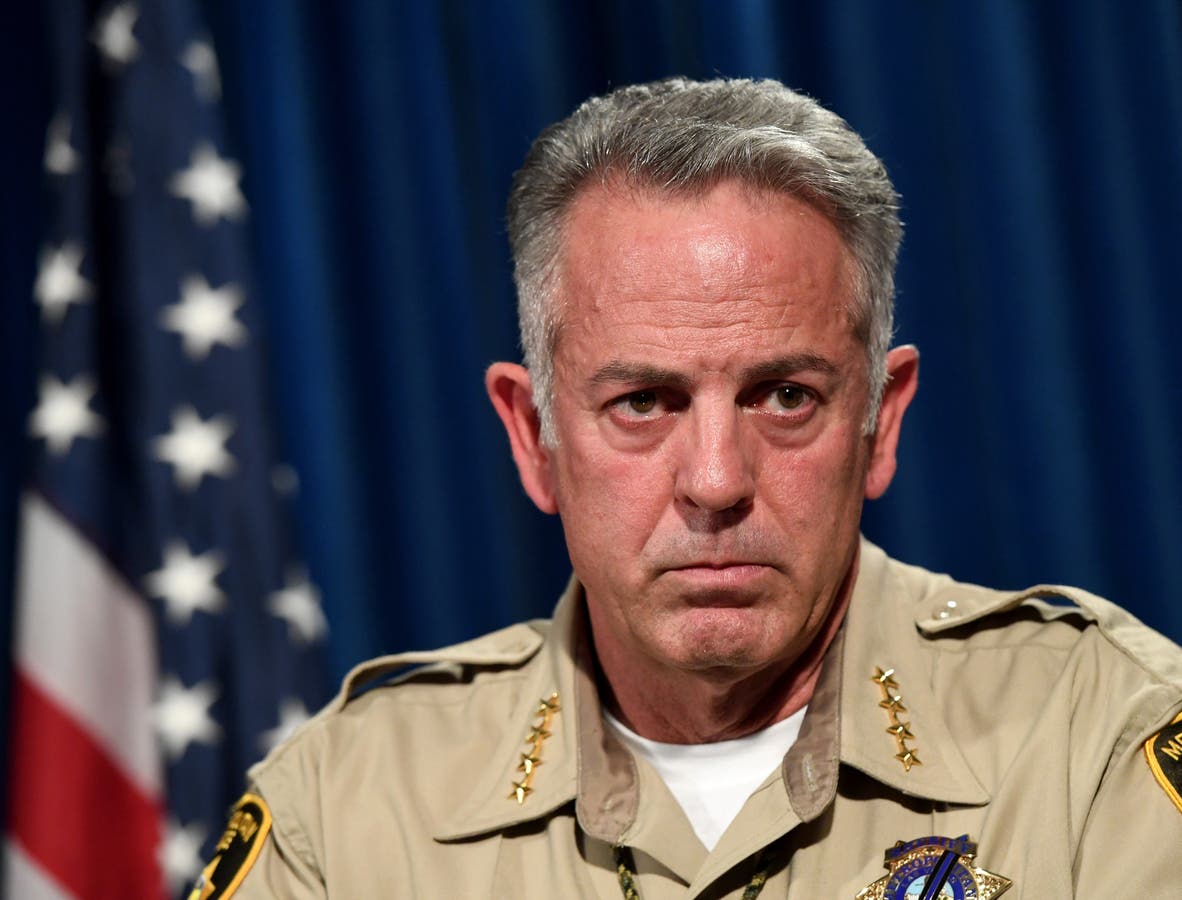
Sheriff Joe Lombardo now says that Stephen Paddock shot security guard Jesus Campos before he opened fire on the concert, not after.


The timeline of events the night of Oct. 1 in Las Vegas has now been substantially revised, deepening the mystery and raising more questions about what happened when. While it had been believed that security guard Jose Campos was shot after Stephen Paddock killed 58 and wounded hundreds, it now turns out that was not the case.
Sheriff Joseph Lombardo says that after further investigation, officials have concluded that Campos was shot in a hail of 200 bullets six minutes before Paddock opened fire on the 22,000 people attending the Route 91 Harvest Country Music Festival.
It was originally believed that Paddock shot Campos at 10:18 p.m. Police now think it just happened at 9:59 p.m.
Find out what's happening in Las Vegasfor free with the latest updates from Patch.
"Mr. Campos was encountered by the suspect prior to his shooting to the outside world," Lombardo said. "He immediately, upon being injured, notified security of his situation.
"In close proximity of Mr. Campos being shot there was also a maintenance worker on the 32nd floor. Mr. Campos prevented him from receiving any injuries."
Find out what's happening in Las Vegasfor free with the latest updates from Patch.
The change in timeline leaves open the question of why Paddock stopped shooting. (For more information on Las Vegas stories, subscribe to Patch to receive daily newsletters and breaking news alerts. If you have an iPhone, click here to get the free Patch iPhone app.)
Watch: Police Are 'Frustrated' By The Las Vegas Shooter's Mystery Motive
Lombardo and other officials had originally said they believed it was the arrival of Campos outside of Paddock's door that led him to end the carnage.
Now the question of why he stopped shooting is as much a mystery as why did he started.
Meanwhile, Nevada Attorney General Adam Paul Laxalt is investigating reports of sham charities collecting donations, purportedly on behalf of victims.
"There continue to be sham charities and websites seeking to profit from this horrific tragedy," says Laxalt. "Complaints from local consumers continue to be the best source of information for our Bureau of Consumer Protection in investigating claims of misrepresentation."
Laxalt's office has already shut down at least one Facebook page with the help of the company.
In an effort to help protect consumers, Laxalt's office sent out several tips for consumers:
- Avoid any charity or fundraiser that asks for donations in cash or via wire transfer. Those that are unable to provide detailed information about their mission or organization and how donations will be used are suspect.
- Better Business Bureau can also provide assurances about the trustworthiness of any particular charity.
- Review the charity’s financial information or its Form 990. For information on the Form 990, visit the Nevada Secretary of State website. If a charity claims to use your donations to help the local community, contact the local agency and confirm whether the agency is familiar with the charity and receives financial support from it.
- Do not feel pressured into making an immediate donation by telephone or in person. The need for donations and the opportunity to give will be present for some time, and legitimate charities will not pressure you into making an immediate donation.
- Avoiding making checks payable to individuals. Also, avoid providing credit card, bank account or social security number information over the phone.
- When texting to donate, confirm the number with the source before you donate. The charge will show up on your mobile phone bill, but donations charges are not immediate.
- Be cautious of unsolicited charitable e-mails and attachments. An unsolicited e-mail is likely part of a scam, and any attachments may have a virus designed to steal financial or other personal information from your computer.
- Social media sites can also perpetuate scams. As with any other charity, take time to investigate the people behind any social media campaigns to ensure they represent a legitimate organization. Some sites, such as GoFundMe, take affirmative steps to ensure fundraising campaigns are vetted, donations are verified and complaints can be made to protect donors.
- Be wary of soundalike names. Many sham charities intentionally use names that are easily confused with legitimate, respected charities.
Nevada consumers can file complaints regarding fraudulent charities with the Nevada Attorney General’s office. Consumers may also file complaints with the Attorney General’s Bureau of Consumer Protection at the Family Assistance Center located at 3150 Paradise Road, Las Vegas, inside the Las Vegas Convention Center. In addition, the FTC provides complaint assistance for anyone who suspects that a scammer is disguising itself as a charity.
Photo via Ethan Miller/Getty Images News/Getty Images
Get more local news delivered straight to your inbox. Sign up for free Patch newsletters and alerts.