Politics & Government
Activist Group Challenges New Hampshire Student ID Voter Law
Left-of-center advocacy org Open Democracy is trying to overturn HB 32, which removed student IDs from the ID list accepted at the polls.

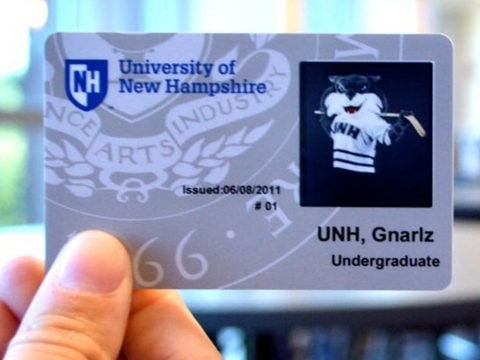
An activist group that helps register college students to vote in New Hampshire is asking a federal court to overturn the state’s new voter ID law, which removes student identification cards from the statutory list of IDs automatically accepted at the polls.
Republicans who passed HB 323, signed by Gov. Kelly Ayotte in April, have long raised concerns about college students whose permanent homes are in other states casting ballots that affect local property taxes and public policy. Some Republicans argue those students should vote by absentee ballot in their home states.
Find out what's happening in Across New Hampshirefor free with the latest updates from Patch.
Democrats, who overwhelmingly opposed the legislation, say Republicans are attempting to suppress participation by young voters, who tend to favor Democratic candidates.
Open Democracy, a left-of-center advocacy group, filed suit Tuesday in the U.S. District Court for the District of New Hampshire seeking to block enforcement of HB 323. The organization is also challenging Secretary of State David Scanlan’s instructions to election officials to treat student IDs as unacceptable not only when voters obtain ballots, but also when establishing identity during voter registration and requesting an absentee ballot.
Find out what's happening in Across New Hampshirefor free with the latest updates from Patch.
“In New Hampshire, registering to vote on your 18th birthday is a rite of passage. For more than a decade, student IDs have been a secure and accepted way for students to prove their identity at the polls,” said Open Democracy Executive Director Olivia Zink. “HB 323 strips away that option without any evidence that it was ever a problem. That is not the New Hampshire way.”
Open Democracy is represented by Free Speech For People, the law firm Mintz, and local counsel Whatley Kallas LLP.
Free Speech For People Legal Director Courtney Hostetler said HB 323 will create chaos at the polls.
“HB 323 and Secretary Scanlan’s directive accomplish one thing: they unconstitutionally burden young voters to keep them from the polls,” Hostetler said. “Student IDs are an accessible, reliable way for young voters to prove their identity when registering and voting. The exclusion of these IDs will create chaos in the fall, creating a risk that thousands of young voters will be turned away from the polls. That’s by design—and it is both inexcusable and unconstitutional.”
J. Christian Adams, president and general counsel of the Public Interest Legal Foundation, told NHJournal the legal strategy is unlikely to succeed.
“These cases have been rejected by courts around the nation,” Adams said. “There is no youth discrimination recognized in federal voting rights law. States have wide latitude to design voter ID systems, and only protected classes that are harmed may sue. College kids in New Hampshire aren’t a protected class.”
State Rep. Ross Berry (R-Weare), chairman of the House Election Law Committee, echoed that analysis.
“College students are not a special class of voters,” Berry said. “Our common-sense law holds everyone, college student or otherwise, to the same standard. There are no exemptions for favored groups. Going to court to demand otherwise undermines the very principle of equality under the law.”
College-age voters tend to support Democrats, making student voting a recurring partisan issue in New Hampshire. Under state law, college students may vote in New Hampshire if they establish the state as their voting domicile. They cannot legally vote in both New Hampshire and another state.
Since New Hampshire enacted its voter ID law in 2012, qualifying students have been permitted to use identification cards issued by accredited New Hampshire high schools, colleges and universities. The cards were required to include a photograph and a sufficiently recent issuance or expiration date.
“These IDs bore the same markers of reliability as other forms of ID, like driver’s licenses; student IDs were only accepted if they displayed the student’s photo and displayed an expiration date,” Open Democracy said in a statement announcing the lawsuit.
Open Democracy argues that requiring students to obtain government-issued identification imposes an unnecessary burden without making elections more secure.
“Now, students are left scrambling to obtain other forms of acceptable identification,” the group said. “Notably, to obtain at least some of these forms of ID, including a state-issued ID available at New Hampshire’s Department of Motor Vehicles, students must still provide their identity—and can do so using the same documents, including their student IDs, that they used to be able to use to register to vote.
“In other words, they will still present their student ID as a basis for proving identity; they just have to go through burdensome processes first.”
Berry counters that the law and Scanlan’s directive level the playing field by holding college students to the same requirements as other voters.
“College students must first prove their identity prior to entering college,” Berry said. “They are required to show their government-issued identification when purchasing alcohol or a firearm, just like everyone else. And like everyone else, the same should be required of college students when they vote.”
The lawsuit seeks an immediate injunction blocking HB 323 and Scanlan’s directive, which would allow qualifying students to use their school IDs during this fall’s elections.
This story was originally published by the NH Journal, an online news publication dedicated to providing fair, unbiased reporting on, and analysis of, political news of interest to New Hampshire. For more stories from the NH Journal, visit NHJournal.com.