Politics & Government
AFP Event Celebrates New Hampshire Becoming 'Ungovernable'
New Hampshire's January 1776 constitution is generally recognized as the first written constitution adopted by an American colony.

For New Hampshire, “First in the Nation” started long before the presidential primary tradition. It started even before America’s founding. But it was based on the same Granite State culture that has informed the state’s politics for nearly 300 years:
New Hampshire’s elected leaders work for the people — or else.
Find out what's happening in Across New Hampshirefor free with the latest updates from Patch.
“We were the ‘First in the Nation’ to kick the Brits out,” Greg Moore of Americans for Prosperity told a crowd gathered in Portsmouth Wednesday night. “We were a pretty unruly lot that pretty much started this revolutionary mess.”
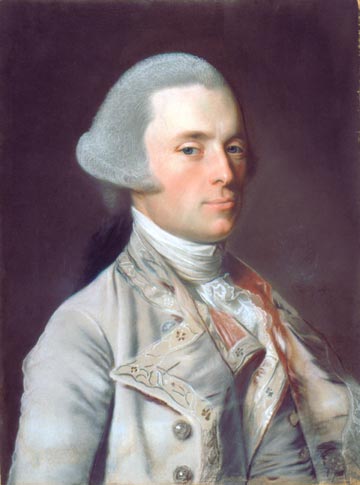 Gov. John Wentworth (Wikipedia)
Find out what's happening in Across New Hampshirefor free with the latest updates from Patch.
That mess included sending Royal Gov. John Wentworth and his court fleeing the state on Aug. 23, 1775, ending royal rule in New Hampshire months before the Granite State established its own independent government. That was the event commemorated at the AFP-New Hampshire gathering under the slogan “Become Ungovernable.”
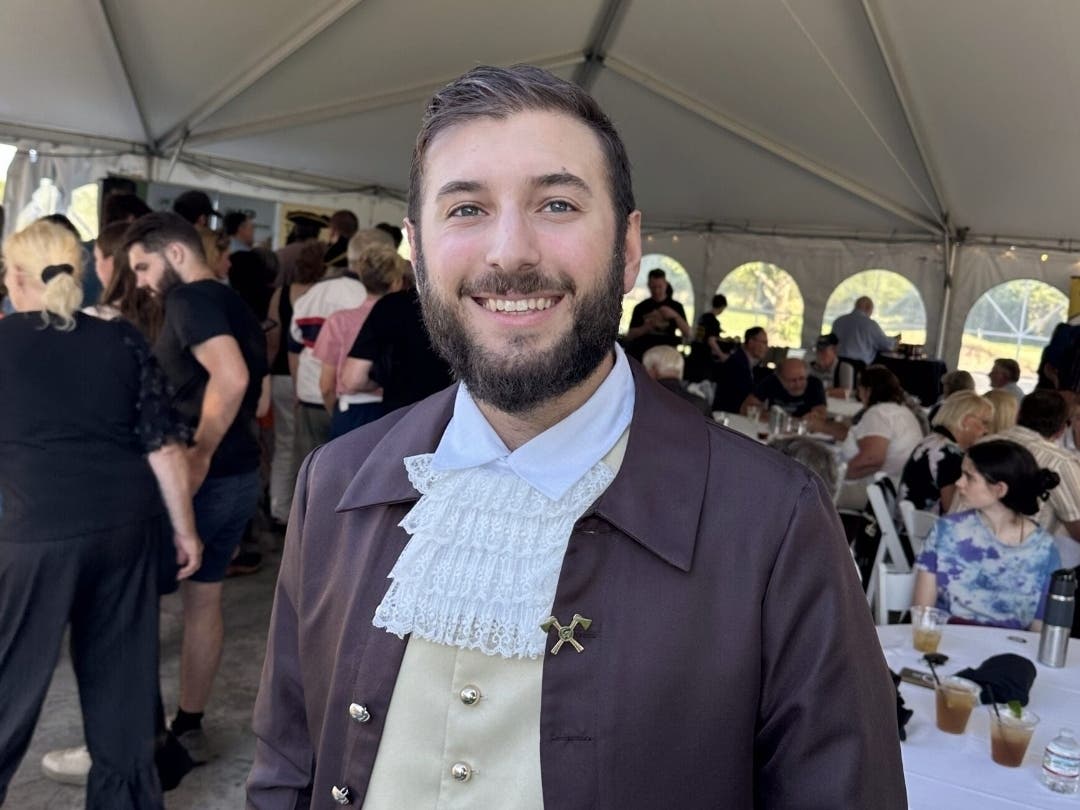
Addressing a crowd that included several members of the state House of Representatives, as well as a few people dressed in colonial garb, former House Speaker Bill O’Brien said Massachusetts gets most of the attention in Revolutionary War history.
“New Hampshire’s contribution is that they realized after Wentworth fled, ‘We don’t have anyone governing how we run the state.’ So they enacted the first state constitution of the colonies on Jan. 5, 1776.”
When Wentworth fled, he refused to describe his departure as an escape, an exile or the end of royal government in New Hampshire.
“I find it necessary to go to sea for a few days,” the royal governor wrote from Fort William and Mary on Aug. 23, 1775.
Those few days became permanent. Wentworth left the province as royal authority crumbled around him, never again making New Hampshire his home.
The program looked back at a period when New Hampshire’s political order was coming apart month by month — and when Wentworth, a Portsmouth native who had governed the province since 1767, found himself caught between loyalty to the British crown and growing resistance among his neighbors.
Wentworth had not always been estranged from the province, the Josiah Bartlett Center’s Drew Cline told the crowd. A Harvard graduate from one of New Hampshire’s most prominent families, Wentworth was close to John Adams and, for years, was a popular governor.
“He listened to the people,” Cline said. “He became very popular because he was one of the few governors who actually got it. He built a house up in the Lakes Region in Wolfeboro because it was on the frontier at the time. He liked being out there. He liked to chop wood. He enjoyed the solitude. He was very American in some respects.”

The rupture accelerated in December 1774, after Paul Revere carried a warning to Portsmouth that British authorities might reinforce Fort William and Mary and secure its military stores. Local residents led by John Langdon raided the fort and removed gunpowder. Another force, led by John Sullivan, returned and carried away weapons and other supplies.
Wentworth reported that “an insurrection suddenly took place in town.” He appealed for assistance, but the raids demonstrated how little force remained behind royal authority in New Hampshire.
By the spring of 1775, war had begun at Lexington and Concord, New Hampshire militiamen had joined the forces surrounding Boston, and Wentworth’s relationship with the provincial Assembly had broken down.
The immediate crisis came on June 13. Armed men surrounded Wentworth’s Portsmouth home while seeking the surrender of Loyalist Assembly member John Fenton. Wentworth later wrote that “the spirit of outrage runs so high” that the crowd brought a cannon to his door and threatened destruction.
Fenton surrendered. Wentworth withdrew with his family to Fort William and Mary in New Castle before eventually retreating to HMS Scarborough in the Piscataqua River.
A ship’s log records Wentworth boarding the Scarborough on Aug. 24 and receiving a 17-gun salute. His departure effectively ended royal government in New Hampshire and marked the beginning of an era of self-government that began in the Granite State and eventually spread throughout the colonies.
According to O’Brien, New Hampshire and its citizens expanded the “Overton window,” taking the then-radical notion of self-government and making it mainstream among their fellow colonists.
“James Otis, Sam Adams, John Adams, Joseph Warren — all these people we would call ‘radicals’ — had the radical idea that, ‘We’ve been in this land for 150 years, and we don’t want Britain to tell us what to do.’”
Anthony DiLorenzo, a GOP candidate in the NH-01 primary endorsed by AFP, attended the commemoration.
“I think the lesson from Wentworth is that, when you’re in leadership, it’s your role to solve problems, not find excuses or blame the people,” DiLorenzo said. “That’s one of the things that made me so angry about the Joe Biden presidency. He blamed Congress for not closing the border, then Trump gets in and closes it in 30 days. Don’t point fingers. Fix problems.”
New Hampshire’s January 1776 constitution is generally recognized as the first written constitution adopted by an American colony. Its 250th anniversary, along with the nation’s semiquincentennial, is being commemorated in 2026.
After ousting Wentworth as governor, the new state tried a different approach.
“So, 250 years ago, New Hampshire established a large representative government with a legislature and no governor,” House Majority Leader Jason Osborne told the gathering.
“I just came from dealing with our own governor situation, a little thing we call Veto Day, and I’m starting to wonder if the founders didn’t have the right idea.”