Politics & Government
Council Unanimously Passes 4 GO-NORTH Federal Rural Health Grants
The Executive Council voted unanimously to support four of 5 key hubs of the wheel to distribute funds in the new "GO-NORTH" initiative.

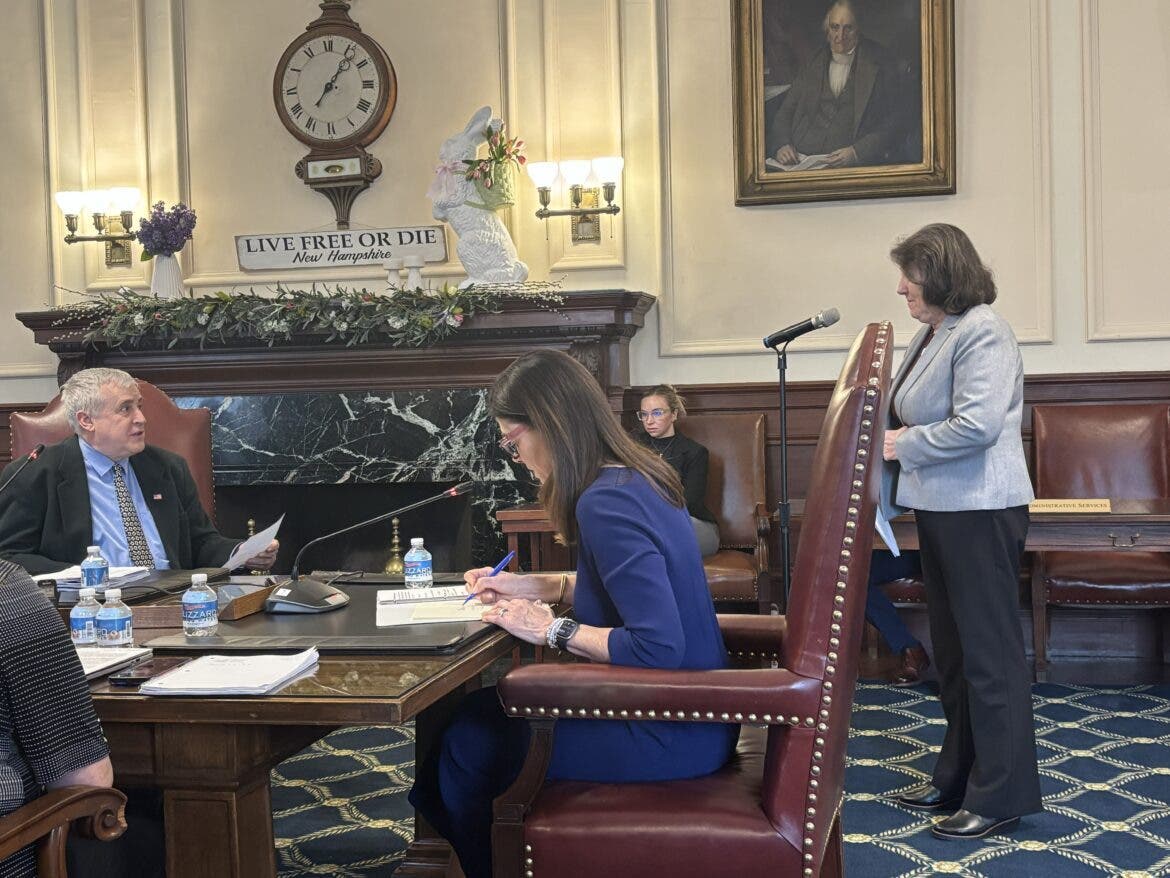
CONCORD, NH — The state took a big first step toward transforming medical and behavioral health in rural areas of the state for the next five years with federal money for things like a new nursing home in Colebrook for Coos County, new initiatives to educate paraprofessionals for health-care needs, along with better transportation to doctor visits and improved telehealth.
The state's Executive Council voted unanimously Monday to support four of five key "hubs" of the wheel to distribute funds in the new, "GO-NORTH" initiative.
Find out what's happening in Across New Hampshirefor free with the latest updates from Patch.
Republican Gov. Kelly Ayotte got $204 million a year until 2030 for the project as part of the Trump Administration's "One Big Beautiful Bill" which, nationally, is distributing $10 billion across all 50 states from 2026-2030.
New Hampshire got the largest grant in New England.
Find out what's happening in Across New Hampshirefor free with the latest updates from Patch.
The acronym stands for New Opportunities & Rural Transformational Health and the website is here: https://www.gonorth.nh.gov/.
All calls for applications to support and fund strategies aligned with the New Hampshire Rural Health Transformation plan will be posted on the GO-NORTH website.
It will mean possible things like new, mobile transportation options to get people to the doctors; new funding for windows and HVAC needed at a nursing home in Strafford County; expanded childcare options, help for housing to support workers who want to provide healthcare, more education options for high schoolers on up to add to the paraprofessional landscape in the state and more connections between health care providers and mental health needs with physical needs.
The contracts approved for the first year will allow the Community College System of New Hampshire, the University System of NH, the Community Development Finance Authority and the Foundation for Healthy Communities to begin to distribute the money.
A fifth contract, with Community Behavioral Healthcare will be voted likely March 25 when the council meets.
GO-NORTH director Donnalee Lozeau, said while these were non-competitive or "sole source" contracts, going forward all grants which are non-competitive will require a council vote while the rest will be handled by a competitive bid process.
Executive Councilor Janet Stevens, R-Rye, was among the councilors who thanked Lozeau, a retired chief executive officer of the state's largest Community Action Program, former Nashua mayor and legislator, for taking on heading the GO-NORTH initiative.
She asked a number of questions and Lozeau assured her that childcare is part of the effort and that their voices would have a seat at the table, though she preferred not to be committed to another formal board or group.
Executive Councilor Karen Liot Hill, D-Lebanon, said managing $1 billion over five years is ambitious for anyone and thanked her for continuing in public service. But she noted that the state is set to lose $2 billion in Medicaid over that period of time due to the "One Big Beautiful Bill" and this does not cover the losses.
"Today we are here to decide after tabling this and needing to look into certain matters to learn more about the plans," she said, which will have a major impact on the state.
Issues of accountability and transparency came up, she said. But they have largely been answered and she said she was ready to move forward to support the contracts.
She was asked how will there be accountability, and what will the role of the council be in oversight.
Lozeau said the feds will be asking for that and new tranches of money are predicated on the state doing a good job on that.
Liot Hill asked if there would be quarterly information provided to the council and Lozeau confirmed that would occur.
Executive Councilor John Stephen, R-Manchester, former commissioner of Health and Human Services, said this is a "huge win" for the state.
"It's really important on the implementation that we get this right," Stephen said. "What I really like is the collaboration," between various state departments and local communities in the process, which began last September to get stakeholders to identify areas where the state could see transformative change in rural health care.
Stephen said innovation is critical here. Stephen said, "I believe the taxpayers are getting value today," with these contracts.
Councilor Janet Stevens said she was concerned that the contracts were heavily favoring the hospitals and wondered how uncompensated care would be handled, as well as where is the space for federally qualified health centers.
Lozeau said this first amount of money is focused on hospitals and health care centers.
According to the federal guidance, every county has areas covered by the funding, Lozeau said.
Will the money be targeted to the really rural area, Liot Hill asked?
"The whole point of this grant is rural first," Lozeau said.
Ambulance coverage is a concern, Liot Hill said, in rural areas. How might this impact EMS needs?
Lozeau said the team has not had a chance to brainstorm but "we will be posting RFPs as it relates to that kind of work."
The major issues we are addressing, Lozeau said, are sustainability issues including housing and childcare to support health care professionals.
"I really appreciate the work GO-NORTH went to addressing our concerns," Liot Hill said, including oversight and accountability and the roles of the council.
Executive Councilor Joe Kenney, R-Wakefield, asked if the council is a partner with GO-NORTH.
"I wouldn't say you aren't a partner," Lozeau said. "I work for the governor."
There will be some oversight, he said, but the leverage for the council stops after Monday's vote.
"We are counting on you," Kenney told Lozeau.
Ayotte said the process was only 51 days long to get the state's proposal to the federal government. And it included consultation with stakeholders, input from the public, and a lot of the ideas for the grant came from that and are baked into the new program.
Foundations For Healthy Communities
According to its website, The Foundation for Healthy Communities is a non-profit organization that collaborates with hospitals, community partners, state departments and insurers on statewide initiatives that improve the health and health care for all New Hampshire residents and their families.
Based in Concord, the organization received $66.5 million Monday. Founded in 1968 as an education and research organization for the New Hampshire Hospital Association, the Foundation was reorganized in 1995 to meet the needs of a changing healthcare system.
The governor's statement indicated this grant would support rural providers such as Federally-Qualified Health Centers, Critical Access Hospitals, County Nursing Homes, Home Health Agencies, and EMS units to adopt innovative care models that expand access and invest in primary care and prevention (e.g., telehealth, team-based care, enhanced care coordination, mobile integrated health, and community nurse programs); adopt innovative technology (e.g., advanced clinical tools to support provider practice and remote-patient monitoring); workforce recruitment and retention activities.
The New Hampshire Community Development Finance Authority received $43.8 million. The governor's press release said this will fund rural health capital improvement projects which will support capital and infrastructure improvements such as nursing home renovations in Merrimack and Coos Counties, the embedding of childcare facilities within rural health care facilities, and other facility renovations and upgrades to expand access to care and support the financial sustainability of rural healthcare providers.
University System Of New Hampshire
The University System of New Hampshire in Durham received a $15.6 million grant for the first budget period.
Ayotte said this money would be used to expand statewide clinical simulation capacity (site-based and mobile) and, in partnership with rural employers and other secondary education institutions, launch the Governor’s Health Scholars Awards Program to grow the rural health professional workforce.
Community College System Of New Hampshire
The Community College System of New Hampshire was awarded a $6.7 million contract.
Ayotte said this money will support the Rural Health Career Pathways and Early Workforce Development Hub. This aspect will build career pipelines from high school through secondary education degree programs through expanded paraprofessional training, career navigation, employer-linked apprenticeships, and mobile clinical simulation training.
“I thank the Executive Council for approving these important contracts. I look forward to working alongside the Council, GO-NORTH, and our partners to deliver a healthier future for all of New Hampshire,” Ayotte said.
This article first appeared on InDepthNH.org and is republished here under a Creative Commons license.