Business & Tech
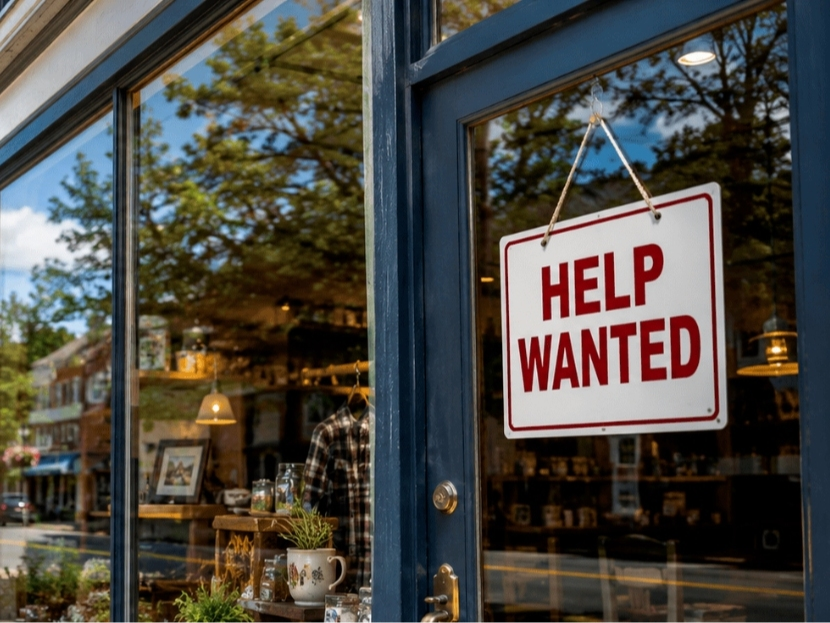
Help Wanted: NH Small Businesses Say Labor Shortage Still Top Concern
The National Federation of Independent Business says finding qualified workers and dealing with the impacts of inflation are big concerns.

The surge in energy costs since the war with Iran has been an economic shock.
But the news from New Hampshire small businesses has not. Their top challenges remain finding qualified workers and dealing with the impacts of inflation.
Find out what's happening in Across New Hampshirefor free with the latest updates from Patch.
That’s according to the latest survey from the National Federation of Independent Business, which found optimism among America’s small businesses still below the historic average.
The NFIB Small Business Optimism Index rose 0.1 points in April to 95.9 but remained below its 52-year average of 98.0 for the second consecutive month. The group’s Uncertainty Index fell four points from March to 88, but it remains well above its historic average of 68.
Find out what's happening in Across New Hampshirefor free with the latest updates from Patch.
About half of the state’s workforce is employed by small businesses, according to the U.S. Small Business Administration. And with unemployment at 3.1 percent in April, it’s hard for local employers to find workers, particularly in a state already facing demographic and workforce challenges.
“Inflation continues to impact the operations of New Hampshire’s small businesses, leaving owners to raise selling prices and make difficult business decisions to adjust,” said NFIB New Hampshire State Director John Reynolds.
“While inflation remains a top concern, Main Street employers are also having trouble hiring and finding the right workers for their open positions. These pervasive national challenges make efforts at the State House in Concord to reduce business taxes and provide more affordable health insurance options all the more important.”
According to NFIB, labor quality was the top problem cited by small-business owners in April, with 18 percent naming it their single biggest concern. That is up three points from March and above the historic average of 12 percent.
The problem is not just theoretical. A seasonally adjusted 34 percent of small-business owners reported job openings they could not fill in April, up two points from March and well above the historical average of 24 percent. Twenty-nine percent reported openings for skilled workers, while 13 percent reported openings for unskilled labor.
Overall, 53 percent of owners reported hiring or trying to hire in April, and 46 percent said they had few or no qualified applicants for the jobs they were trying to fill.
A key part of New Hampshire’s small-business economy is the hotel and restaurant sector, which relies on the state’s tourism industry. Mike Somers, president and CEO of the New Hampshire Lodging & Restaurant Association, says that, like other small-business owners, his members say “inflation and workforce challenges are top of mind.”
There are also concerns that are specific to the hospitality industry.
“Insurance costs and credit card fees have increased substantially for our industry,” Somers said. “The drop in Canadian visitors from last year likely won’t recover much this year. Uncertainty about what this summer travel will bring, with gas over $4 a gallon, has many businesses nervous.”
While New Hampshire is already a low-tax state, particularly compared to its New England neighbors, Republicans in Concord have been trying to make additional cuts to business taxes. Rep. Joe Sweeney (R-Salem) and his House colleagues voted to cut the Business Enterprise Tax rate from 0.55 to 0.5 percent.
The GOP-controlled state Senate rejected that approach, with Sen. Tim Lang (R-Sanbornton) calling it “fiscally imprudent.” Instead, Lang backs increasing the BET filing threshold from $298,000 to $350,000, which he said would cost roughly $2 million but exempt about 2,000 small businesses from filing.
“Because this year is not a budget year, we had to come up with something unique that gives tax relief to those small businesses that need it the most,” Lang said Wednesday. “Raising the floor is a uniquely New Hampshire, business-friendly approach that provides tax relief to 3,500 ‘mom and pop’ businesses at a fiscally responsible cost to revenue of $2.5 million.”
Sweeney says the House is still pushing for an across-the-board cut.
“We’re sending the legislation to the Committee of Conference so I can fight for a real tax cut for small businesses,” Sweeney said. “Raising the threshold is great for microbusinesses, and I support that. But small businesses with payrolls need relief, and the House is going to fight for them.”
For New Hampshire, the NFIB numbers point to a Main Street economy that is stable but strained. Small businesses are still hiring, investing and serving customers. But with higher prices, expensive credit, weaker sales expectations and difficulty finding qualified workers, many owners appear to be holding off on major moves.
The result is a familiar story for New Hampshire’s economy: high energy prices, low unemployment and narrow profit margins.
This story was originally published by the NH Journal, an online news publication dedicated to providing fair, unbiased reporting on, and analysis of, political news of interest to New Hampshire. For more stories from the NH Journal, visit NHJournal.com.