Politics & Government
Judge Rejects Injunction To Block School Budget Cap Vote
Merrimack County Superior Court Judge Daniel St. Hilaire said the plaintiffs failed to prove they would succeed on the merits.

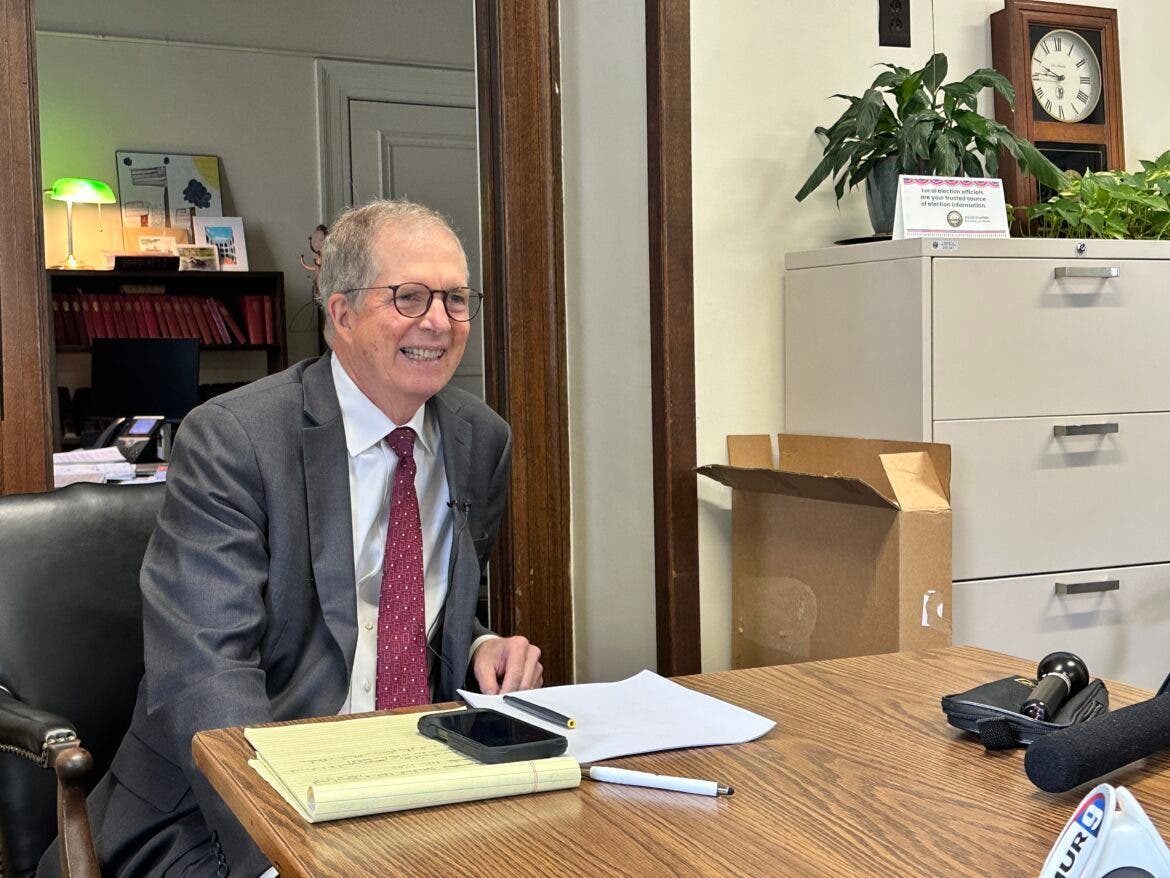
CONCORD, NH — A superior court judge shot down a request from two New Hampshire parents, one a school board member and the other a former school budget committee member, for a preliminary injunction to block the school budget cap question from appearing on November’s general election ballot.
State election officials hope to begin printing ballots by the end of this week in order to meet deadlines for overseas voters.
Find out what's happening in Across New Hampshirefor free with the latest updates from Patch.
Merrimack County Superior Court Judge Daniel St. Hilaire said the plaintiffs failed to prove they would succeed on the merits which is needed for a temporary injunction and failed to prove there would be irreparable harm if the question went forward to be decided in November. A three-fifth vote is necessary to institute a cap.
“The Court concludes that Plaintiffs have not demonstrated ‘an immediate danger of irreparable harm’ and the absence of an ‘adequate remedy at law’ as to this aspect of their claim,” St. Hilaire wrote in his decision issued Wednesday afternoon.
Find out what's happening in Across New Hampshirefor free with the latest updates from Patch.
The plaintiffs, Kelly Wieser of Campton and David Bates of Warner, sought an emergency injunction to block Secretary of State David Scanlan from putting the question on general election ballots.
The question would ask voters to cap school budgets to the rate of inflation plus new construction, to cap school administrative budget increases to six percent of the district’s budget, and to exclude capital costs from the calculations.
The controversial House Bill 1300 passed the legislature with almost all Republican support and was signed into law by GOP Gov. Kelly Ayotte in June.
Although New Hampshire is not a referendum state, the back-door attempt at that comes after almost all school districts who had budget cap proposals on their warrants this spring and last year saw them defeated. One school district voted to study a budget cap last year.
“I’m a former school budget committee member and a paralegal, but with all that experience the proposed ballot measure is still unclear,” said Bates when the suit was filed. “I’m unsure what it would mean for my children, I’m unsure what it would mean for hundreds of kids in my district, and I’m unsure precisely what it would do for taxpayers.”
House Election Law Committee Chairman Rep. Ross Berry, R-Weare, touted St. Hilaire’s decision.
“Today’s ruling is a win for every New Hampshire taxpayer. Democrats sued to keep Granite Staters from voting on capping local property taxes, and they lost,” Berry said. “This question is simple, should voters decide when to rein in out-of-control property taxes?”
But House Minority Leader Rep. Alexis Simpson, D-Exeter, said the court allowed a deliberately misleading question to go before voters.
“Republicans cut education funding to over half our communities this year and are trying to blame others for the consequences,” Simpson said. “Property taxes are sky-high in New Hampshire because we rank last in state funding for public education, which puts the burden of keeping schools open and staffed properly on the backs of local property taxpayers.”
The plaintiffs claimed the question is misleading and confusing and likely unconstitutional.
The lawsuit challenges the constitutionality of the ballot question on three grounds:
- The question is confusing, using structure, language, and terminology that are difficult for voters to understand and evaluate the impact.
- The question is misleading, directly claiming to not impact classroom or other school-based services, which is impossible to guarantee.
- The question impacts the right to vote, as the yes or no options do not represent the range of possible choices for voters outlined in the statute.
The language that would appear on the general election ballot is:
“Shall the [name of municipality] limit property tax growth for [name(s) of school district(s)] under RSA 32:5-i. If adopted for a two-year period: (1) the local property tax levy may not grow beyond the prior year’s amount, adjusted for inflation and new construction; (2) SAU central office spending may not exceed 6 percent of total school district appropriations; and (3) bonded capital costs are excluded from both limits. These caps apply only to administrative operations of the SAU central office and do not affect classroom instruction, school-based services, or other municipal expenditures. These limits may be overridden as provided in RSA 32:5-i. Adoption requires a three-fifths (3/5) majority vote.”
In his decision St. Hilaire dismissed the three main points raised in the suit, saying the plaintiffs did not prove their points as their evidence was often speculative and the claims of confusion and misleading could be remedied at school district meetings or through media postings or advertisements.
After voters rejected every school budget cap put before voters in 2025, Republicans tried unsuccessfully to introduce a statewide school budget caps in the legislative session.
House Majority Leader Jason Osborne, R-Auburn, said after a very lopsided Kearsarge Regional School District vote against a proposed budget cap, “Perhaps, if (local voters) are unwilling to cap themselves, the state will step in and cap local taxes for them.”
This past legislative session the Republican leadership supported HB 1300 which went through a number of changes before it was approved after a conference committee worked out differences between House and Senate versions and over the objection of educators, school officials and local budget writers.
Under HB 1300, the question would be on the general election ballot for both the 2026 and 2028 general elections.
Supporters of the bill argued that more voters need to decide if a budget cap is necessary as a smaller number and those with “special interests” determine school district warrant articles.
Turning out voters who want to cap their property taxes is also a way of bringing out many voters who are not likely to vote in general elections, and the Republicans who proposed HB 1300 are hopeful they will turn out and vote for Republicans if they do, as a get-out-the-vote strategy.
Garry Rayno may be reached at garry.rayno@yahoo.com.
This story was originally published by InDepth NH.